Sprig

Sharing possible solutions for an optimistic future

A food forest(sometimes also called “agroforestry”) is a permaculture method which mimics a forest when planning out a food garden.

“A food forest, also called a forest garden, is a diverse planting of edible plants that attempts to mimic the ecosystems and patterns found in nature.” | Project Food Forest [1]

With proper care, a food forest can even last generations. For example, in the 1920’s near Philadelphia(USA), John Hershey created a food forest. Although today that land has been broken up by urban sprawl, many of the trees survive today in empty lots, backyards, and by parking lots.

There are pecans, walnuts, persimmons, apples, and many more, all growing without maintenance. [2][3]

Parts of a Food Forest:

These gardens are typically broken down into these layers:

  1. Canopy: large fruit or nut trees
  2. Understory: dwarf fruit trees, like pears, juneberries, mulberries, and more.
  3. Shrubs: berries, like elderberry, currants, blueberries, and more
  4. Herbaceous: Herbs, like mint, lemon balm, comfrey, and more.
  5. Rhizosphere: Potatoes, sweet potatoes, ground nuts
  6. Climbing: Peas, grapes, hardy kiwi, honeysuckle.
  7. Ground Cover: Strawberries, catnip, walking onion.

However, it is important to note that what plants you use will be specific to what can grow in your area.

FoodForest

Food Forest Benefits:

  • Promoting a healthy soil microbiome
  • Increased carbon-capture (no-till)
  • Preventing erosion
  • Retaining water
  • Low maintenance
  • Can support wildlife biodiversity

[4][5]

References:

  1. https://projectfoodforest.org/what-is-a-food-forest/
  2. https://www.shelterwoodforestfarm.com/blog/2018/10/17/exploring-americas-oldest-food-forest
  3. https://m.youtube.com/watch?v=qQZTmb_1
  4. https://grocycle.com/food-forest-layers/
  5. https://twobrothersindiashop.com/blogs/farmers-kitaab/food-forests-and-soil-health

#permaculture #gardening #farming #GreenLiving

SprigLogo

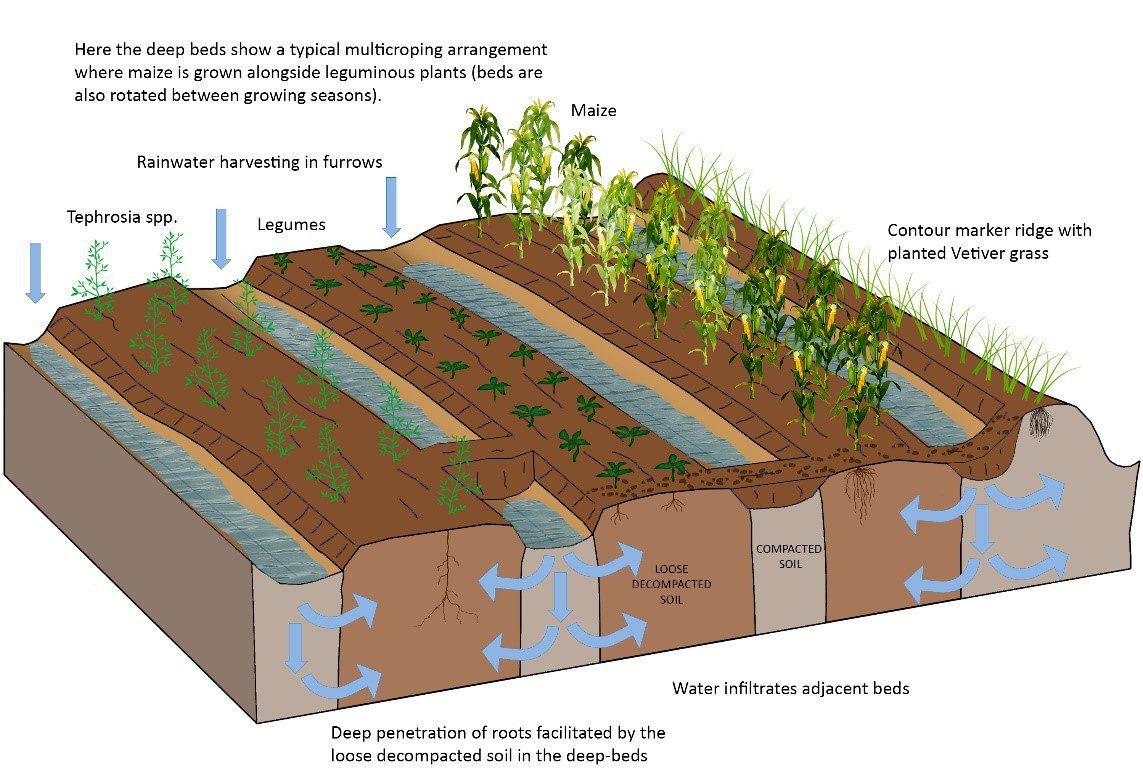
Deep Bed Farming (DBF) is a regenerative agriculture method developed by the Tiyeni Trust in Malawi and studied by Loughborough University and Aftrak. It is designed to overcome widespread soil compaction (“hardpan”), improve water infiltration, and significantly increase crop yields.

 The Tiyeni deep-bed farming system during cultivation

The Tiyeni deep-bed farming system during cultivation

Method

  • Break the Hardpan: Farmers dig through the compacted sub-soil layer once during the first year, allowing roots, air, and water to move deeper into the profile.
  • Construct Deep Beds: Beds about one metre wide are formed alongside shallow ditches. These ditches capture rainfall and reduce runoff, while the beds are kept permanently unwalked to prevent re-compaction.
  • Intercrop and Rotate Crops: DBF replaces monocropping with mixed planting (e.g., maize with legumes or pumpkins) and seasonal rotations to improve soil nutrients and reduce pests.
  • Mulch and Compost: Weeds and plant residues are used as mulch or compost, boosting organic matter and reducing dependence on synthetic fertilisers.

Benefits

  • Major yield increases have been recorded—maize rising from ~1.7 t/ha to over 8 t/ha in some trials.
  • Strong reductions in soil erosion and improved water retention.
  • After year one, the system shifts toward low-till or no-till.
  • Farmers report improved food security and higher incomes.

Limitations

  • High labour demand in the first season.
  • Best suited to regions where rainfall or runoff capture is practical.
  • Requires training to adopt new bed layouts and crop diversity.

· · ──────·❂·────── · ·

References:
– 📰 Tiyeni.org
– 📰 Loughbourgh University
– 🎙️ People Fixing the World Podcast
– 📺 BBC News Africa Youtube Video


#permaculture #farming #gardening #GreenLiving

SprigLogo

One thing all cities should enforce for future builds(especially for skyscrapers), is bird-protection on windows.

In Canada, 16-42 million birds[1] are killed by window strikes, and in the USA, that number goes up to 365 million-1 billion. [2]

Sadly, one or two of those bird-shaped decals do not help, since the decals have to be no more than 2-inches apart.

“Window decals may help, but they must be placed no more than 2-4 inches apart in order to be effective. Birds will try to fly through larger gaps. This means that on large windows, many closely spaced decals may be necessary to deter bird collisions.” Audubon

Luckily, the fix for this window problem is easy. For the first example; there are bird-safe decorative window films and decals(they must go on the outside of the window).

The most common design is made up of several small white dots, while others are more decorative.

If decals will not work for you (they sometimes don’t last in cold climates), you can opt for permanent (and more expensive) window etchings.

Need an even less expensive option? You can make your own dots or designs using a Uni-Posca pen. The markings can be scraped off if needed. Just remember that the markings must be on the outside part of the window for them to work.


#CityPlanning #BetterBuilds #GreenLiving #Housing #Building

SprigLogo

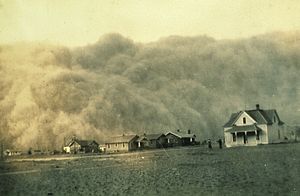
Dust storm approaching Stratford, Texas.

Have you heard of The Great Dust Bowl? It was a series of dust storms in the USA that were so intense, they killed crops, livestock, and people during the the great depression.

The situation was amplified by a drought, but the dust was also human caused.

“Following years of overcultivation and generally poor land management in the 1920s, the region—which receives an average rainfall of less than 20 inches (500 mm) in a typical year—suffered a severe drought in the early 1930s that lasted several years. The region’s exposed topsoil, robbed of the anchoring water-retaining roots of its native grasses, was carried off by heavy spring winds. “ Britannica[1]

This dust storm was so thick that it blocked the sun.

“Dear Mr. Roosevelt, Darkness came when it hit us. Picture taken from water tower one hundred feet high. Yours Truly, Chas. P. Williams.” An unknown author writes to Roosevelt[2]

Under the hands of desperate farmers, grasslands turned to landscapes so lifeless and dangerous, that many people abandoned their dreams and left.

Why Rototilling Harms Soil

Image source

One of the practices that amplified this disaster (that is a current farming practice to this day) is rototilling. During this, you flip the soil over, which can make planting easier. This comes with many problems, including:

  • Destroying the soil microbiome. Healthy soil means healthy crops. [3]
  • More weeds. As you flip your soil you are allowing dormant seeds a chance to thrive
  • Soil Compaction: As the soil gets more compact, it becomes harder for roots to work through it.
  • Washing or blowing away top soil. Top soil is where the heathiest soil is, and it can be washed away if left uncovered
  • Drying the soil. By leaving the soil exposed you are letting the sun bake out any moisture [4]

Ways to Improve Soil Health

  • Crop rotation. This is a pre-medieval technique where you rotate what crops you grow in what soil. This can add nutrients to the soil, avoid nutrient depletion, reduce diseases, and reduce pests. [5]
  • Cover Crops. Never leave your soil bare. Cover crops can save your soil. [6]
  • Water Catchments. These slow down the movement of water, encouraging the soil absorbing it. Examples: bunds or swales.
  • Food forests. Instead of rows of monoculture, food forest combine several different types of plants in a way that mimics a forest.
  • Reducing food waste. To take pressure off food production. In Canada alone, $31 billion dollars worth of food waste is thrown out a year.
  • Mulch. Putting mulch down can protect your soil while also keeping down weeds.
  • Planting trees and bushes. Even if it is just on the outside perimeter of your crops, trees and bushes can help hold soil in place, reduce wind, and improve the general health of the area.

#Farming #Gardening #Permaculture

SprigLogo

Housing First is a powerful, proven approach to ending homelessness—one that starts with a simple but radical idea: people need stable housing before anything else.

Instead of requiring people to get sober, find work, or jump through bureaucratic hoops first, Housing First gives individuals a permanent place to live right away, then connects them with support services like healthcare, counseling, and job training.

Finland’s Success Story

Silta’s community space, where tenants go for gardening or group BBQs. Image by Lilly Dietz. Finland, 2024.

While the Housing First model was originally developed in the United States in the 1990s, Finland has become one of its most successful adopters. In just over a decade, Finland has reduced homelessness dramatically—from over 20,000 people to under 4,000, making it the only EU country where homelessness is consistently declining.

The key to Finland’s success:

  • Permanent housing is treated as a basic human right
  • Support services are optional but available, not conditional
  • There’s a focus on community and dignity, not punishment

One example is Silta, a housing unit with communal gardens, BBQ spaces, and gathering areas where tenants can build connections and find purpose.

Housing First in the United States

Though the U.S. invented Housing First, adoption has been uneven. Some cities have launched successful programs, but many regions still prioritize temporary shelters or emergency interventions over long-term stability.

Why It Matters

Housing First is a real-world policy that:

  • Reduces homelessness and poverty
  • Increases public health and safety
  • Treats people with respect and dignity
  • Reduces long-term public spending on emergency services and shelters

In short, it’s a practical, compassionate model that shows what’s possible when we prioritize people over punishment.


#CommunityBuilding

SprigLogo

Why City Greenery Matters

Greenery is not just visually appealing, it also has many benefits for both us and wildlife.

For example:

  • Helping Insects. Even a small patch of greenery can help native insects [1],
  • Removing cancer causing toxins,[2],
  • Removing rainfall microplastics, [3]
  • Reducing city temperatures [4]

Creating Paths for Wildlife

Cities might have large expanses without any greenery at all, and that can create habitat fragmentation. Habitat fragmentation is when the natural paths and territories of a living creature is broken up. This limits the area animals can forage, can limit mating options, and can completely disrupt migration patterns. Due to this, habitat fragmentation is showing to have world-wide consequences. [5]

Even the smallest of creatures matter, which is why some locations are starting to think about paths insects can take through cities. [6]

Unique Ideas

Moss

Since moss can absorb 6x more C02 than other plants[7], some, like Gorespyre, are working to add more moss to cities.

Vertical Meadows:

If a city does not have the space to plant trees or shrubs, some cities are instead choosing to grow greenery up the sides of buildings. This can reduce building heat loss,[8], and when paired with the correct native plant, can help local wildlife. [9]

The main key to this is to choose native plants that can handle the harsh weather a building might endure, while also not having a very large root system. This typically means no trees.

Building For Greenery

Some architects build with including greenery in mind. A great example of this comes from Friedensreich Hundertwasser, who worked both greenery into his creations.


#CityPlanning #BetterBuilds

SprigLogo

Swap:

If you swap something with someone, you give it to them and receive a different thing in exchange.

Collins

Many people today are focused on being hyper-independent; this, however, is not how life has always been for everyone.

Have you ever heard of the term “barn raising?” Barn raisings (aka a raising bee) was when a whole community — especially in 18th-19th century North America — would get together to build a barn or other structure. With so many hands at the ready, they could build an entire barn in a day.

No one would be paid for their work, and the whole community was expected to help. Often, finishing would be celebrated with a feast and dance.

The idea of this is that you help your neighbor with the knowledge that you may need that help in the future.

Instead of taking on every task yourself, you lean on a community to take on some of the load. Here are some examples of how some people are working on this:

Seeds and Seedling Swaps

Some communities organize seed swaps, where you have a gathering for people to exchange seeds. This is a great way to swap something you have a lot of for something you have never tried before.

This system is particularly helpful for people who seed save from the previous harvest.

Can’t go with the community option? There are online seed exchanges as well.

Note: in some places, this is illegal. For example, in some of the USA states, patents are held on the seeds themselves. As well as that, there are also laws “intended to protect farmers” from weeds. Some people host these events anyways, while lobbying their local governments to make changes.

Harvest Exchanges / Crop Swaps / Food Swaps

While seed swaps tend to happen before the growing season, harvest exchanges happen during harvest times. By then, you will hopefully have produce of some kind from your garden, and if you have extra, you can exchange it with the produce of someone else. For example, if you grow tomatoes, you could leave with some carrots and apples.

This does not have to be on a large scale, either. You could set up a plan with friends where you each grow something different, then plan to swap at the end of the season.

There are also online options for this as well.

Some of these also expand into finished goods; such as baked food, canned foods, and so on. These are called “Community Food Swaps.” There are online directories for these.

Clothing Swaps

I hope you are getting the idea by now, but just in case, people gather, and exchange clothes that no longer fit or no longer match their style, for clothes they do need.

Putting it simply, the events have tables (organized by clothing type and size) for you to put your clothing onto. You can go to any table, and grab the clothes you need.

If there are any clothes not claimed by the end of the event, they can be donated.

Knowledge Swaps

If you have a skill of some kind, you may be able to swap it for the knowledge someone has on a different subject. For example, if you know how to fix jewelry, that might be worth trading for someone who knows how to mend clothing.

For these, you literally exchange the skills by teaching the other person. Any skill you have, even holding chopsticks properly, could very well be a skill someone wants to learn, so do not doubt yourself.

Work Swaps

Just as it sounds: you exchange a job for a job. For example, let’s say you are good at graphics design but need a sink fixed; you could give a plumber the logo they need for marketing, while they repair your sink.


#CommunityBuilding

SprigLogo

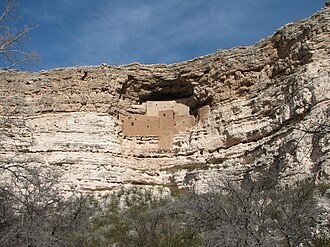
Within Arizona(USA) is a beautiful cliff-dwelling built by the Sinagua people in 1100-1425 AD. Montezuma Castle (renamed to this by colonizers) has around 20 rooms, and is built using a method that today people call “passive solar building.”

wWiwY3gKw5hoWCC.jpg Montezuma Castle National Monument, Arizona, USA

“In passive solar building design, windows, walls, and floors are made to collect, store, reflect, and distribute solar energy, in the form of heat in the winter and reject solar heat in the summer. This is called passive solar design because, unlike active solar heating systems, it does not involve the use of mechanical and electrical devices.” Wikipedia

For the cliff dwelling, that included a design that ensured the buildings were hit with the heat of the low-winter sun, but protected from the high-summer sun by overhang. It also made use of ventilation, small windows and doors (to reduce temperature loss), and more.

For greenhouses, even in colder climates where temperatures can reach -40c(-40f), passive solar designs are enabling greenhouses to run all-year. [1]

For houses, they can save the owners money on both heating and cooling, which is why they are very common in both earth-houses [2] and earth-ship [3] designs.

Window Awnings

qwc01MzNb38OW9L.png

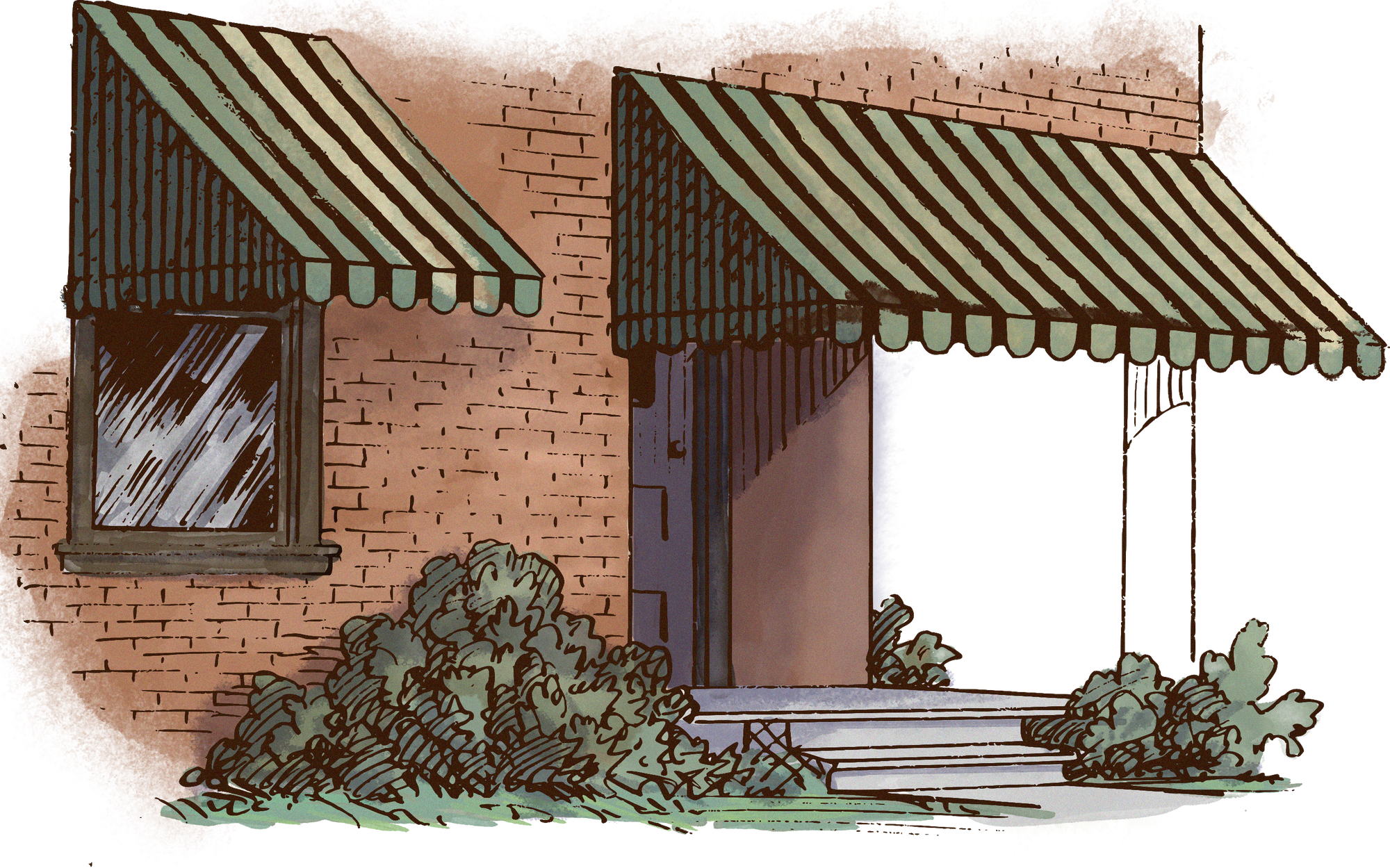
By reducing the need for artificial cooling and protecting windows from damage, Window Awnings support a future that's more comfortable, energy-efficient, and resilient to extreme weather.

In hot weather, windows become major heat sources—-especially those facing south or west. Sunlight pours in, heating up rooms and overworking fans or AC (if you have it). Awnings offer passive solar cooling by shading windows and blocking direct sunlight before it reaches the glass.

According to the U.S. Department of Energy, awnings can reduce solar heat gain by 65% on south-facing windows, and 77% on west-facing windows. [1]

This not only cools your home naturally but also protects furniture and flooring from UV damage. Well-placed awnings also let in low winter sun, making them effective year-round in passive solar design.

Types of Awnings

  • Fixed Awnings: Permanent structures that consistently block sunlight. Simple and effective for sunny windows.
  • Retractable Awnings: Can be pulled in or out depending on the weather or season. More adaptable, but usually more expensive.
  • Clamshell Awnings: Durable, hinged panels (often aluminum) that can be propped open for shade or dropped fully closed during storms.

Why Clamshell Awnings Deserve a Comeback

Clamshell-style awnings are a practical choice for anyone in storm-prone areas—-or for those off-grid who want a multi-use, no-power-needed solution. When closed, they form a protective shell over the window, guarding against extreme weather.

Tips for DIY Installers

  • Angle awnings to block the high summer sun but allow in low winter sunlight.
  • Choose durable, weather-resistant materials like aluminum, treated wood, or fabric with UV protection.
  • For clamshells, check salvage yards or second-hand stores—-they're often available for cheap and easy to repaint.

#GreenLiving #Housing #Building

SprigLogo

FOSS stands for Free and Open Source Software, and it is exactly as it sounds: software that is free that allows you to see the source-code so that you can ensure there is nothing suspicious.

Quite often, the projects run off donations, and communities may work together to improve the code for everyone.

Here is a list of some popular options:

Arts:

  • Krita: Open source free drawing program
  • Inkscape: Free open-sourced program for Vector format files
  • Seamly2D: A program for creating fabric patterns
  • Scribus: InDesign alternative
  • FontBase: A program for sorting and previewing your fonts.

3D: – FreeCAD: a free alternative to AutoCAD – Blender: pro-level 3D creation software

Animations: – Synfig Studio: 2D animations – OpenToonz: 2D animations – Enve: 2D animations

Music and Audio

Streaming and Video Editing

Photography:

  • Dark Table: Photo editing that supports RAW files
  • GIMP: photoshop alternative program

Office, Writing, and Business:

Creating Writing Specific:

Accounting and Money Management:

Entertainment:

  • VLC: a media player that can play pretty much anything
  • Kodi: Video media manager
  • Jellyfin – A personal media server and client.
  • HandBrake – An open-source video transcoder.
  • VidCoder – An open-source DVD/Blu-ray ripping and video transcoding application.
  • Metastream – Watch streaming media with friends
  • Syncplay – Syncplay synchronizes the position of media so people can watch the same thing at the same time.

Ebooks:

Gaming:

Farming:

Other:

  • GRAMPS: family tree maker
  • uBlock Origin: Ad Blocker
  • Eraser – A secure data removal tool for Windows.
  • Powertools: Productivity tools for Windows.
  • KDE Connect: Connect your devices: including by syncing notifications between phones and computers.
  • Grocy: “Grocy is a web-based self-hosted groceries & household management solution for your home.”
  • Devtoys: “Swiss army knife for developers”
  • VSCodium: “VSCodium is a community-driven, freely-licensed binary distribution of Microsoft's editor VS Code.”

Text-to-Speech:


#DigitalFreedom

SprigLogo

If you are ever in need to get in contact with friends and family in your area without the use of cell towers, one way you could do it is through Bluetooth. While this tech might seem odd to need when you can message someone over the internet or cell signal, there are situations where having this set up could help keep you and those you care about safe.

For example, lets say a natural disaster hits your area and knocks out the cell service and power grid. You need to both get in touch with your loved ones, and send a message to rescuers that you need help. So, you send your messages over Bluetooth and wait.

Since the messages do not go to a server, another use case is for organizing protests where protesting is considered illegal. For example, in Hong Kong several years back, protesters used Bluetooth messaging to make it harder for Chinese authorities to trace who was there.

Other uses are: you are camping somewhere with no signal, you are on an airplane and want to messages someone you know who is not sitting with you, or you can't afford a phone plan but still wish to send messages.

Benefits:

  • No Cell or Wifi Needed.
  • Security. Bluetooth messages are encrypted.
  • No server communication.
  • Messaging is free.

Downfalls:

  • People you are trying to communicate with must be using the same app as you.
  • There are distance limits (though most some apps will device-hop to increase limits).

Apps:

Suggested Videos:


#DigitalFreedom #DigitalPrivacy

SprigLogo