Deep Bed Farming
Deep Bed Farming (DBF) is a regenerative agriculture method developed by the Tiyeni Trust in Malawi and studied by Loughborough University and Aftrak. It is designed to overcome widespread soil compaction (“hardpan”), improve water infiltration, and significantly increase crop yields.
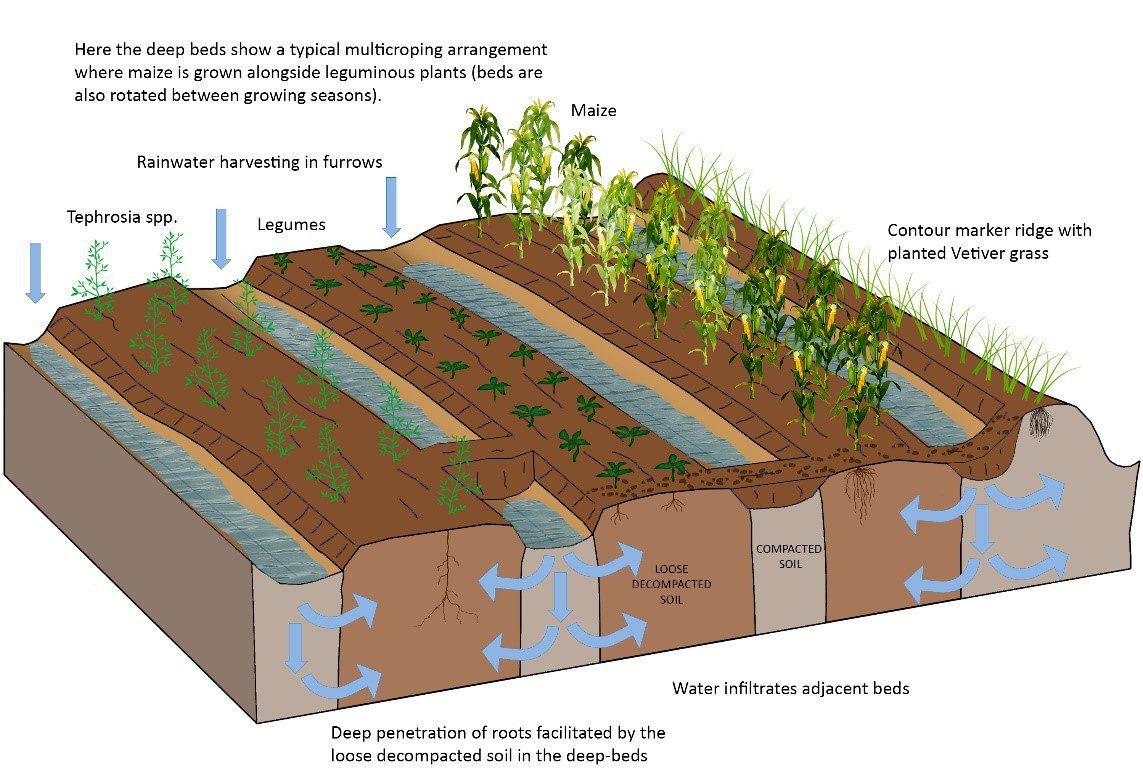
Method
- Break the Hardpan: Farmers dig through the compacted sub-soil layer once during the first year, allowing roots, air, and water to move deeper into the profile.
- Construct Deep Beds: Beds about one metre wide are formed alongside shallow ditches. These ditches capture rainfall and reduce runoff, while the beds are kept permanently unwalked to prevent re-compaction.
- Intercrop and Rotate Crops: DBF replaces monocropping with mixed planting (e.g., maize with legumes or pumpkins) and seasonal rotations to improve soil nutrients and reduce pests.
- Mulch and Compost: Weeds and plant residues are used as mulch or compost, boosting organic matter and reducing dependence on synthetic fertilisers.
Benefits
- Major yield increases have been recorded—maize rising from ~1.7 t/ha to over 8 t/ha in some trials.
- Strong reductions in soil erosion and improved water retention.
- After year one, the system shifts toward low-till or no-till.
- Farmers report improved food security and higher incomes.
Limitations
- High labour demand in the first season.
- Best suited to regions where rainfall or runoff capture is practical.
- Requires training to adopt new bed layouts and crop diversity.
· · ──────·❂·────── · ·
References:
– 📰 Tiyeni.org
– 📰 Loughbourgh University
– 🎙️ People Fixing the World Podcast
– 📺 BBC News Africa Youtube Video
#permaculture #farming #gardening #GreenLiving
