Sprig

Sharing possible solutions for an optimistic future

If you want an easy way to help your local pollinators, then consider building a water station. Not only do pollinators also need water to drink, but some rely on water sources for other needs: such as how a mason bee needs mud to create their nests. [1]

Many plants and crops rely on pollinators, so the more you attract and help, the healthier your garden will be. For example, bee pollination improves crop production and can increase produce shelf-life. [2]


Water Station Tray

Supplies:

  • Tray or dish
  • Rocks
  • Water

Instructions:

The tray or dish is to hold everything, and the rocks are to give the pollinators something safe to land on. Without the rocks, you will likely end up with drowned bees.

Due to evaporation, you may have to fill the dish once or more a day.

tray with rock and water


Refilling Bowl

If you would like an option that some beekeepers even use is refilling dog bowls.

Supplies:

Directions:

Put rocks into the bowl so pollinators have a safe place to land. Place the bowl in a shady spot to help reduce algae growth. [3]

SprigLogo

As you might have guessed, this was one of my gradma's recipes. It is for a cheese sauce that you make in bulk and freeze so that you have a sauce ready to grab for a quick meal.

Ingredients: 

  • 8oz sharp cheddar cheese
  • Âľ cup boiling water
  • â…“ cup butter or margarine, melted
  • ½ cup instant blending flour
  • 1 ½ tsp salt
  • 1 tsp dry mustard
  • 2 tsp worcestershire sauce
  • ½ cup milk powder

Directions:

  • Shred cheese with electric shredder or grate. Place the shredded cheese in a blender.
  • Pour boiling water into the blender and blend until smooth and cheese is melted. 
  • Add remaining ingredients in order listed then mix. 
  • Pour sauce into 8 ½ “ x 4 ½ “ loaf pan or aluminum ice cube tray. 
  • Freeze until consistency of ice cream. 
  • Cut into 16 one-inch cubes; remove to chilled tray. 
  • Freeze until solid.
  • Package and store in freezer.

To Use:

Vegetables: Cook one, 10-oz package frozen lima beans, broccoli, or asparagus in Âľ cup lightly salted water until tender. Add 4 cheese sauce cubes. Stir and cook until sauce is smooth and thick.

Pasta Sauce: To prepare a separate sauce, stir 3 cubes into Âľ cup milk. Cook over medium heat until smooth and thick. Use with macaroni or vegetables.


#Recipes #Recipe #preserves

SprigLogo

Did you know that you can grow your own bath sponges?

“Luffa is a genus of tropical and subtropical vines in the pumpkin, squash and gourd family.“ Wikipedia

Image of a Luffa

Luffa plants are from southeast Asia, and can be grown in places with a long warm summer. The fruit can take a long time to grow and toughen it's inner fibers (about 150-200 days), but after that time, they are ready to become sponges. Explaining it simply, you peel the skin, wash the insides, hang them to dry, then you are done.

“Getting all the seeds out can be a challenge, but the drier the sponges are, the easier the seeds will fall out. Save the best ones for next year. You can also cut open the sponges in any shape you want to remove seeds or make a loofah fiber mat.“ luffa.info

When done, you can use the sponges for bathing, washing dishes, and even as industrial filters. [1]

Luffa sponge photo


Suggested Videos


#gardening #farming #greenliving

SprigLogo

Right-to-repair refers to a movement where people are fighting worldwide for the right to continue to repair products the we own, as well as for the right for us to choose who repairs them.

“The right to repair refers to proposed government legislation to forbid manufacturers from imposing barriers that deny consumers the ability to repair and modify their own consumer products.” | Wikipedia

Why Right-To-Repair is Needed

  • Planned Obsolescence: companies are purposely building their products to break faster, so you have to pay to replace them sooner.
  • Unfixable Products: some products will have their components soldered, glued, or riveted, to stop people from being able to repair.
  • Brand-Specific Parts: These parts may cost more than buying a new product. As well as that, some companies refuse to let independent repair technicians purchase their parts to try and force costumers to only use the product company for repairs.
  • Restrictive Programing. For these, the programs refuse to let you fix your own products (a large example of this happens to farm equipment, where farmers have to hack their own equipment if they want to repair on their own).

How to Help

SprigLogo

With wildfires and dust storms seeming to happen more often, many are looking into ways to make the air in their homes safer to breathe.

A do-it-yourself (DIY) air filter is an affordable air-cleaning device that typically uses a standard household fan paired with a filter medium to remove particulate matter (PM) from indoor air. Such filters have gained attention during events such as wildfires and sandstorms, when commercial air purifiers may be prohibitively expensive or unavailable. This setup draws air through the filter before it reaches the fan, purifying the air as it passes through. [1]

Register Vent Filter Implementation

Rather than having a filter sitting in the room, some instead buy vent filters so that the air from heaters or AC's is filtered. [2] These sometimes have magnets or stick-on velcro to attach the filters to the vent covers.

Circular Fan Implementation

Rather than furnace filters, some people propose using washable fabric filters mounted to a fan. These filters may be reusable, though typically offer lower filtration efficiency than MERV-rated filters. The performance depends strongly on the fabric's structure and fiber composition, but layering fabrics can filter between 12%-96% of particles. [3] [4]

A better option for circular fans is to get a filter shroud with a filter rating. The shroud covers the sides, and in doing so ensures that more air is pulled through the filter, instead of around it.

Box-Fan Implementation

  1. Use a box fan with safety certification and thermal protection.
  2. Attach a MERV-13 (or higher) furnace filter to the intake side of the fan, ensuring the arrow on the filter aligns with the airflow direction.
  3. Consider using multiple filters (e.g., four filters in a cube) to increase surface area and reduce pressure drop.
  4. Monitor and replace filters when they become dirty or loaded; replacement frequency depends on air quality and particulate loading.

#health #diy

SprigLogo

J4tQCXiF5r2aclx.PNG

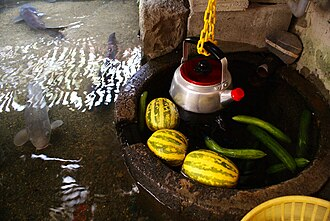
In Harie, Shiga(Japan), water canals run through much of the town, and the people there use it to develop a mutually beneficial relationship with fish.

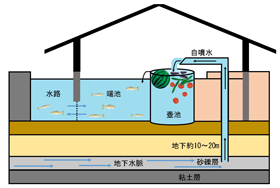
Imagine a pool of water that people use for washing fruits, vegetables, and dishes. That same pool has carp that call it home, and the carp eat the scraps and keep the water crystal clear. This could be inside the home or outside, but it is constantly added to by natural spring water, and the water exits in to a canal. This system is called “Kabata,” and has been used for over 300 years. [1]

RdTEMvti7i0WFOA.png

The Wider Benefit:

That running water then heads to rice flats, which benefit from the natural fertilizers the fish provide. That water then heads to wetland area, where the water is cleaned by reeds and other vegetation before entering a lake. [2]

Suggested Videos:


#water #cityplanning #GreenLiving

SprigLogo

Aquaponics is similar to hydroponics, but makes use of fish to create fertilizer-rich water (from fish waste) for the plants to thrive. In turn, the plants help clean the water for the fish.

You can put the pumps, lights, and fish feeders on timers to automate them, and even use fish types people eat for fish farming.

Aquaponic Benefits:

  • Can enable year-round growing.
  • Reduce water usage (compared to conventional farming).
  • No weeds.
  • Can provide two income sources (plants and fish) [1]
  • Can bring food options into food deserts [2]

Common Aquaponic Fish Mistakes

  • Over-crowded tanks. Too many fish in a tank causes stress, poor water quality, and can increase the chance of disease outbreaks.[3]
  • No Light. Fish need a cycle between light and dark to regulate their circadian rhythm just like people do,[4], so aquaponic fish either need artificial lighting, or a tank that gets sunlight.
  • No Gravel: Gravel is not just for appearance, it can also help regulate the water quality for fish, provide enrichment, and reduce reflections. [5]
  • No Hiding Spots: Having places to hide can make a fish feel safer and so less stressed. One easy option is driftwood. [6]
  • No Bubblers: If you are not going to have water constantly flowing between your tanks and plants, then you will need bubblers to increase oxygen in the tank for the fish[7] and also reduce algae.[8]

Suggested Videos:

What's So Great About Aquaponics?

“Ever heard of aquaponics? In urban areas, aquaponics helps combat barriers that come with farming in cities, like lack of access to space. “

How This Aquaponics Farmer Is Reinventing Urban Agriculture

“There are so many barriers in place when it comes to growing food in cities, but education and lack of access to space are the hardest to overcome. Yemi Amu has dedicated her life as a farmer to solving this problem, by starting the only Aquaponics farm in NYC. Oko Farms in Brooklyn is both a working farm which provides fresh food to surrounding neighborhoods, while also actively engaging the public in education on how to grow food for yourself in urban environments.”


#farming #gardening #GreenLiving

SprigLogo

With hydroponics, you replace soil for water and liquid fertilizers.

Hydroponics are becoming more and more popular in an urban setting, because they can be grown in small spaces (such as apartment buildings), and can be built into most unused spaces. For example, in Alberta, Canada, a family converted an unused school into a hydroponic farm that provides fruits and veggies for their town all year. [1]

Setups for hydroponics can range from large factories, to just a small setup on a kitchen counter.

Hydroponics will not work for all crop types (such as trees), and fruits that require pollination may have to be hand-pollinated.

Hydroponic Benefits:

  • Can enable year-round growing.
  • Reduce water usage (compared to conventional farming).
  • No weeds.
  • They do not require soil, which drastically cuts down the chance of pests.
  • Can bring food options into food deserts
  • Can be grown in restrictive spaces (such as indoors).
  • Can avoid harsh weather by being able to be grown in doors

DIY Basic Hydroponics

Supplies:

  • Bin with a lid
  • Drill and drill bit
  • Hydroponic baskets
  • Lava stones or other filler
  • Aquarium bubbler
  • Hydroponic fertilizer solution
  • Water
  • Seedlings

Instructions:

  1. Using a drill bit slightly smaller than the rim of your baskets, drill holes in the lid. Be sure to leave gaps between holes.
  2. Drill a hole for the cable of the aquarium bubbler
  3. Fill the bin with water and add the fertilizer solution
  4. Put on the lid and place baskets into their holes.
  5. Place seedlings into the baskets with the lava stones
  6. Turn on the bubbler

Make sure the setup is in a sunny location, otherwise you will need a grow light.

DIY Window Hydroponics:

NPR and Window Farms

Do you have plastic bottles sitting around? You could consider turning them into a window food garden!

You’ll of course need plants that do not get too big (such as dwarf tomato plants instead of full-sized).

If your window does not get enough sunlight, you may also have to supplement that with grow lights and a plug timer.

Supplies:

  • used water bottles or pop bottles
  • a pump kit (with tubing and joints)
  • a bucket of water
  • growing substrate
  • a hanging anchor kit
  • silicone steel tube
  • chain (for hanging)
  • tools (electric drill, plier, hole punch)

… and convert them into a tiny food garden that hangs by your window. Here is a full tutorial on the setup: https://www.youtube.com/watch?v=igWJ8uqy4


#gardening #GreenLiving #farming

SprigLogo

In modern landscaping, any sort of hole or ditch is considered a “dangerous tripping hazard,” “unsightly,” or “a waste of space,” so everything is smoothed out. If you go to most cities and farms, the only non-flat places are designed to carry water away from cities, rather than hold onto it.

This thought process can not only increase overland flooding and wash away topsoil, but it also gives water no place to sit and be absorbed into the soil. Without any water capture gradually trickling into the soil and creating an underground reservoir, the landscape becomes less drought resistant and more susceptible to wildfires.

DwfOODbSyDDk1zi.jpg

Image Source

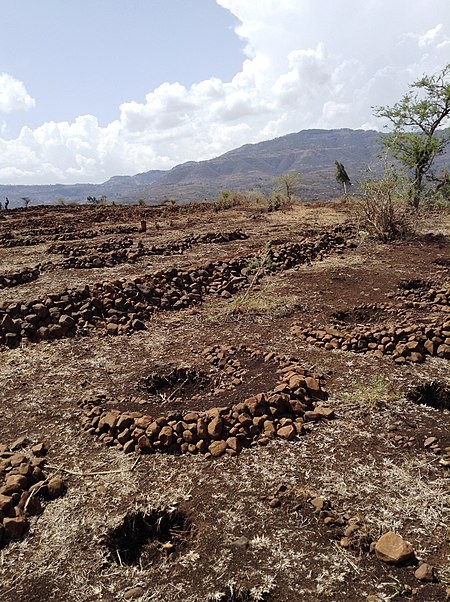
Swales and the other water catchment methods might be different shapes and use slightly different methods, but they all do all work the same on a basic level. The idea is to dig or build a shape that will slowdown and/or catch some of the movement of water. This can make the soil more absorbent (dry and hardened soil does not absorb water as easily) which promotes healthy microbiome of the soil.

In the process of reversing landscape desertification, it is proving drastically helpful. As the underground water reserves build, so does the vegetation.

The Different Methods:

  • Demi-lunes / Half – moons / Semi-circular bunds [1]
  • Eyebrow terraces / banquettes [2]
  • Negarim [3]
  • Contour bunds [4]
  • Micro basins [5]
  • Planting pits[6] / Zai pits / Chololo pits [7]
  • Swales [8]

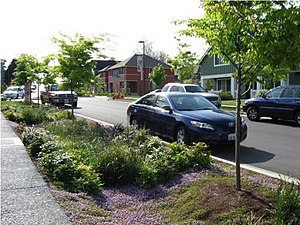
In cities, they look like a slight ditch in front of a house, or a creek in a greenspace.

For other landscapes, it could be just slight indents in un-farmable areas, or ditches dug around farm perimeters.

They do not have to be very deep, and often do not need any fancy equipment to dig(most just involve using a shovel), but they can do amazing things.

Image Source: Just Dig It.

Suggested Video:

____________

#permaculture #weather #farming #gardening

SprigLogo

z2oxwdFxo9fsnb7.png

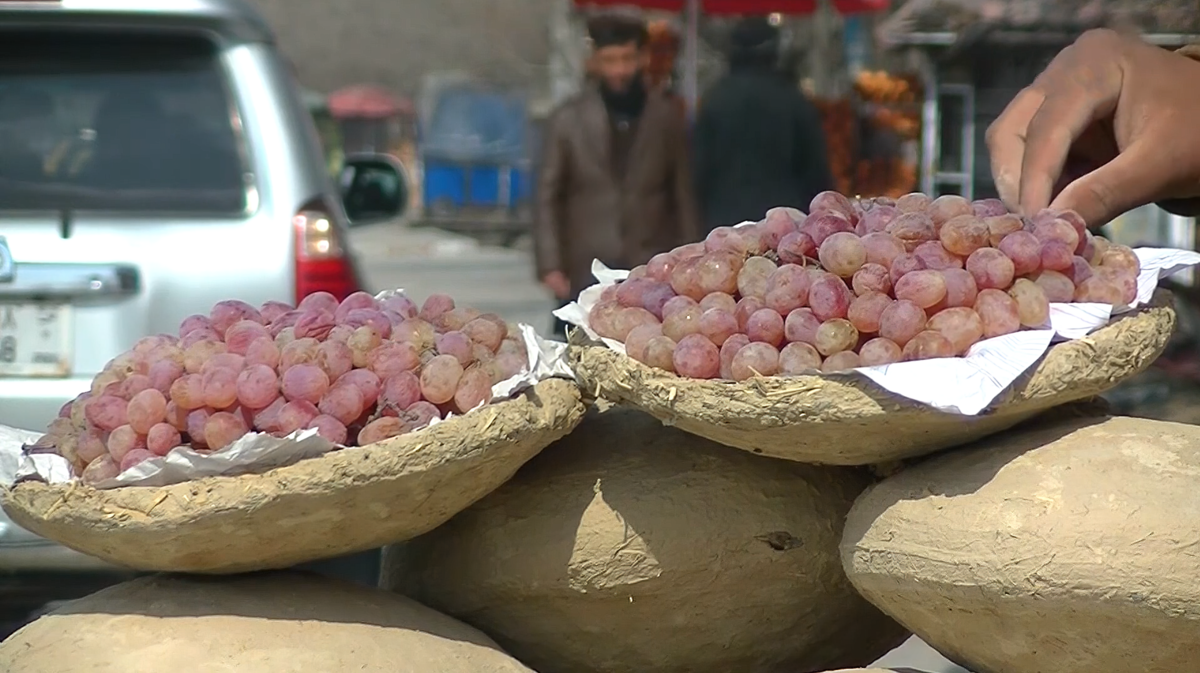
Two open kangina full of red grapes in Afghanistan. Image Source

What Kangina Are:

Kangina is an ancient preservation technique still used in Afganastan today that makes use of clay. Produce is sealed within two clay bowls, and stored somewhere cool.

It is thanks to Kangina that even people in remote communities can still enjoy fresh produce in winter months. [1]

If stored somewhere cool, they will remain fresh for up to 6 months. This is because the vessels are a form passive controlled-atmosphere storage. Due to restricting the airflow and moisture, is is harder for microbes to thrive, but at the same time, the clay still supplies enough oxygen to keep the grapes alive. 2

How They are Made

After making bowls out of clay, they are left in the sun to bake. Once they are completely dried, they are ready to use. [3]

The produce (often grapes) are placed inside a bowl, and another bowl is placed on top and the seams are sealed with mud. [4]


#preserving #preserves #food #TraditionalSkills #GreenLiving

SprigLogo