Sprig

Sharing possible solutions for an optimistic future

Internet radio is a digital audio service transmitted over the internet. Unlike traditional AM/FM radio, which uses radio waves, internet radio streams audio through online connections, making it accessible from anywhere in the world with an internet connection.

Benefits:

  • Global Access. Listen to radio stations from the other side of the world from you, or right in your area.
  • Variety: Thousands of stations offer everything from indie music to talk shows, news, and music genres.
  • Less Restrictions: In places where there is a lot of censorship, using the internet can provide more freedom than traditional radio.
  • Free Music: So long as you have internet, you can listen to music. This makes internet radio an alternative for those who can't afford music-streaming platforms.
  • Emergency Situation News: If you are somewhere that does not have a radio, you can connect to local news stations over the internet.

How To Tune In:

While there are some dedicated internet radio apps and websites, some of them only display stations directly linked to their companies, and some even charge for the service. So, be sure to use FOSS apps and programs (example: VLC. There is a tutorial here ).

Once you have your app or program: 1. Find stations using search engines like Radio Stream URL Search Engine or InternetRadio . 2. Add stations to your platform of choice 3. Enjoy!

Getting Creative:

There are devices you can buy that look just like traditional radios, but another popular method is to make. Here are some examples:

Station Examples:


#DigitalPrivacy #DigitalFreedom

SprigLogo

zqOMMw0m838aPlj.jpg

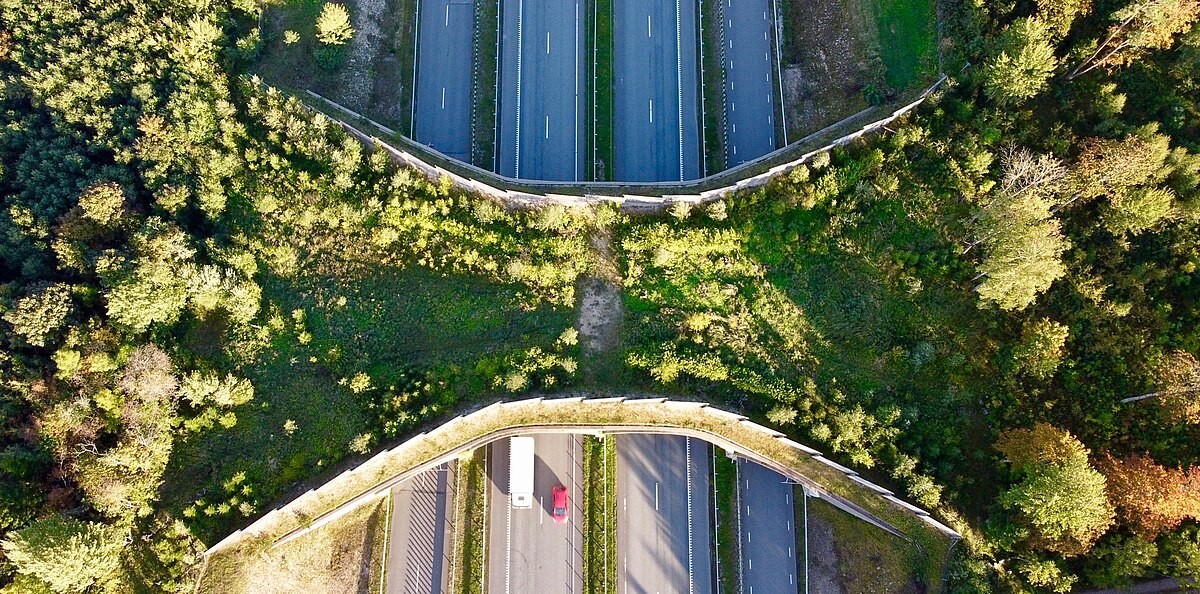
Roads can cause major problems for wildlife, and not just from the danger of being truck by vehicles. With busy enough traffic, wildlife may avoid crossing at all, causing habitat fragmentation. Habitat fragmentation is when the natural paths and territories of a living creature is broken up. This limits the area animals can forage, can limit mating options, and can completely disrupt migration patterns. Due to this, habitat fragmentation is showing to have world-wide consequences. [1]

In order to stitch habitats back together, wildlife overpasses, underpasses/tunnels, and viaducts are all used. They not only protect the wildlife, but also help drivers and passengers by limiting the chance of a collision with an animal. Considering roads are the biggest source of human-caused wildlife death in Canada's national parks [2] , a change can make a big impact.

Proof They Work

Wildlife crossings are not a new idea, so some of our oldest crossings have provided many years of data, showing their worth.

“In 2012, eleven species of large mammals have been recorded using wildlife crossings more than 150,000 times since 1996. This includes grizzly and black bears, wolves, coyotes, cougars, moose, elk, deer, bighorn sheep, and more recently wolverine and lynx.“ Parks Canada

When paired with fences to keep animals off the roads and help encourage them to use the crossings, areas can see a reduction in animal-vehicle collisions by more than 80%, and that number jumps to a reduction of 96% for just elk and deer. [4]

What Wildlife Crossings Look Like

There are a wide range of different crossings that might be built for animals. Some are large overpasses that span over roads and are covered with greenery to make them seem more like hills. Others are large tunnels that pass under the roads, and some are barely wider than a basket ball or baseball, and are used for our smallest critters. An example of one of these small paths is in Waterton Lakes National Park (Canada) where care was taken to ensure Salamanders have a safe path. [5]

Typically, overpasses work better than underpasses for most wildlife, since not all wildlife is comfortable traversing into a dark tunnel which is often loud with traffic vibrations. In comparison, the overpasses are typically made with soil, grass, and trees, to feel like a hill for wildlife.

Where We Also Need More

As cities continue to spread outward, one place more care in creating these would be within cities themselves. Typically, they are only found in wild spaces, but they make a big impact in cities as well.


#nature #outdoors #BetterBuilds #CityPlanning

SprigLogo

Ceramic water filters became particularly popular in the 1800's in London, when poor water qualities were often reported on. [3] Since then, they spread across the world.

They are an inexpensive water filter which uses the small pore size of the ceramics to filter out impurities. You pour water into the top half, and that water slowly filters into the lower half. Since it only needs gravity and does not cost anything to run, it is a very cost-effective way of filtering water.

Some (though not all) also come with a activated carbon filter to aid in the removal of chemical contaminates (like chlorine) and/or a special silver treatment to help kill bacteria, mold, and algae. [1]

Since many people in the world do not have save drinking water or do not trust the water from their local treatment plants, these filters can provide a filtration method that does not contribute to the use of bottled water.

Note: When treating water directly from a wild water source, it is generally suggested to use a filtration method along with a method of disinfecting (such as boiling). This is because while filtering can remove many dangers, it can not remove viruses. [2]

]


Maintenance:

The top half should be cleaned regularly to keep the ceramic pours free of impurities. This can be done with soap and water, or just water and a bristle brush.


#water #lowtech

SprigLogo

Picture a vending machine where you can rent a space inside, or the whole machine. If you can't afford to rent a building, this would give you a space to try and sell your goods with less risk.

For an example of this in action, vending machines are being used by many farmers so that they can make back more profit than what they get from the store store. This is because they can skip all the middleman fees, and instead sell directly to the customers.

“For every dollar we spend on food, only about 16 cents goes to the farmer. ” Tracie McMillan

In many farming communities, you will come across a “honour code” stand, where farm goods are sold at the end of their property, and they are trusting you to leave the correct amount of money for what you take. The vending machines do the same thing, but in a more secure way for the farmers.

It is not just for farmers, though. In some cities, you can rent boxes within the machine. Machine rentals are also becoming more common, where you can rent a whole machine, so you might see a machine in a local park selling sports equipment, or perhaps one selling books or local art.

On top of being great for the sellers, vending machines can also bring products to neighborhoods that do not have stores in walking-distance.

“Food deserts can be described as geographic areas where residents' access to affordable, healthy food options (especially fresh fruits and vegetables) is restricted or nonexistent due to the absence of grocery stores within convenient traveling distance.” | Food Empowerment Project


#CommunityBuilding

SprigLogo


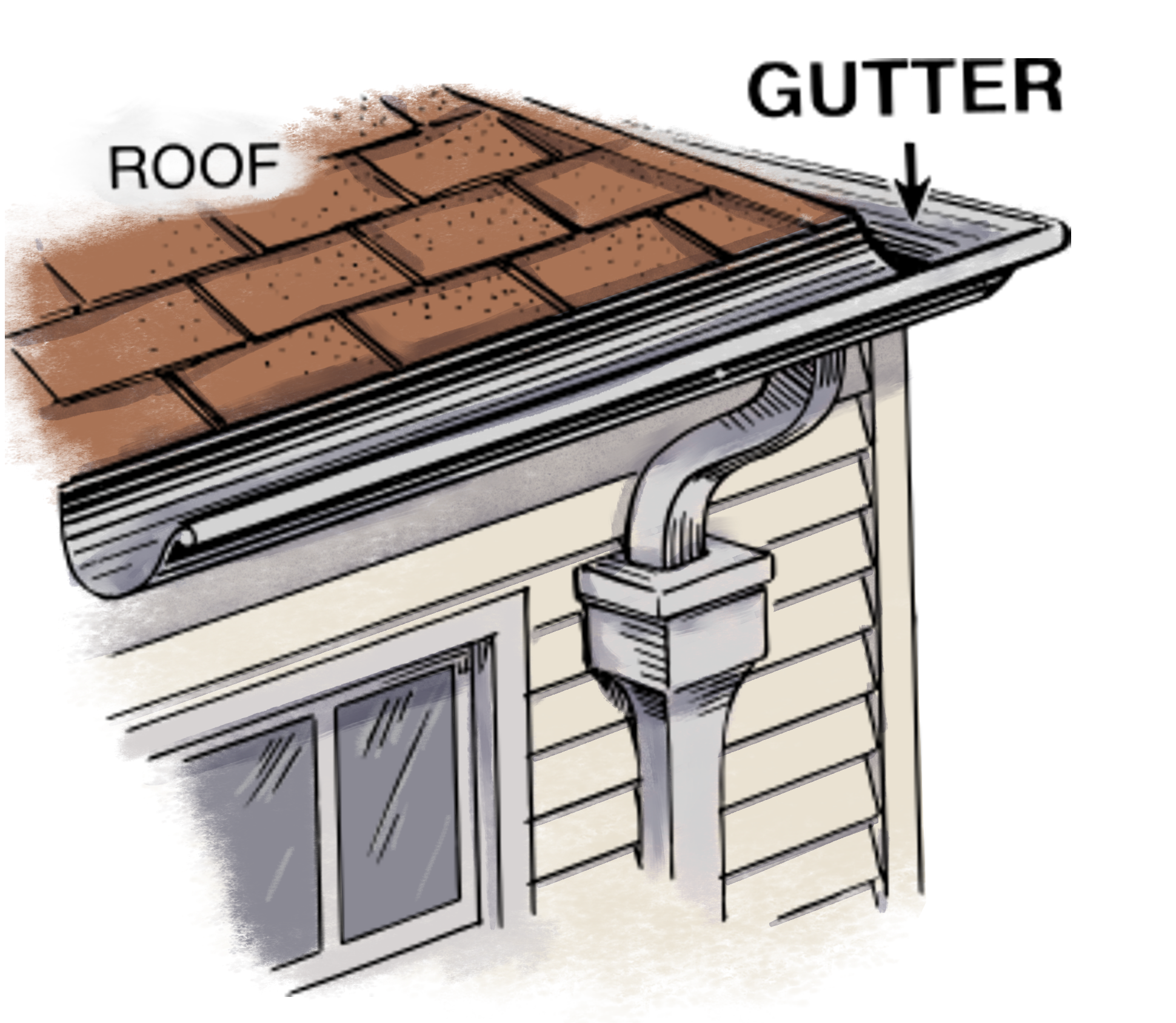
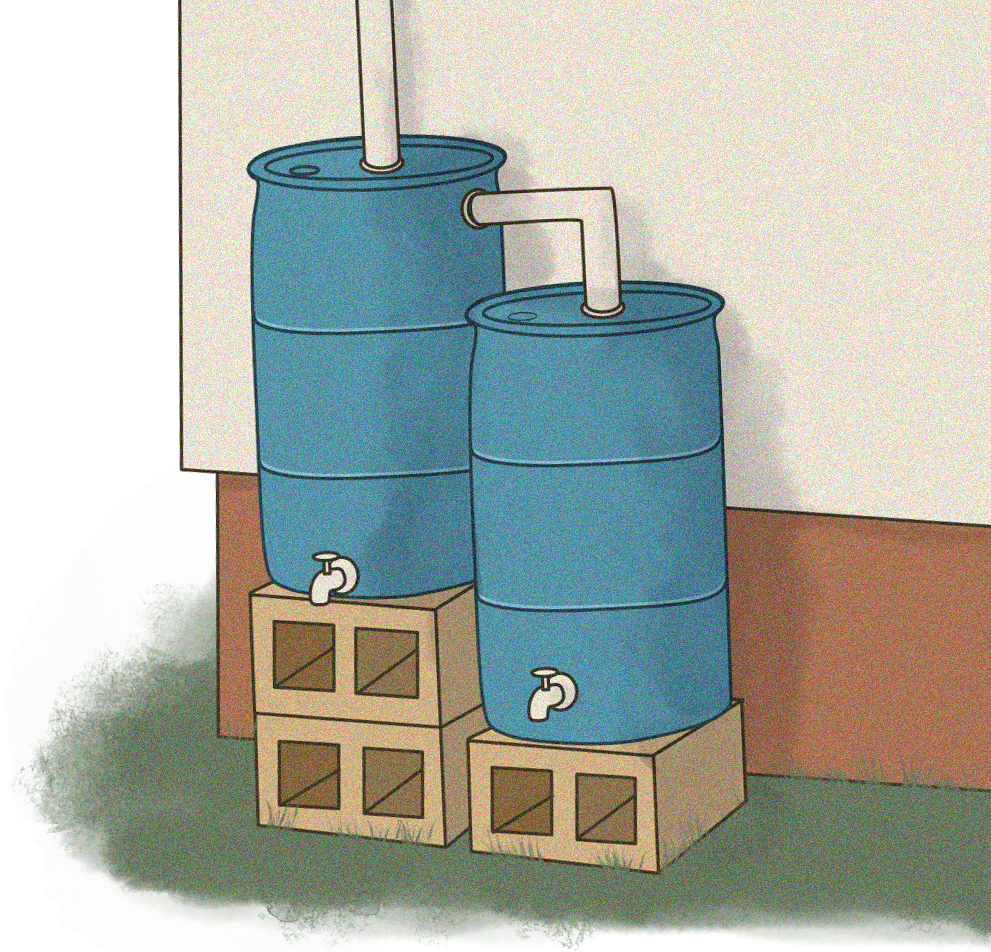
Rain barrels (also called rainwater tanks) collect rainwater runoff from rooftops by using eavestroughs and downspouts to carry and funnel water into the barrel.

Since this is untreated water, it is healthier for the plants in your garden [1] while also saving you money on your water bill.

The use of the barrels can assist drought-prone areas by collecting water in the rainy season which can then be used during the dry season. This reduces the strain on local water reserves.


Before Buying

Many cities do also have incentives to buy rain barrels, so be sure to do some research on that for your area.\ Some places (such as some USA states) have different regulations regarding water capture, so please look into that as well. [2]


Tips:

  • Barley: If you are having trouble with algae, try barley. It helps restrict algae growth. [3]
  • Mosquito Dunks: If you have a open-faced (no mesh or cover) barrel, consider a mosquito Dunk to help deal with mosquito larvae in a safe way. [4]
  • Timers: If you water at the same time every day, consider a battery-operated faucet timer and a soaker hose
  • Gravity: If you can get your barrels higher than the ground you are planning to water, you should be able to water without problems

DIY Option

Supplies:

  • Garbage can with a lid
  • Valve Spigot
  • Screening
  • Drill and drill bit
  • Waterproof duct tape

Instructions:

  • Use the drill and drill bit to make a hole near the bottom of the container for the valve spigot.
  • Install the valve spigot (installation instructions will vary depending on what you buy)
  • Use the drill and large drill bits to make a hole or several holes in the lid.
  • On the top side of the lid, cut the screening so it will cover the holes, and tape in place with the water proof duct tape.
  • Place the lid upside down over the container so the rim of the lid helps to funnel the water
  • Place your new rain barrel under your downspout.
  • Optional: Add another tap near the top of the container if you want to link multiple containers.

#GreenLiving #TraditionalSkills #Water #Gardening

SprigLogo

RSS stands for Really Simple Syndication. An RSS feed is a standardized file (usually XML) that lists recent updates from a website—-blog posts, news articles, podcasts, comics, changelogs, you name it. Most (but not all) websites have RSS feeds built into them, so once you find the correct URL for the RSS feed, you can add it to your RSS reader and new updates will appear in your feed.

This gives you the ability to stay up-to-date with what is happening online and/or around the world without attention-seeking algorithms, web-trackers, ads, or e-mail subscriptions.

RSS lets you subscribe directly to content and read it in one place, on your terms. 

If you care about the open web, RSS is one of its backbone technologies.

There are many RSS options out there, and they tend to fall into three categories: self-hosted, local only, or web-based. 

  • Self-hosting: for those who can host a server. One of the most popular options for this is using a Nextcloud server with the Nextcloud News app. 
  • Local-Only: means that the program is run on your device only, so while it does give you a feed, you can not view the feed across your devices. This is a good option for those who only plan to use a RSS reader on one device. 
  • Web-based: this RSS reader is hosted by someone else, meaning you can sync the feed across your devices. This option does have the risk of failing if your host shuts down the server, and there is also the risk of the host becoming a paid-service someday. This is the option I use, and just to be safe, I occasionally back up my subscriptions in a opml file. Most RSS readers have a function to import from opml, so it is a safe backup to have in case I ever need to switch to a different reader. 

Note: some websites refuse to provide RSS feeds, but you can still have a chance to add them using scrapers such as RSS-Bridge.


Reading RSS Feeds with FOSS Software

  • FreshRSS (self-hosting or web-based). I personally use this this. You can use the website, and/or add the feed to the app of your choice. For example, I sync my feed to the android app Readrops, so that I can view the feed on my computer and my phone. You can also self-host this if you'd like.
  • Miniflux (self-hosted): for those who prefer a minimalist and fast-loading setup.
  • Liferea (Linux)
  • RSS Guard (Linux/Windows): This one has the added benefit of being able to subscribe to and play podcasts.
  • Thunderbird (Linux/Windows/Android/Ios): Thunderbird is primarily a FOSS e-mail inbox option, but it also has a RSS feed reader built in
  • Akregator (KDE): This one is an app for the KDE software community

Publishing Your Own RSS Feed

You write posts → RSS updates itself to send your post to the feeds of your subscribers.

Some website providers (such as WordPress) do have a built-in RSS feed. You can typically find your feed at:

  • https://yoursite.com/feed/
  • https://yoursite.com/category/news/feed/

You can also add rss to your website if it does not already have one built-in. 


#DigitalFreedom #DigitalPrivacy #RSS

SprigLogo