Shadows25

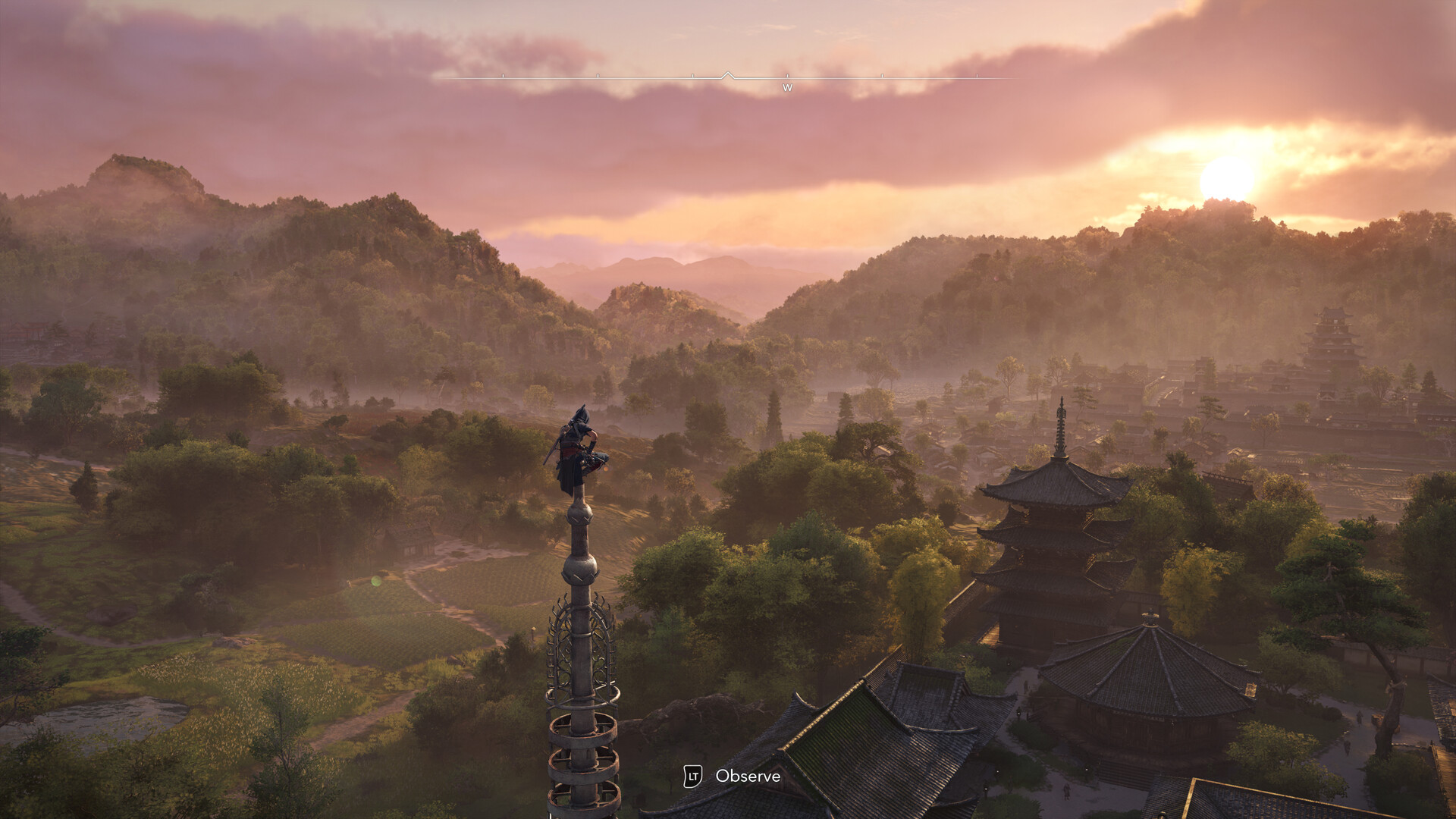
Every game in the AC series invokes the same excitement as the last. With the first glimpse of Assassin’s Creed Shadows, I was transported back to the days when I was running through ancient Greece in Odyssey. The world—I mean, the game world—seemed to be so alive. Parts of Japan are caught in a pre-modern conflict, while other parts are so serene, so peaceful, a wild contrast to the chaos. The world is so richly crafted that I was hooked almost immediately. Sneaking my way through the bamboo thickets, the game wilderness covering me like a shroud, the game’s promised immersive experience was finally here after a period of longing.

The humor in the game may not target the same audience as in Odyssey, but it builds warmth to the narrative that was set against a dark and troubled background, and again, it was so richly crafted. The script gave Naoe and Yasuke writing, but it was still grounded. The deliveries in the Japanese track were a true masterpiece and a joy to listen to. The authentic delivery was poetic in nature and wonderfully crafted to avoid the pitfalls of caricature, making it a highlight even for players who buy cheap PS4 games and value strong voice performances.
Assassin’s Creed Shadows

Dual Protagonists, Dual Styles

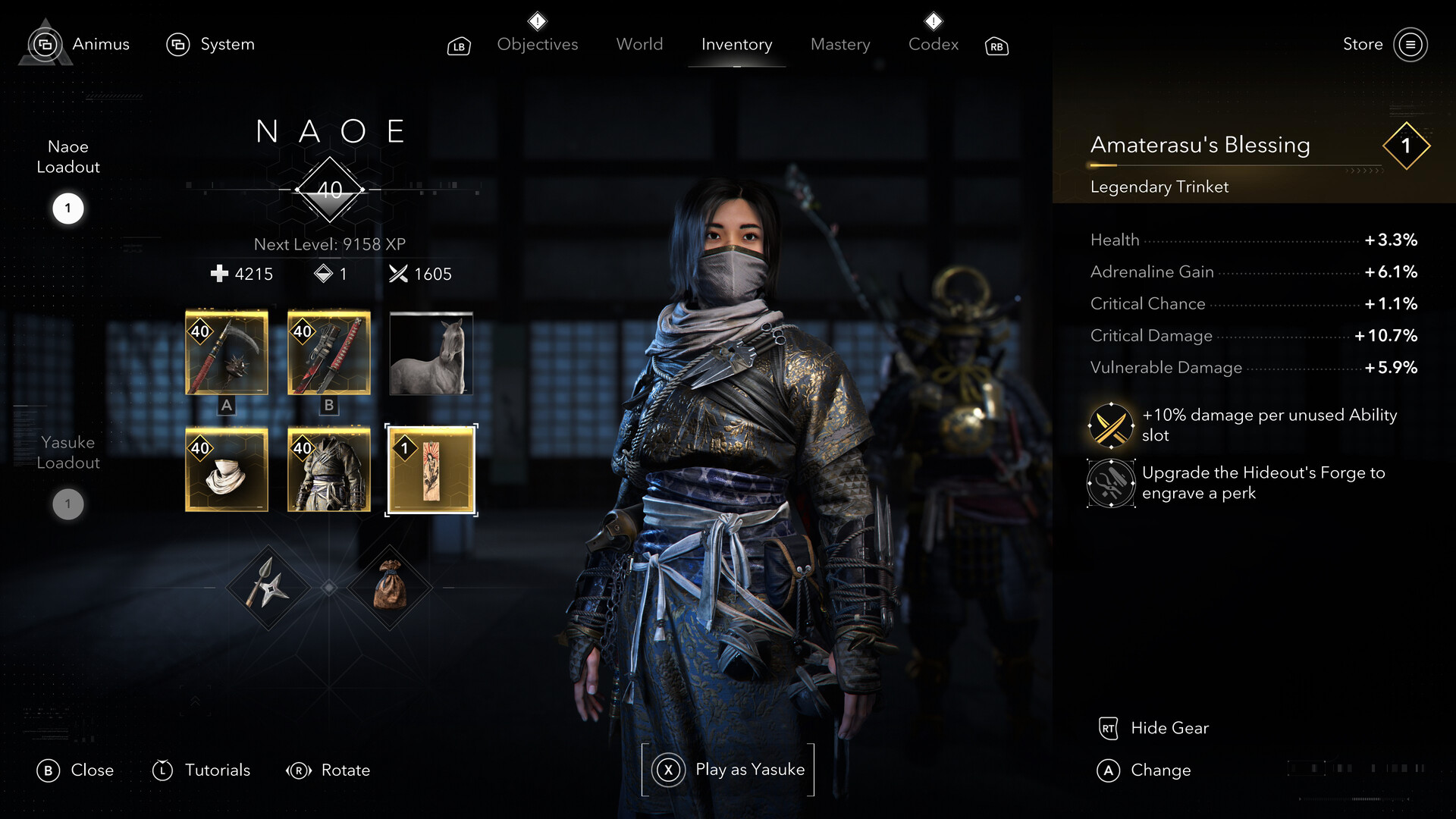
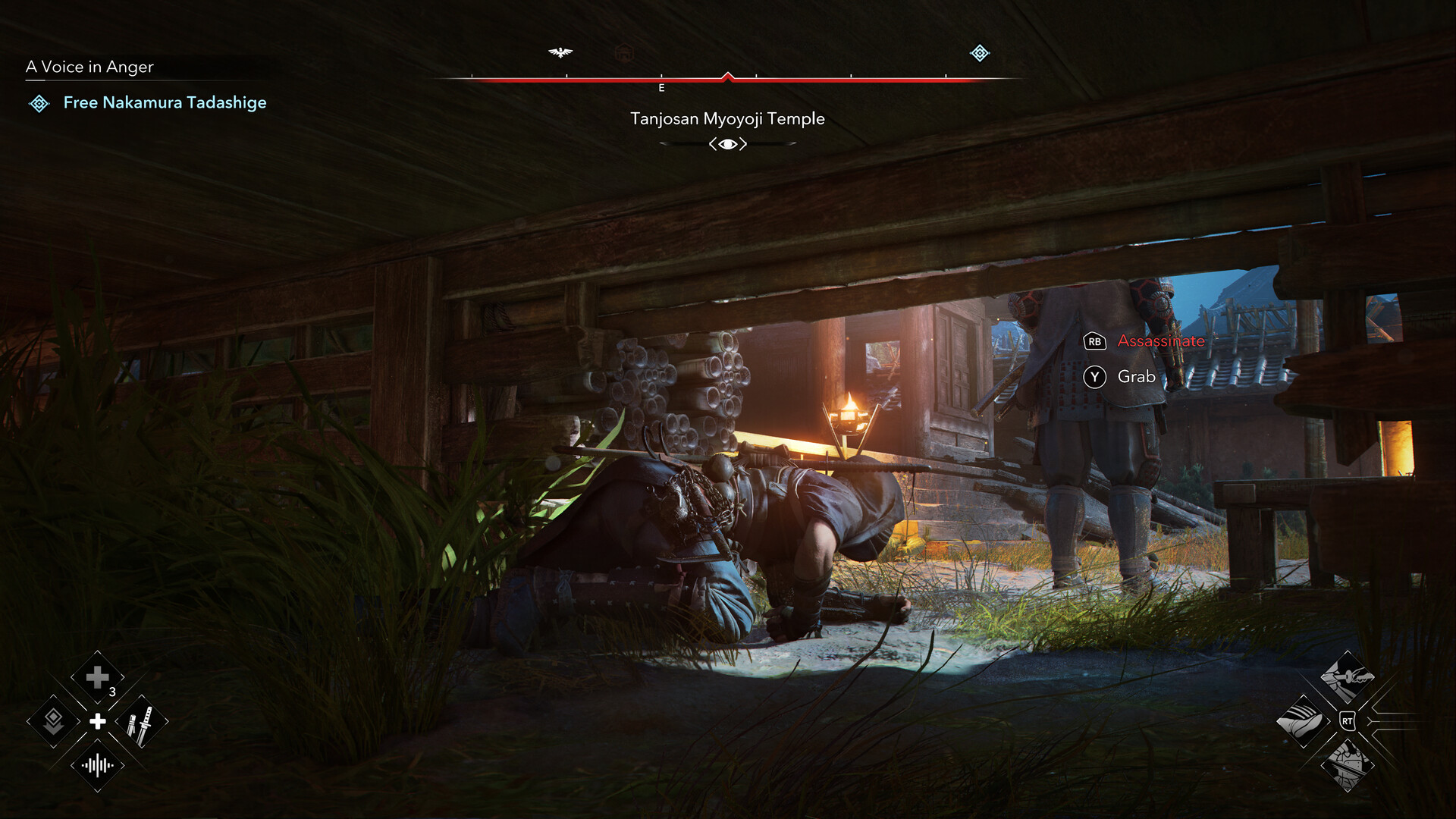
Naoe and Yasuke each bring their own flavor to the gameplay, offering players two contrasting yet equally satisfying approaches. Naoe embodies the series’ classic stealth roots. She moves like a whisper through the shadows, blending the grace of a shinobi with the calculated patience of a true Assassin. Her stealth toolkit is where Shadows truly shines. Light and sound play a dynamic role in every infiltration. You feel the tension as you time your movements with the rhythm of the environment—torches flickering, guards chatting, doors sliding open. The sense of presence in these moments is powerful.

One thing I appreciate about Naoe’s stealth mechanics is that it feels earned. It’s not simply about hiding in a bush and waiting for a target to stroll by. It’s about perfecting the balance between light and shadow. The modern stealth mechanics in this franchise are dynamic and fluid, while also being the most refined in recent times. The absence of social blending, however, is a small disappointment. The classic stealth feature integrated into the architecture of Assassin’s Creed II is a missed opportunity in a scenario that could have beautifully integrated social blending, mingling crowds, and stealth, something players who buy cheap games might miss as they recall the series’ earlier, more immersive mechanics.

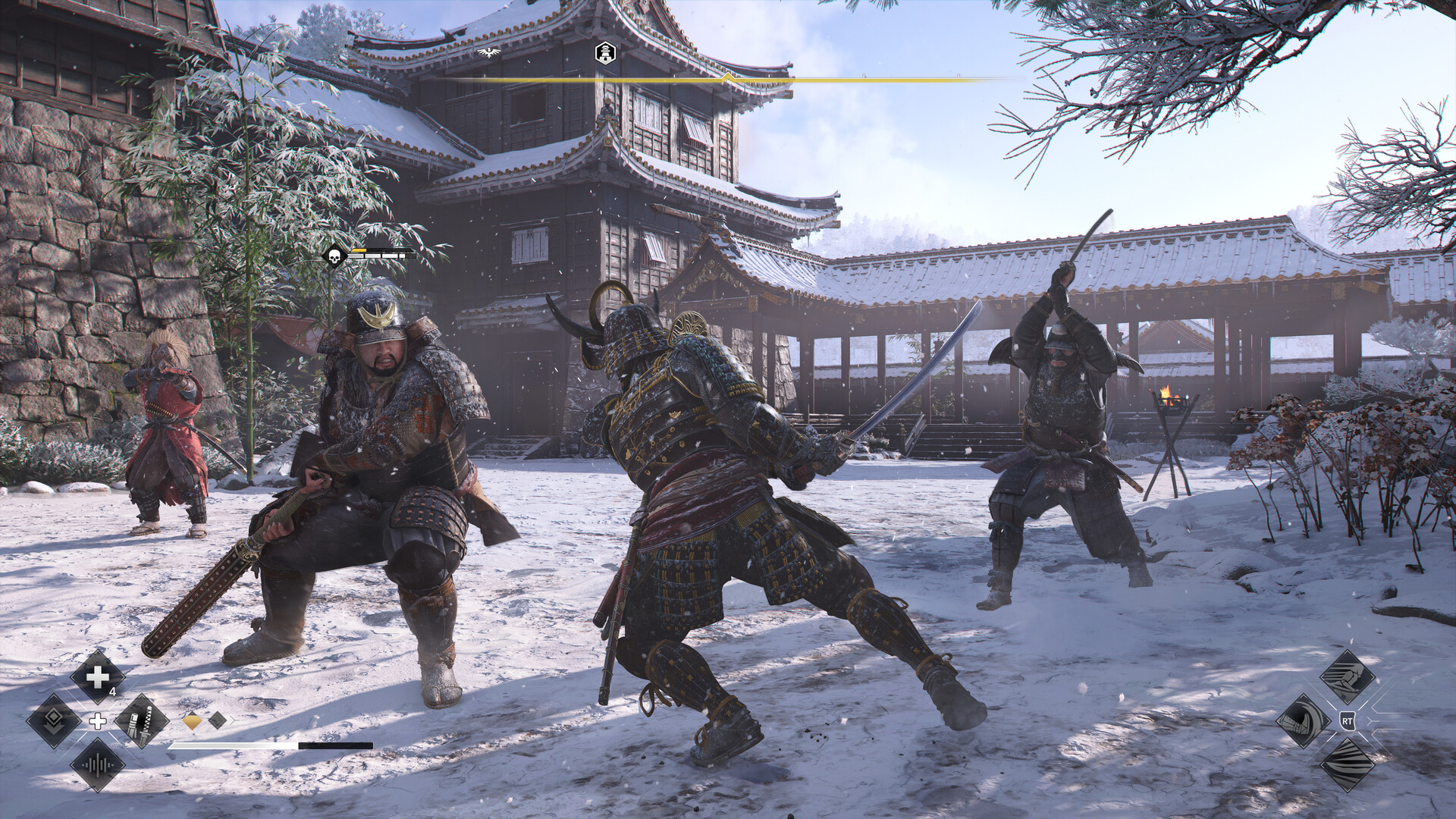
Yasuke, in contrast, carries the open encounters with a unique presence and power. Each of his strikes is methodical and grounded in a way that makes the combat satisfying, especially when they are executed in unison. The weapon animation is a tremendous visual addition, and while encounters are not overly violent, they still have a cinematic quality. However, I would have preferred retention of some of the combat rhythm. I found the ability customization not flexible enough to fit the deep systems of combat progression. When I feel that deep systems are in place, I expect to be free to sculpt my playstyle, rather than having to follow pre-defined patterns.
Assassin’s Creed Shadows

Progression: Strategy Over Stats

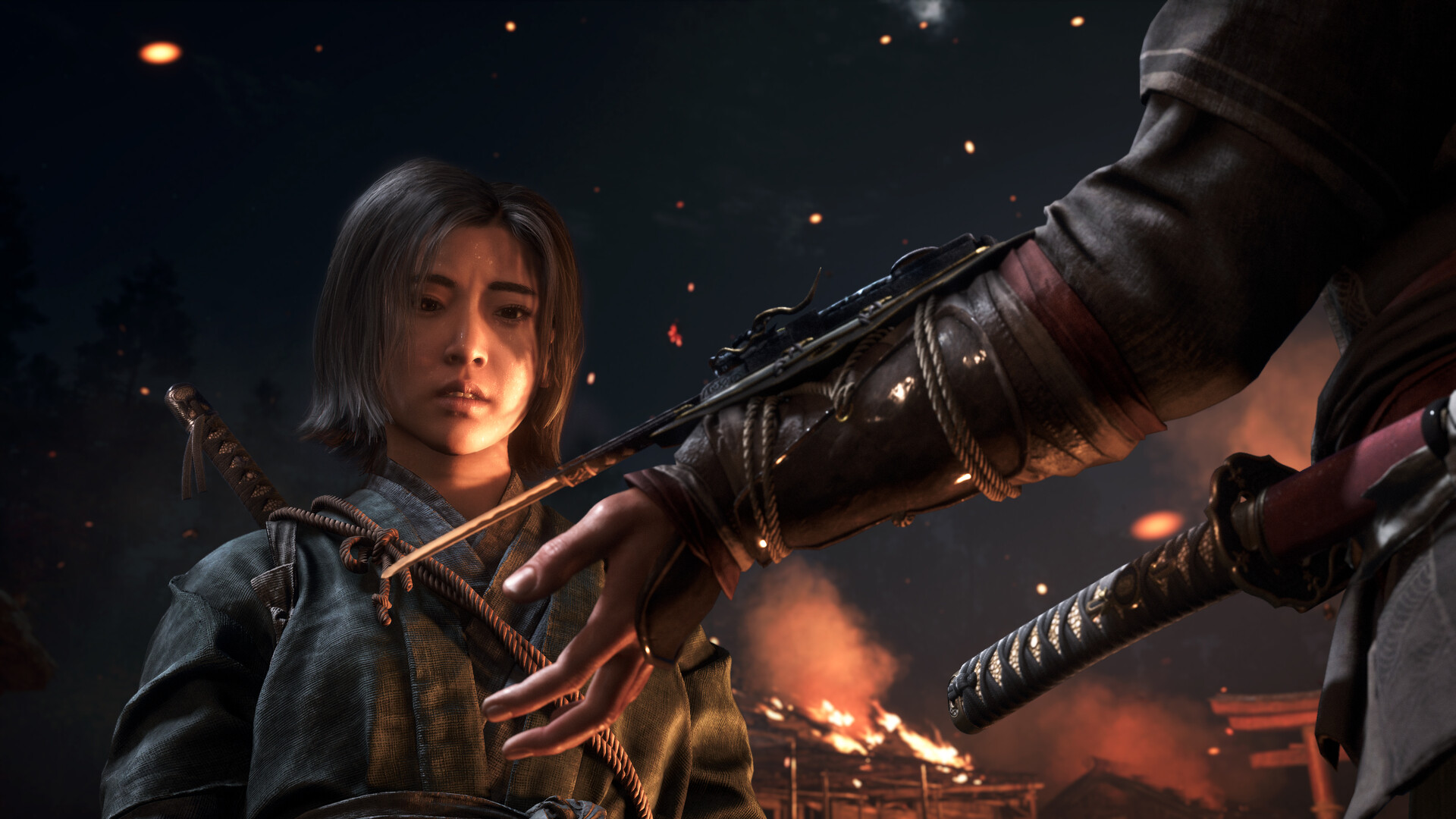
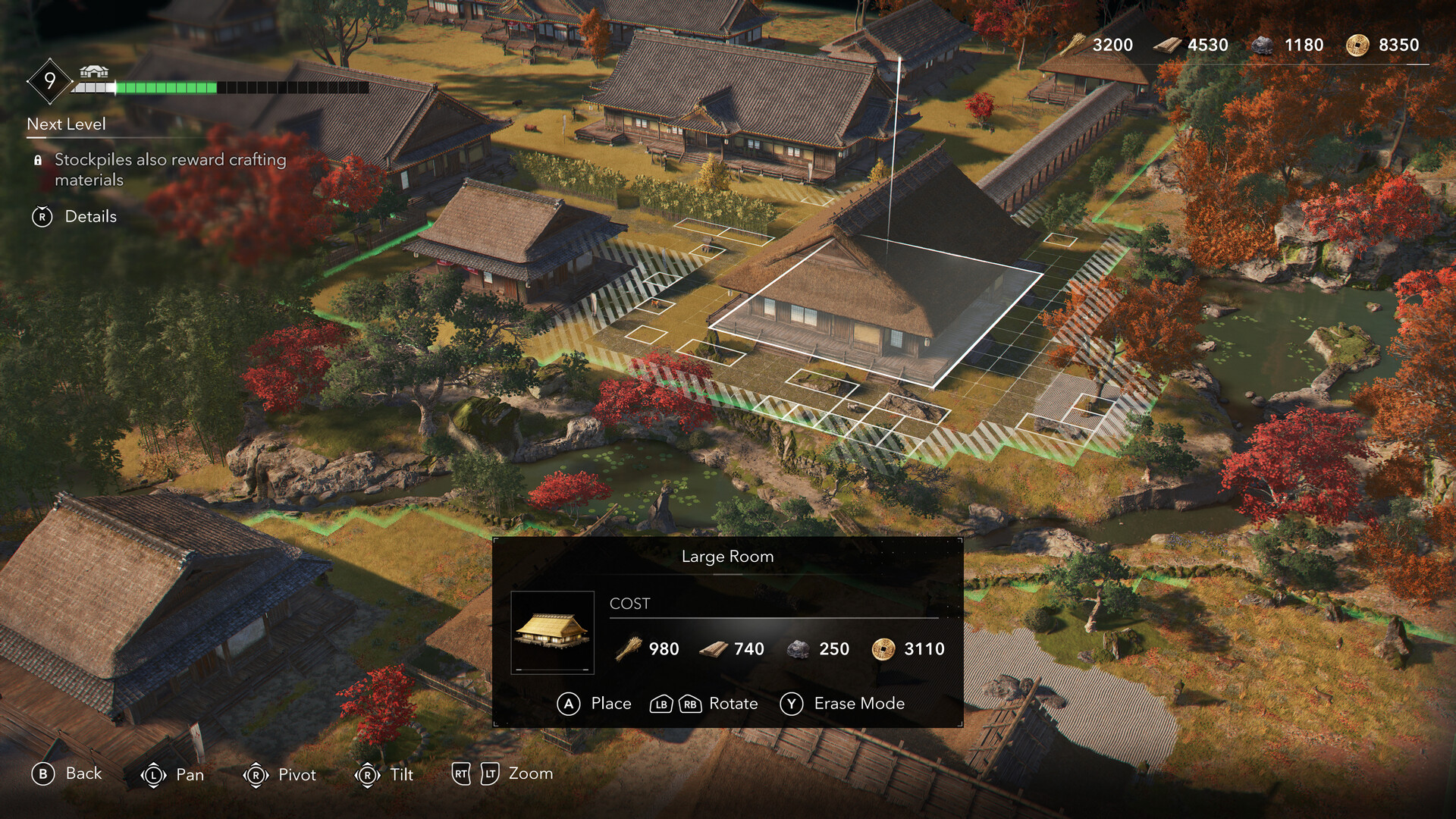
Assassin’s Creed Shadows shifts focus toward a more strategic RPG approach, and I really love that! Combat and progression feel purposeful instead of bloated, thus avoiding a “chase high numbers” scenario. Each upgrade feels impactful, allowing the players to spend some time considering the more strategic aspects of synergy and build acquisition. The grind for materials is still here, of course—character strengthening does require some farming. But that’s how it is in this genre!

Progression does miss the mark a little when it comes to gear and customization. After a certain point, it’s quite hard to feel unique due to the limited number of gear slots. Although the armor and weapon designs are elegant, the lack of opportunities to showcase individuality through the appearance of the character leaves much to be desired. After so much time spent exploring and crafting, I especially found the lack of cosmetic variety disappointing.
Assassin’s Creed Shadows

The World: A Beauty That Slowly Fades

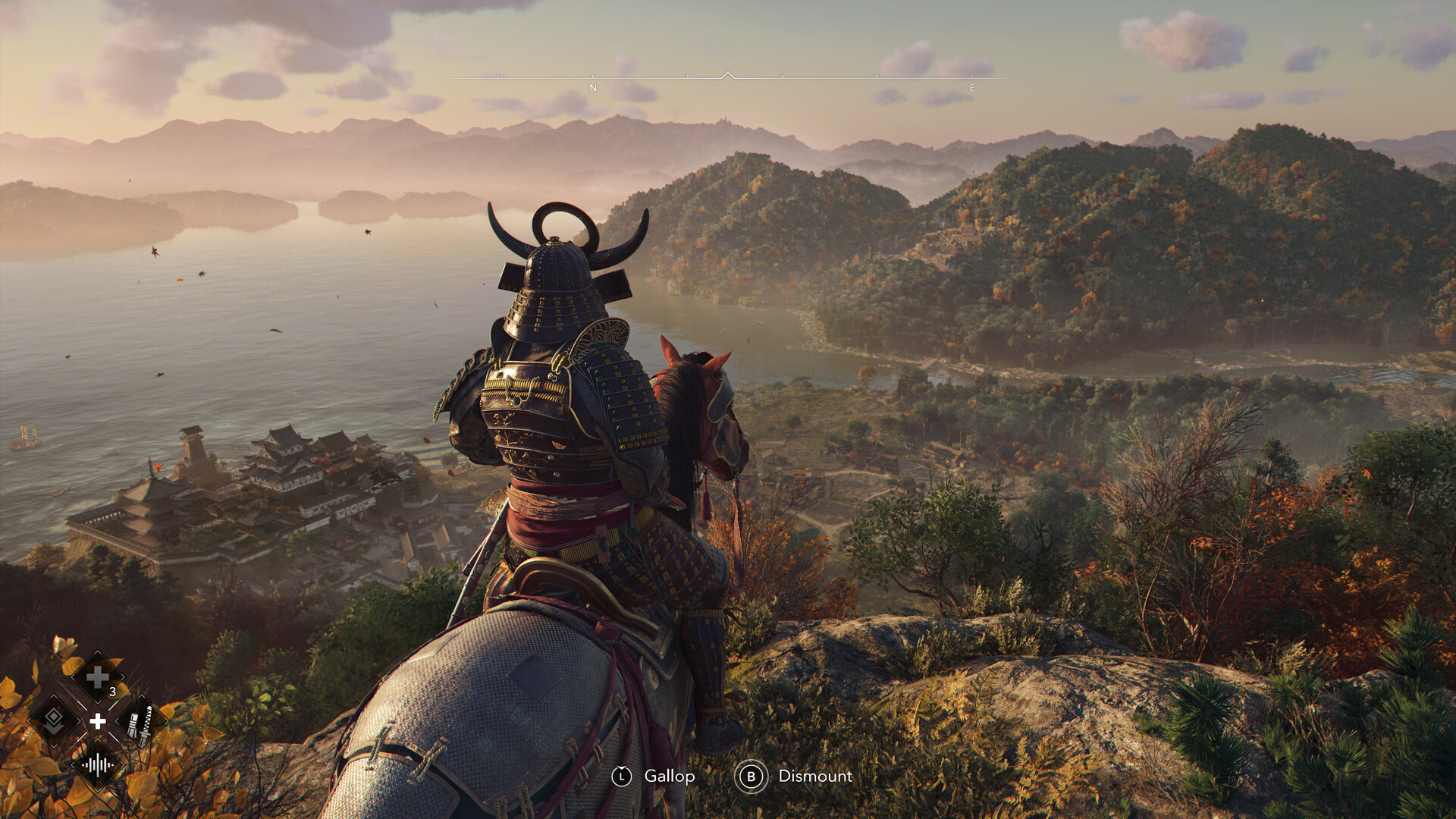
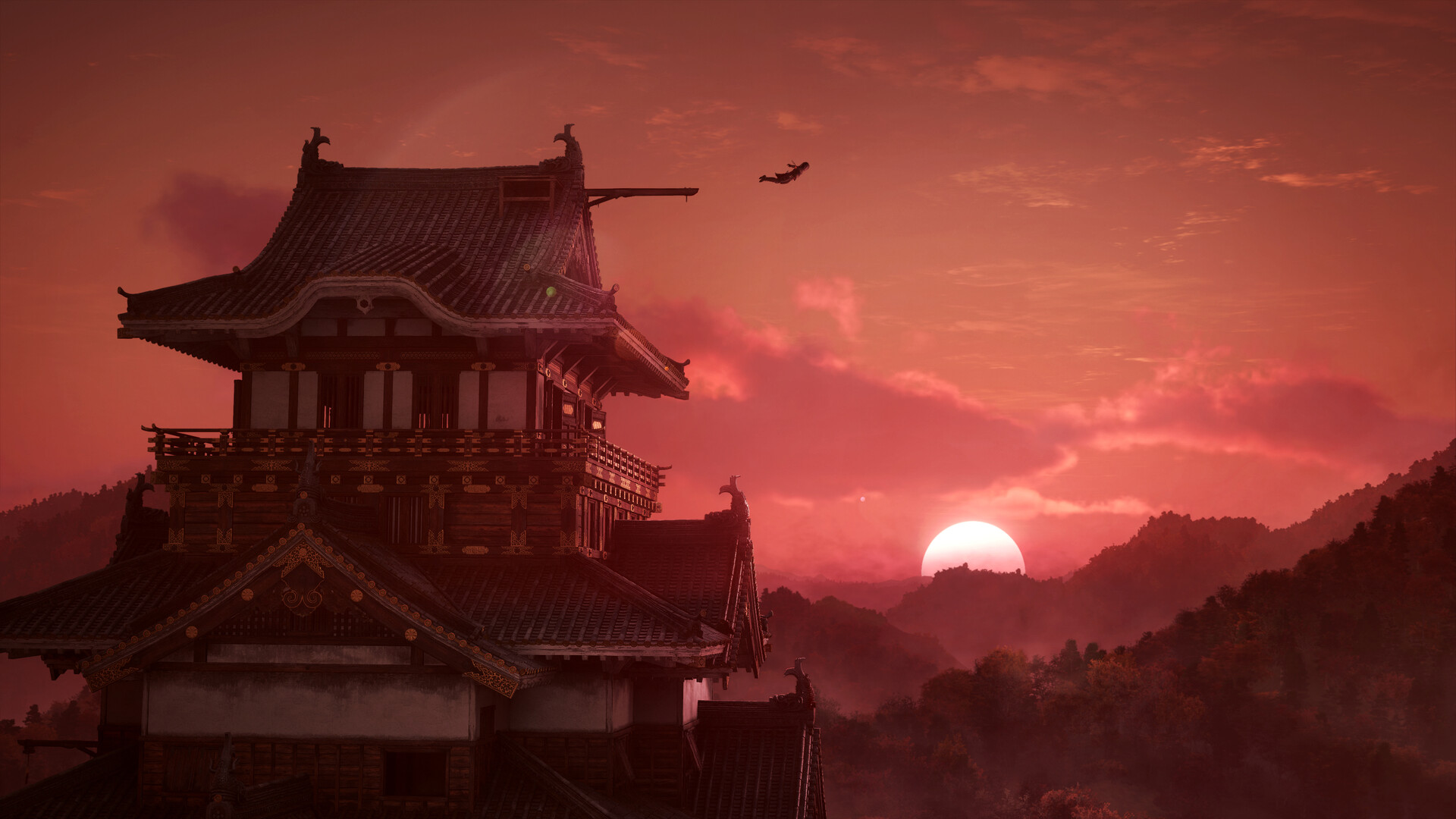
There is no denying that Feudal Japan is an astonishing backdrop. The attention to detail in Shadows is extraordinary. Seasonal transitions bring the world to life—cherry blossoms fluttering in spring, torrential rains marking the monsoon season, and fiery red leaves carpeting the autumn roads. The atmosphere shifts organically, creating a rhythm that keeps exploration soothing even after long sessions. Simply wandering through these environments feels meditative. The light filters through paper walls, streams trickle quietly under bridges, and distant bells echo from temples. It’s an audio-visual symphony of calm.

Even though I emphasize the settings I love, the world starts to lose its newness after many hours of play. I put in 60 hours before I realized the world was built around a repeating pattern. I could visit snow-draped hamlets or huge, sprawling cities. I could visit all the city-states, and still the same styles of buildings and settlements would begin to repeat. The game’s early bardic magic of discovery declines to a dull routine. The size of the world works against its uniqueness, making it hollow. By the time I reached 100 hours, I could not believe the game still had more shrines to see, more mountain passes, more scenic overlooks.

This is not to say the sense of discovery was unrewarding. The reward was there, but the source had diminished. The sense of mystery that made Odyssey so compulsively prodigious is explored, but it does not seem to be the fascination with Scatter. I missed more of Odyssey’s stranger, overtly science-fiction, and techno-saturated story of the game. The absence of the techno challenged the pseudo-magical narrative in Shadows and left it too grounded for its own good.
Assassin’s Creed Shadows

Traversal and Navigation: A Fractured Flow

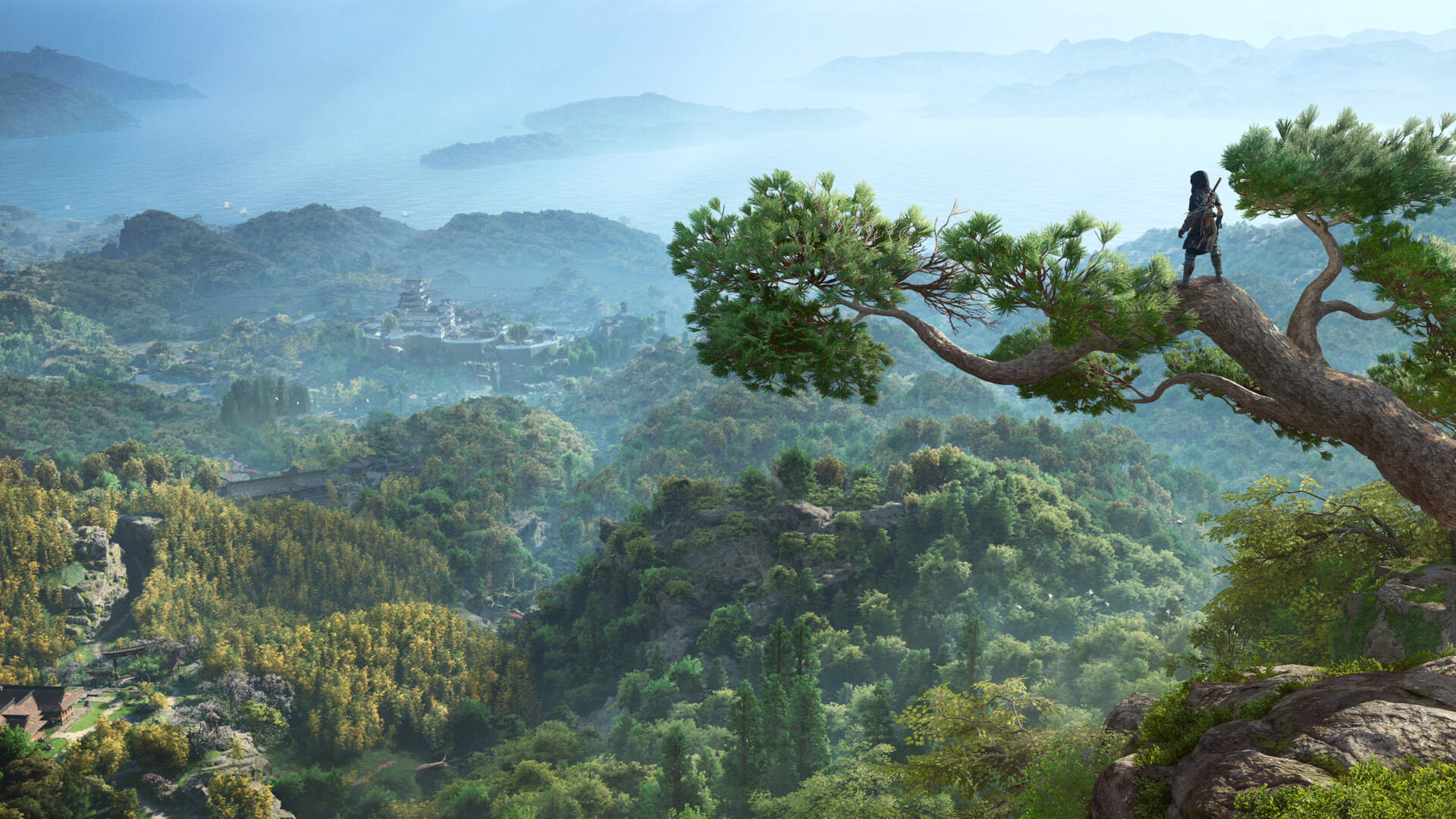
Poor traversal options are what hinder Assassin’s Creed: Shadows the most. Visually, the world is gorgeous, but there is dissonance if you are exploring, and freedom is curbed. When you cannot climb something, there is something arbitrary about that design choice, especially after the series built expectations on the ability to climb and explore. In those instances, you hit an invisible wall, you are forced to turn around, and retrace your steps to find the “correct path.” When open-world design has been perfected to encourage free exploration, these moments are jarring. You can see most of the world around you, but cannot interact and reach even simple goals like climbing temple roofs.

Stunning mounted and vehicle animations do little to alleviate the pain. You can end up with rough auto navigation in the mountains and be forced to steer the vehicle down narrow paths. By the end of a playing session, the build-up from these moments can lead to achievements to make even the most rewarding quests feel like a chore. The atmosphere, stealth mechanics, and world-building are still amazing, but the lack of good traversal mechanics still feels like a step back.## Missed Opportunities for Consequence Systems

The game implements a kind of Wanted system, reminiscent of its forerunners, albeit in a restricted capacity. Actions that warrant a harsh reaction from the world leave a sense of void. The tension of the chase, becoming the hunted, goes unfulfilled. Interactions with the pursuants lack the adrenaline needed, the anticipation. It narrows the illusion of a stunningly reactive world around the player. I genuinely hope Ubisoft builds on this in the updates that follow. The groundwork is there; it just needs real consequences to create a sense of completion.
Assassin’s Creed Shadows

The Artistic Heartbeat

Even with these persistent flaws, what moves Assassin’s Creed Shadows beyond its flaws is its bare atmosphere. Every frame is almost painterly, and every sound intentional. The interplay of wind and different weather conditions, together with light, produces a sense of place that few games achieve. When a game world makes you want to stand, simply watch the rain, and savor the moment, it’s something special. There is artistry in the world's design that deserves to be praised in full.

I appreciate the dialogue system and the way conversations flow and develop. Immersive dialogue design is a big improvement, replacing awkward conversations with soft gestures, fluid changes, and emotional holds. This, coupled with the wonderful performances from the Japanese voice actors, provided an authenticity and tenderness that enriched the whole story. I truly cared about Naoe and Yasuke by the end because their character arcs were treated with a real sincerity and grace.
Assassin’s Creed Shadows

The Verdict: A Long Journey Worth Taking

I’ve been playing Assassin’s Creed Shadows for more than a hundred hours, and I can say that I have absolutely no regrets. I’ve received more than my money’s worth. It’s a highly enjoyable game, one that fulfills its promise to allow players to experience the authentic fantasy of a shinobi and samurai in one of the most beautiful worlds crafted by Ubisoft. The stealth is a great improvement, the world is gorgeous, and the combat is satisfying, making it a must-play for those who buy cheap PS4 games and still expect top-tier quality.

The Shadows' experience is August’s paradox. What initially captures your imagination eventually becomes sameness. What seems impressively vast eventually feels insubstantial. Fortunately, repetition is mitigated by maintaining the quality of the experience. It does not quite break the boundaries of the open-world, but it meaningfully improves the formula.

I hope the future game updates focus on community building, robust game world morality, and, as a consequence, game depth. Expanded community building and game world depth would mean game goals and community-building focus goals. Refined Shadows would mean game goals and community-building focus goals. Expanded community building and game world depth would mean game goals and community-building focus goals. Refined Shadows would mean game goals and community-building focus goals.

It’s been a pleasure playing and engaging with the numerous ideas it presents and the contrasts it evokes. The journey Shadows takes you on makes it a memorable experience with a strong light. It’s beautiful. I rate it a 9 out of 10.
Prior to assessing the value of this title, I must admit my bias: I have always found reason to enjoy the Assassin’s Creed games as the franchise creates a historical tourism experience. To me, the most interesting aspects of the franchise have always been the ability to “walk through history,” as you put it, rather than the meta-narrative or the combat systems. I can recall when I played Origins, I enjoyed every moment of my time in Alexandria, while in Odyssey, I loved every moment of my time in the Parthenon. I’ve always considered these games as my portals to lost worlds. Naturally, when Assassin’s Creed Shadows was set during the Sengoku period in a realised Japan, most of my predilections were already sold. My enjoyment was always going to hinge on how well the title captures the time and the people.

The internet has started to take a particular dislike to Shadows. It seems that some people have made a quick habit of chopping up outdated “grind” clips, selecting a few game glitches, and making scathing comments about a game they likely haven’t played. After all, it’s a lot easier to get internet fame by sparking outrage than by spending fifty hours playing and studying a beautifully crafted piece of art that takes place in 16th-century Japan. Most of this outrage is created by raging harvester content creators who take one flaw of many and crank it up to ten, then proclaim it to be the entire experience. This is not a critique; it is performance art. Of course, Shadows has flaws. I will not deny that. But to say it is an empty, repetitive slog is to miss what makes it special: the sheer love for historical architecture, the deep respect for Japanese culture, and the powerful atmosphere that draws you in once you stop doomscrolling and start playing, something players who buy cheap PS4 games will truly appreciate once they give it a chance.

Assassin’s Creed Shadows

The World: A Living Scroll of Feudal Japan

For me, this is easily the strongest aspect of Shadows. The world is not just big; it is coherent. Every mountain shrine, every misty rice field, every castle compound feels built with reverence for the land and its people. I have lost hours simply walking through villages as the rain falls, listening to monks chant in the distance, or watching farmers labor in the fields beneath cherry blossoms. The way sunlight filters through the shoji doors inside a daimyo’s residence made me pause, not once, but dozens of times.

Kyoto, in particular, is a triumph. It breathes. The layered rooftops, the subtle changes in architecture from temple districts to merchant quarters, even the faint echoes of wooden sandals on cobblestones—all of it feels painstakingly researched. You can tell Ubisoft’s historians and artists poured years into this reconstruction. For someone like me, who values games as educational tourism, Shadows delivers an experience I’ve longed for since Odyssey, one that even players who buy cheap games will find rich in cultural and historical detail.

I do see some repetition in the design of castles and shrines. Yes, many fortress layouts do seem copy-pasted, and some elite guards do seem cloned. It is disappointing, especially when the first few encounters make such a strong impression. Still, while repetition of the structure is the case, there is the beauty of the world they constructed. When you stand at the top of Himeji Castle and look out over the valley at sunset, that view is worth much more than any checklist complaint.

Assassin’s Creed Shadows

Stealth, Customization, and the Art of Shadow

Mechanically, Shadows gives me a lot of joy as long as I play the way I like best: quietly, intelligently, invisibly. Stealth has finally regained its throne. The clunky systems of the recent entries that turned assassinations into awkward brawls are gone. Now, darkness, sound, and the environment all matter again. Yes, hiding in tall grass is useful, but using rain or thunder to mask your footsteps is brilliant. The absence of lighting is also useful: snuff out a lantern, and you create a pocket of invisibility.

Buildcraft is yet another area that deserves recognition. The quiet satisfaction that comes from tuning your gear, experimenting with the weight of your armor, skill trees, and perks, and then discovering an optimal configuration that allows you to take down high-ranking enemies with a single, calculated blow is one of the great pleasures of this game. When all the pieces of the puzzle fit, it’s an earned triumph. The stance, the timing, and the angle of approach all fall into place. It is a thing of skill and elegance, and it resonates so deeply with the essence of the shinobi fantasy.

There are people who think the hard-charging samurai variant is overly simplistic, and I’d agree with that statement. The tension that adds excitement to the best moments of Assassin’s Creed is removed when you charge straight ahead. But that is not so with Shadows. There, the choice is to forego the bulldozing approach and take the high level of patience and mastery instead. Far more satisfying than any boss fight is using the world itself as your instrument.

Assassin’s Creed Shadows

Story and Historical Depth

This is where my admiration begins to wane. While Shadows excels in world-building, its story is not at the same level. The main narrative feels like it is just going through the motions, point to point, without giving us a real human pulse. We encounter historical Japanese figures—daimyo, spies, and monks—but far too often, they are just tools to provide exposition rather than people we can empathize with. I missed the meaningful historical engagement with people like in the earlier titles with Cleopatra or Socrates, where the world felt alive and intellectually stimulating. The historical figures here are mere specters with little real presence.

That said, there are still some beautiful narrative instances. A few side quests describe with quiet poignancy the philosophy of bushido and the tension that exists between honor and survival. The story of a painter who risks everything to capture the beauty of war and its horrors is one of those captivating narratives that lingers in one’s mind for days. Shadows has its literary flashes of brilliance. I only wish that the main narrative arc had the same depth as its beautiful setting.

Assassin’s Creed Shadows

Technical and Immersion Issues

Absolutely the most frustrating thing for me is the inconsistencies with the audio. As always, I switched to the Japanese audio right away—I cannot stand the English dubbing, which is a parody of the culture it was trying to represent. But like always, switching the audio does come with its own frustrations. The gestures do not always match the speech, and the subtitles go out of sync, and sometimes the lips seem to follow a ghost track. These are immersion killers in a game that does everything to suck you into its world. The game forces you to watch a solemn exchange between two samurai, and while they do their performance, the facial animation lags half a second. The difference is heinous.

The immersion issues do not ruin the experience, but they do chip away at it, and I cannot go without mentioning them. I do notice the issues with frame pacing in the center of denser cities, the overgrown foliage, and the cutscene foliage pop-in. Ubisoft's ambition does push the hardware to the limit. It does seem to be the case here. The immersion issues do not ruin the experience, but they do chip away at it, and I cannot go without mentioning them. When the immersion works, it works, and when it breaks, they feel like you are falling out of a dream, and it is not pleasant.

Assassin’s Creed Shadows

The Grind Debate: Misunderstood Progression

Critics complain about the grind in the game. They say there's too much repetition before getting the most basic skills. I think this is an exaggeration. I get that it’s still Odyssey, but I think it encourages players to explore the world, instead of fast-tracking it. The game gives natural skill points through discovery, shrines, challenges, and assassinations. The idea of “grinding” is a misunderstanding, and I think it's because most players tend to rush. The game actively rewards those who explore.

The outrage about purchasable map reveals and “maphacks” is also understandable, but it is optional. You can ignore it, and the world still unfolds perfectly fine. The map microtransactions do not have to affect gameplay in any way. I get the philosophical approach of not having microtransactions, but the map is still handcrafted. I get that it's a stain on the handcrafted map, but the philosophy of it is still “just let it be.”

Assassin’s Creed Shadows

A World Worth Defending

Assassin’s Creed: Shadows has some issues, yet it remains one of the most immersive, beautiful, and culturally rich historical games I have played. I feel the negativity it gets is disingenuous, and a stream of regurgitated disdain from those who did not give it a thoughtful try. I understand the criticism thrown at it; however, I feel that, for history lovers like myself, the game offers a substantial reward. A fascinating history that is alive and accessible through the many layers to explore, learn, and experience within the game.

Once, I stood at a digital torii gate at dawn. I breathed deeply, recalling places I have been and listening to the approaching wind with dreamy anticipation. I was amused that, whether in digital representation, spoken, or sung, the world that I was in the game was gracious of, and celebrated, the real world I inhabited. For these reasons, I defend and play these games.

Assassin’s Creed Shadows

Final Verdict

As a historical experience, an act of digital preservation and cultural reverence, and an enjoyable game, I would give Assassin’s Creed Shadows a score of 8.5. Even before, I have rated it below Origins at 9.2. I still believe it is the gold standard and have rated it higher compared to weaker, more recent, and directionless entries in the series that have forgotten its purpose. Shadows is a step up from those entries. It is a digital representation of a world I appreciated and respected in real life.

To my fellow history lovers: this is your Japan. Walk it slowly. Listen carefully. Block out the distractions. For you, this is not just a game – it is a pilgrimage.

To everyone else: If you must, wait for a discount. But don’t let the anger merchants deprive you of a journey worth taking.

To begin, this review might be lengthy, so feel free to grab a drink. I’ve spent enough time on Shadows to understand what Ubisoft was trying to achieve. I can see the ambition, but the execution was far from perfection. As someone who spent considerable time on open-world RPGs, especially those like Origins, Odyssey, and Valhalla, I had a certain frame of reference. I was expecting some sense of progression and the feeling of freedom that comes from RPGs, and the feeling of climbing a power curve. It was a mixed experience. Shadows is visually beautiful, and I enjoyed the stealth mechanics immensely. The shinobi elements were nice. But the experience was undermined by shallow content, disjointed narrative, and the most poorly designed combat I’ve experienced in the series in the last several years, something even players who buy cheap PS4 games might find disappointing despite its visual appeal.

Right off the bat, Shadows sets itself apart with its dual protagonists: Naoe, the shinobi, and Yasuke, the samurai. On paper, this contrast should provide a refreshing gameplay loop: stealth and speed vs. brute strength and discipline. In practice, Naoe feels like the star of the show. Her movement is absolutely electric. The parkour animations are silky smooth, full of acrobatic flair, and deeply satisfying to control. Every vault, wall-run, and rooftop dash channels that idealized ninja fantasy that has been craved for from this series for years. She feels like the natural evolution of what parkour in Assassin’s Creed should be.

Yasuke can be a little disappointing in some aspects, compared to his environmental interactions, which are amazing in some ways. I like the physicality of his environmental interactions. Specifically, when he busts through doors and smashes his way through obstacles, I like the way it translates to the player's physicality with the controls. I think the combat animations could use work. I think it is very noticeable when transitions from a series of light hits are missing. This is especially noticeable when compared to some of the melee combat in Ghost of Tsushima.

Assassin’s Creed Shadows

Parkour: The Brightest Blade in Shadows’ Arsenal

Want to take a wild guess on what I have to give credit to Shadows on: the parkour system. Not only is the parkour system in Shadows flashy, it is purposeful. This is an indication that the developers have an appreciation for the craft. Naoe’s work is accurate. The flow of the movement is a perfect blend of grace and lethality from a shinobi. The only downside is that the brilliance of the systems is in work, undermined by the size of the world itself, not the system. In Shadows, Japan is huge. Enormously so. Lush forests, fog surrounding the valley, and wooden temples. The world is pretty. But, in Japan, it's too pretty. The size of the world is so grand that it is visually stunning, but limited. Traversal.

You cannot parkour through trees the way you used to in Assassin’s Creed III. It’s a missed opportunity. Picture leaping from branch to branch in a bamboo forest and silently stalking your target. Instead, you are still forced to over-rely on your mount to cover ground. The flow of the parkour system is broken. I want to be able to move from one town to another without touching the ground. It is the dream, and while this game is exciting, the dream is still out of reach, leaving even players who buy cheap games wishing for a smoother traversal experience.

Assassin’s Creed Shadows

Stealth: Finally Done Right

Stealth in Assassin’s Creed Shadows is the best the franchise has to offer. It’s not just functional, it’s also enjoyable. The detection system is fair, the AI behavior is reactive but not overpowered, and the tools you have are flexible. Shadows nails that feeling of tension from the combination of dropping from rafters, slipping through shadows, and using environmental tricks to remain undetected. For once, I found myself choosing stealth, and the game didn’t demand it. It was simply fun. Naoe’s animations do contribute a lot to this. Everywhere she goes and every move she makes has a sense of spirit and intention, and she encapsulates the shinobi and ninja archetypes with all the cleverness and agility there is. Ubisoft’s attention to Naoe’s design really shows, from top to bottom. It would have been a near-masterpiece in this regard if Shadows leaned more towards her stealth-focused gameplay and tried less to balance it with the chunky combat of Yasuke.

Assassin’s Creed Shadows

This is quite a drastic dip in quality for the series. Combat in Shadows is

Not very good. It is not broken, but the experience is a slog, making the gameplay feel like a chore. Even on the hardest difficulty setting, the combat is minimally engaging. Enemies become damage sponges, meaning combat loses all rhythm. After perfect parries, you expect to be rewarded with unique finishers or some smooth transitions to keep the combat flowing, but you get the satisfaction of a standard attack.

A concept like Yasuke’s is very promising, but there is a disparity between the expectation and the reality of the game. A massive and powerful combatant should feel unstoppable, but instead of generating seamless movement, the combat system encourages a slow and laborious style. Engaging combat increasingly becomes more difficult to appreciate when the systems become so unresponsive, as is the case with Shadows. Combat should not be a chore, and there is no other way to say it. Shadows is a backward step for the series.

Assassin’s Creed Shadows

Story and Structure: Disjointed and Disappointing

If you come to Shadows expecting to play through an engaging story, then I must sadly inform you that you will be disappointed. The story is disjointed, and each mission feels separate from the last, meaning that the pacing feels all wrong, and I began to lose interest two-thirds through the game. I felt like the players were offered too many disparate ideas and, rather than integrate them, the players were just left with disparate missions.

To add to the negative experience, the English dub is simply horrible. The performers all sound synchronized, leaving the visuals in a sort of purgatorial state, coupled with an absence of emotion. I had to switch to the Japanese version of the game, and while it is still better, it still does not come close to a good game experience.

Assassin’s Creed Shadows

The World: Beautiful But Also Shallow

In terms of beauty, the world is unbelievable, and there is no other world that can compete with it. The beauty of the world is incomparable. The realism is mind-blowing, with the reflections on the armor, the rain, and the environmental details. The visuals push the limits of the gaming hardware, and the gaming experience is extraordinary on the high-end setup with the DualSense controller. The haptic feedback is phenomenal. You can feel the rain on the rooftops, the tension of the sword when Yasuke is about to attack, and the grass when Naoe is walking. The gaming experience is fantastic with the advanced controller features, and there is no other gaming experience that makes the user fall in love with gaming. The controller features improve the gaming experience tremendously, and it is highly recommended to use them.

There is no doubt the world is beautiful, but the world is also empty. The world feels empty. Traversal is also tedious, and checking the waypoint is also tiresome. There are breathtaking regions with empty and meaningless activities. It also feels like Ubisoft placed unnecessary fluff. The collectible papers with the unlockable skills feel like unnecessary busywork. The padding seems unnecessary, even for Ubisoft. The fluff content feels excessive this time. Ubisoft also seems to have placed unnecessary fluff. The excessive fluff content also feels unnecessary, and even for Ubisoft, the padding feels excessive.

I was able to play some of my run on a Steam Deck, and for the most part, Shadows was well optimized for it. No, you won’t match the visual fidelity of the highest-tier rigs, but it is smooth enough to enjoy on the go. Load times are reasonable, and the world is visually appealing even on the smaller screen. For a game of this scale, this is a pleasant surprise and a big plus in my book.

Assassin’s Creed Shadows

Final Thoughts: Worth It for the Shinobi Fantasy

There’s so much to love about Assassin’s Creed Shadows, but I can’t shake the feeling that I’m going to be conflicted about this game for a while. I appreciate the freedom of movement and how beautifully the game is designed. There’s that immersion that is felt through a good controller setup, and the game tailors to that feeling. On the downside, the fragmented story doesn't feel like much of a tale, the combat has little to no engagement, and the world, while aesthetically designed, has no rich content that captivates the player. An RPG fan coming to this title, especially one that appreciates rich game mechanics, will find little to appreciate. Thankfully, for the player who loves the experience of a shinobi, this title will more than provide the fantasy of slipping through shadows and abandoning to the rooftops of feudal Japan.

I really had fun at the end of the day, and it was enough to feel satisfying, even if it wasn’t all of the time. Assassin’s Creed: Shadows is, by all means, a good game, although it isn’t the masterpiece it could have been. It is beautiful, it is ambitious, and at times it is even exciting, but it is also impeded by lackluster combat and mediocre storytelling. For now, I will refer to this as a good, first attempt at Japan, and I will continue to expect that the subsequent installment will finally provide the fluid RPG style that is supernatural and fully realized that this setting definitely calls for.