Assassin’s Creed Shadows Review: A Flawed but Beautiful Window into Feudal Japan
Prior to assessing the value of this title, I must admit my bias: I have always found reason to enjoy the Assassin’s Creed games as the franchise creates a historical tourism experience. To me, the most interesting aspects of the franchise have always been the ability to “walk through history,” as you put it, rather than the meta-narrative or the combat systems. I can recall when I played Origins, I enjoyed every moment of my time in Alexandria, while in Odyssey, I loved every moment of my time in the Parthenon. I’ve always considered these games as my portals to lost worlds. Naturally, when Assassin’s Creed Shadows was set during the Sengoku period in a realised Japan, most of my predilections were already sold. My enjoyment was always going to hinge on how well the title captures the time and the people.
The internet has started to take a particular dislike to Shadows. It seems that some people have made a quick habit of chopping up outdated “grind” clips, selecting a few game glitches, and making scathing comments about a game they likely haven’t played. After all, it’s a lot easier to get internet fame by sparking outrage than by spending fifty hours playing and studying a beautifully crafted piece of art that takes place in 16th-century Japan. Most of this outrage is created by raging harvester content creators who take one flaw of many and crank it up to ten, then proclaim it to be the entire experience. This is not a critique; it is performance art. Of course, Shadows has flaws. I will not deny that. But to say it is an empty, repetitive slog is to miss what makes it special: the sheer love for historical architecture, the deep respect for Japanese culture, and the powerful atmosphere that draws you in once you stop doomscrolling and start playing, something players who buy cheap PS4 games will truly appreciate once they give it a chance.
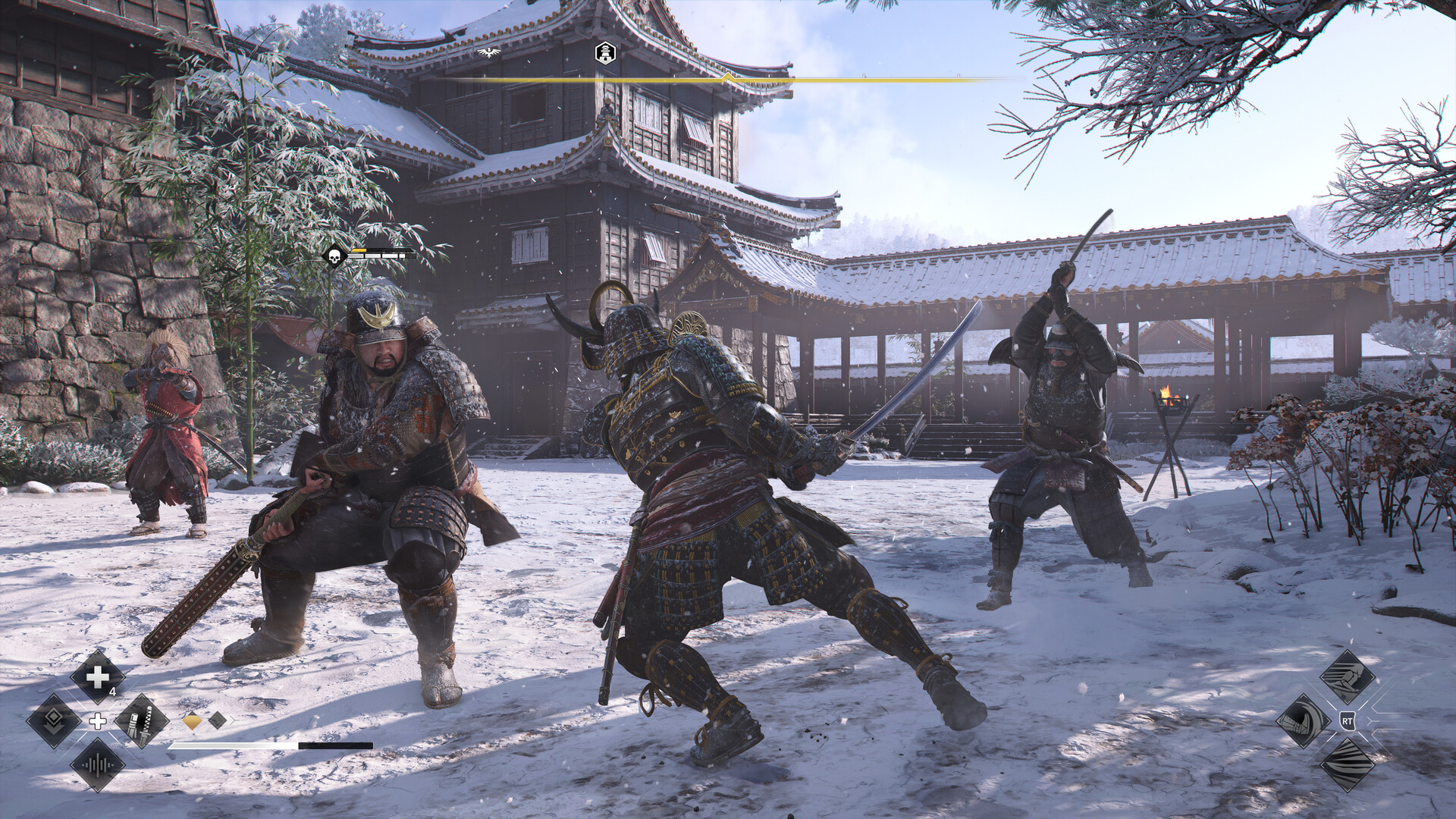
The World: A Living Scroll of Feudal Japan
For me, this is easily the strongest aspect of Shadows. The world is not just big; it is coherent. Every mountain shrine, every misty rice field, every castle compound feels built with reverence for the land and its people. I have lost hours simply walking through villages as the rain falls, listening to monks chant in the distance, or watching farmers labor in the fields beneath cherry blossoms. The way sunlight filters through the shoji doors inside a daimyo’s residence made me pause, not once, but dozens of times.
Kyoto, in particular, is a triumph. It breathes. The layered rooftops, the subtle changes in architecture from temple districts to merchant quarters, even the faint echoes of wooden sandals on cobblestones—all of it feels painstakingly researched. You can tell Ubisoft’s historians and artists poured years into this reconstruction. For someone like me, who values games as educational tourism, Shadows delivers an experience I’ve longed for since Odyssey, one that even players who buy cheap games will find rich in cultural and historical detail.
I do see some repetition in the design of castles and shrines. Yes, many fortress layouts do seem copy-pasted, and some elite guards do seem cloned. It is disappointing, especially when the first few encounters make such a strong impression. Still, while repetition of the structure is the case, there is the beauty of the world they constructed. When you stand at the top of Himeji Castle and look out over the valley at sunset, that view is worth much more than any checklist complaint.
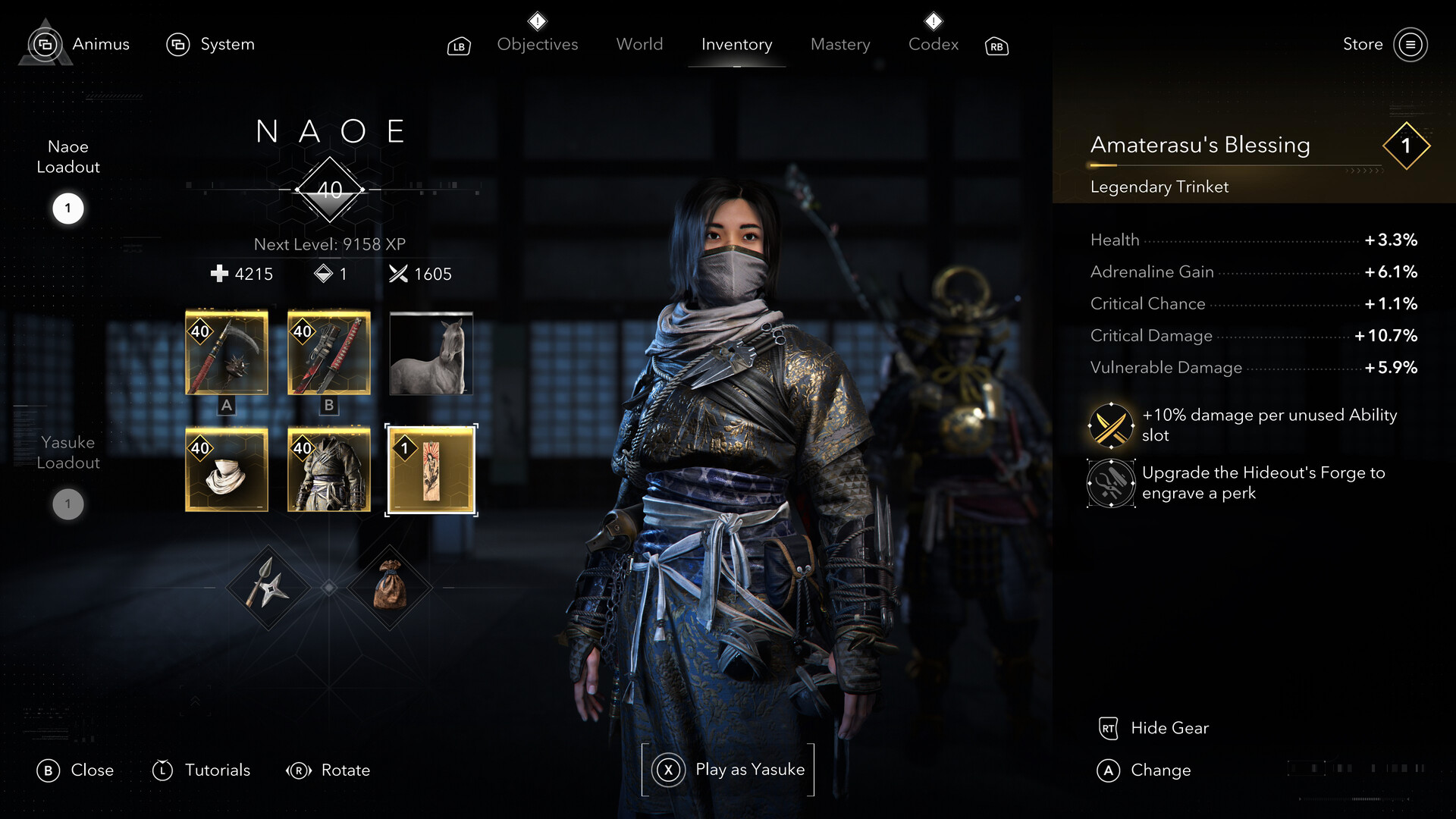
Stealth, Customization, and the Art of Shadow
Mechanically, Shadows gives me a lot of joy as long as I play the way I like best: quietly, intelligently, invisibly. Stealth has finally regained its throne. The clunky systems of the recent entries that turned assassinations into awkward brawls are gone. Now, darkness, sound, and the environment all matter again. Yes, hiding in tall grass is useful, but using rain or thunder to mask your footsteps is brilliant. The absence of lighting is also useful: snuff out a lantern, and you create a pocket of invisibility.
Buildcraft is yet another area that deserves recognition. The quiet satisfaction that comes from tuning your gear, experimenting with the weight of your armor, skill trees, and perks, and then discovering an optimal configuration that allows you to take down high-ranking enemies with a single, calculated blow is one of the great pleasures of this game. When all the pieces of the puzzle fit, it’s an earned triumph. The stance, the timing, and the angle of approach all fall into place. It is a thing of skill and elegance, and it resonates so deeply with the essence of the shinobi fantasy.
There are people who think the hard-charging samurai variant is overly simplistic, and I’d agree with that statement. The tension that adds excitement to the best moments of Assassin’s Creed is removed when you charge straight ahead. But that is not so with Shadows. There, the choice is to forego the bulldozing approach and take the high level of patience and mastery instead. Far more satisfying than any boss fight is using the world itself as your instrument.
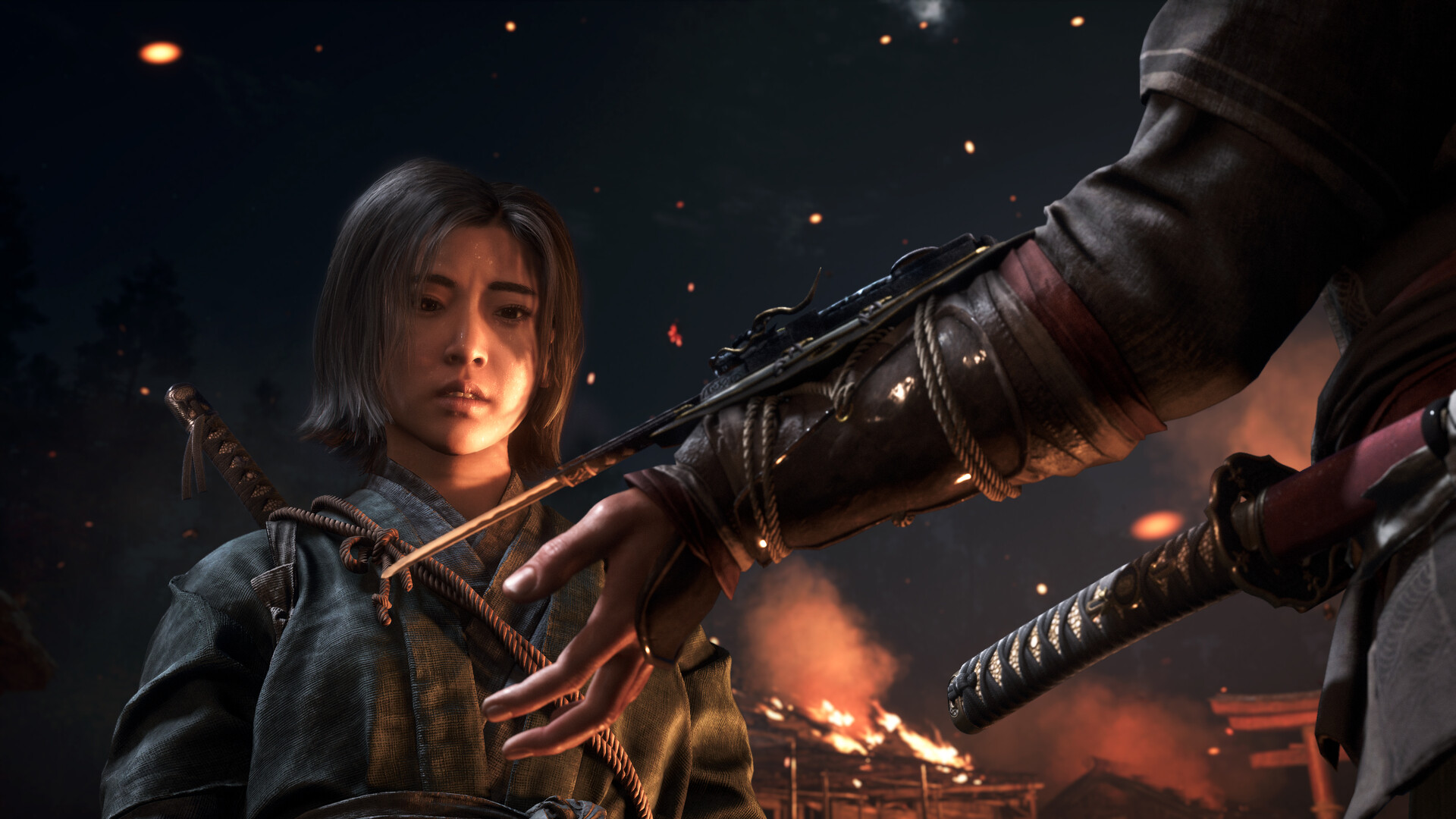
Story and Historical Depth
This is where my admiration begins to wane. While Shadows excels in world-building, its story is not at the same level. The main narrative feels like it is just going through the motions, point to point, without giving us a real human pulse. We encounter historical Japanese figures—daimyo, spies, and monks—but far too often, they are just tools to provide exposition rather than people we can empathize with. I missed the meaningful historical engagement with people like in the earlier titles with Cleopatra or Socrates, where the world felt alive and intellectually stimulating. The historical figures here are mere specters with little real presence.
That said, there are still some beautiful narrative instances. A few side quests describe with quiet poignancy the philosophy of bushido and the tension that exists between honor and survival. The story of a painter who risks everything to capture the beauty of war and its horrors is one of those captivating narratives that lingers in one’s mind for days. Shadows has its literary flashes of brilliance. I only wish that the main narrative arc had the same depth as its beautiful setting.
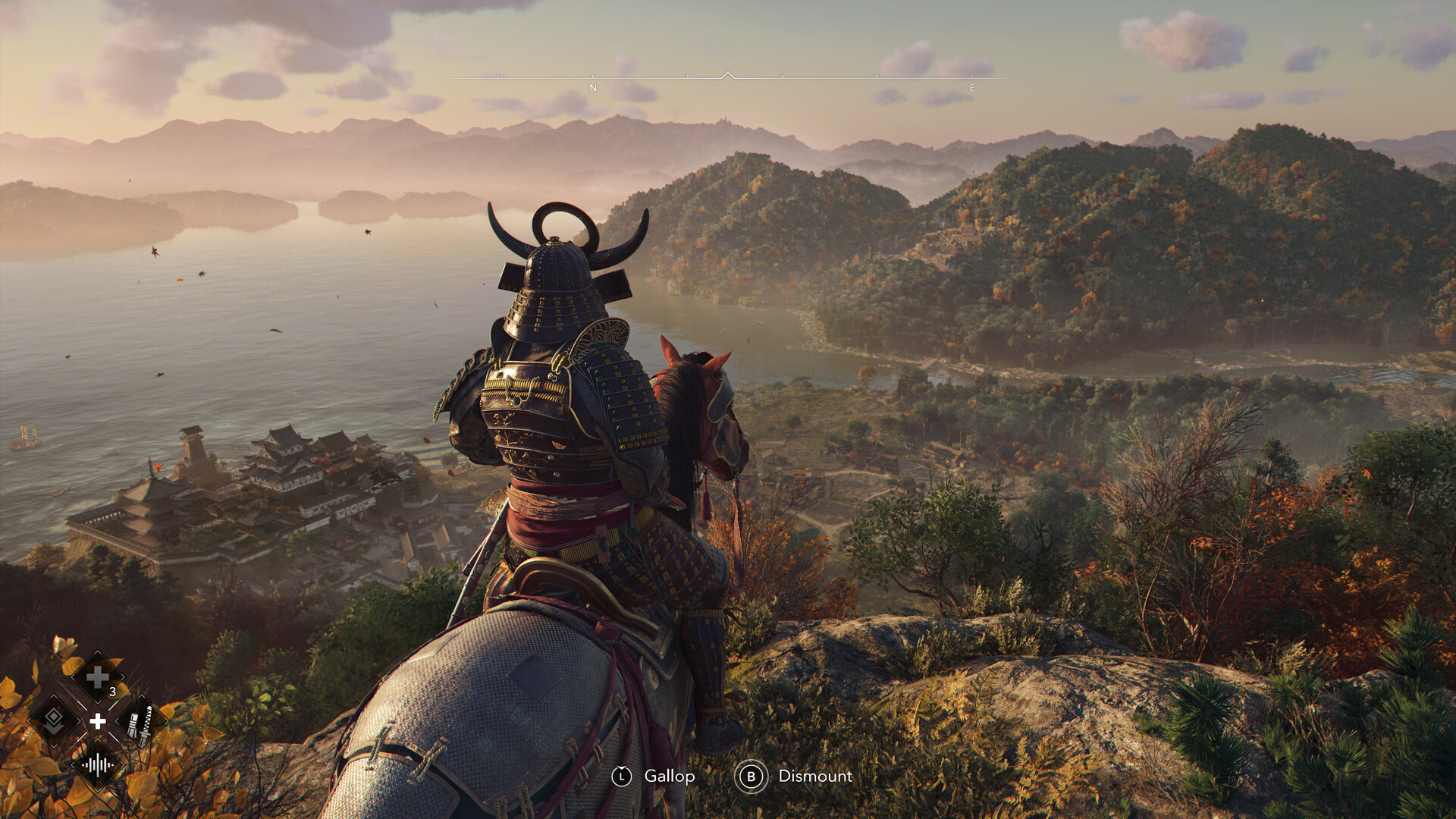
Technical and Immersion Issues
Absolutely the most frustrating thing for me is the inconsistencies with the audio. As always, I switched to the Japanese audio right away—I cannot stand the English dubbing, which is a parody of the culture it was trying to represent. But like always, switching the audio does come with its own frustrations. The gestures do not always match the speech, and the subtitles go out of sync, and sometimes the lips seem to follow a ghost track. These are immersion killers in a game that does everything to suck you into its world. The game forces you to watch a solemn exchange between two samurai, and while they do their performance, the facial animation lags half a second. The difference is heinous.
The immersion issues do not ruin the experience, but they do chip away at it, and I cannot go without mentioning them. I do notice the issues with frame pacing in the center of denser cities, the overgrown foliage, and the cutscene foliage pop-in. Ubisoft's ambition does push the hardware to the limit. It does seem to be the case here. The immersion issues do not ruin the experience, but they do chip away at it, and I cannot go without mentioning them. When the immersion works, it works, and when it breaks, they feel like you are falling out of a dream, and it is not pleasant.
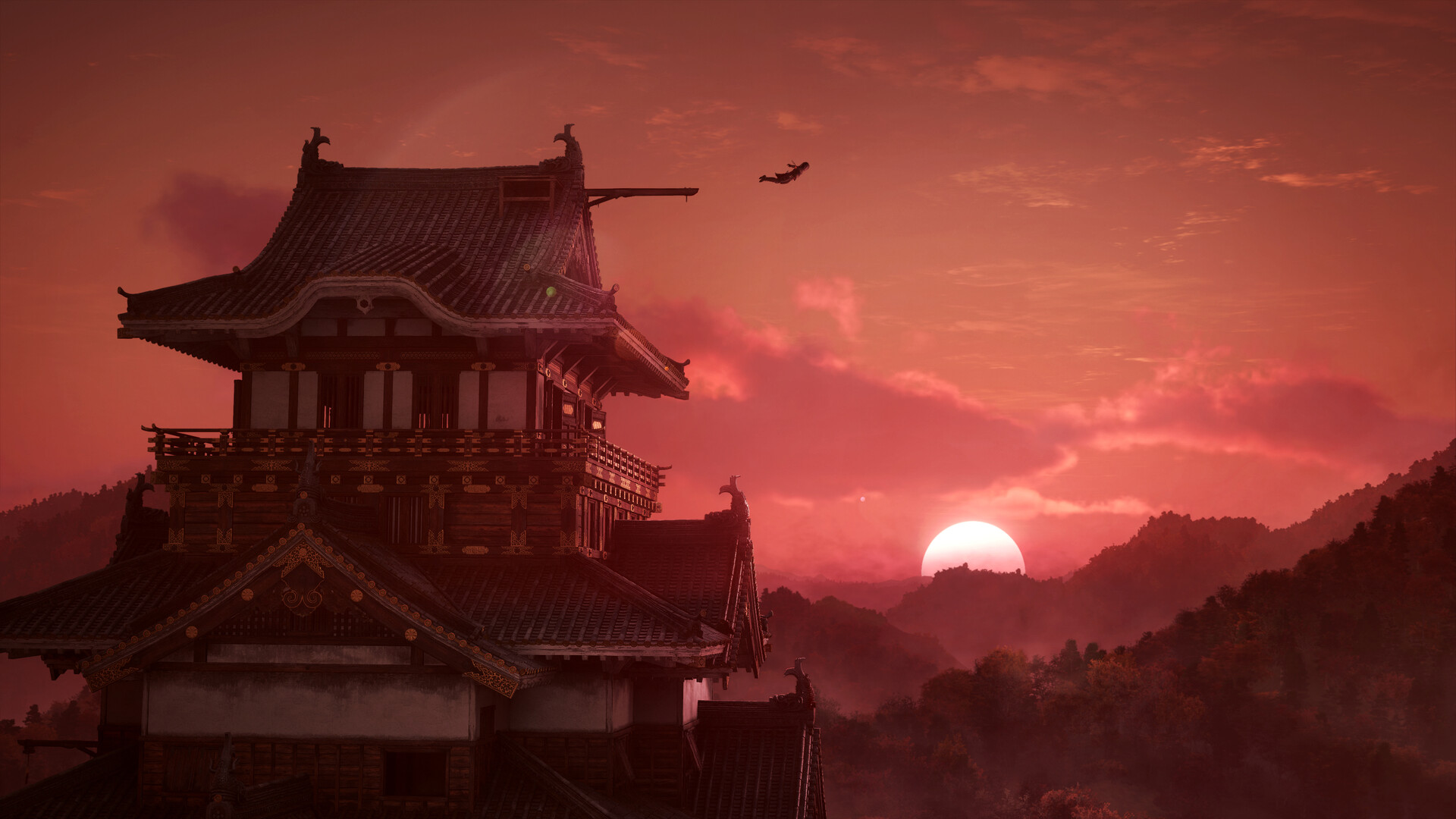
The Grind Debate: Misunderstood Progression
Critics complain about the grind in the game. They say there's too much repetition before getting the most basic skills. I think this is an exaggeration. I get that it’s still Odyssey, but I think it encourages players to explore the world, instead of fast-tracking it. The game gives natural skill points through discovery, shrines, challenges, and assassinations. The idea of “grinding” is a misunderstanding, and I think it's because most players tend to rush. The game actively rewards those who explore.
The outrage about purchasable map reveals and “maphacks” is also understandable, but it is optional. You can ignore it, and the world still unfolds perfectly fine. The map microtransactions do not have to affect gameplay in any way. I get the philosophical approach of not having microtransactions, but the map is still handcrafted. I get that it's a stain on the handcrafted map, but the philosophy of it is still “just let it be.”
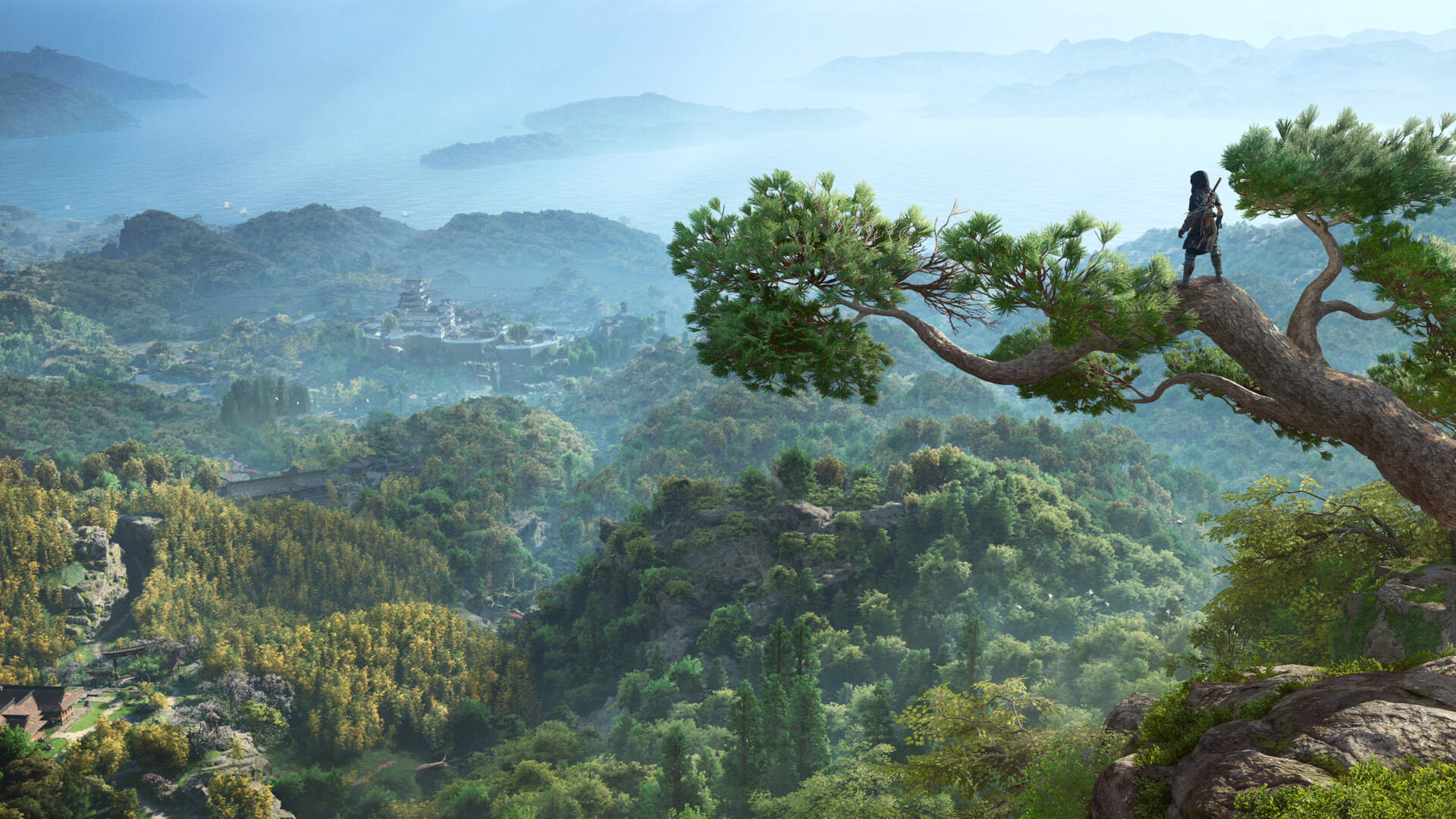
A World Worth Defending
Assassin’s Creed: Shadows has some issues, yet it remains one of the most immersive, beautiful, and culturally rich historical games I have played. I feel the negativity it gets is disingenuous, and a stream of regurgitated disdain from those who did not give it a thoughtful try. I understand the criticism thrown at it; however, I feel that, for history lovers like myself, the game offers a substantial reward. A fascinating history that is alive and accessible through the many layers to explore, learn, and experience within the game.
Once, I stood at a digital torii gate at dawn. I breathed deeply, recalling places I have been and listening to the approaching wind with dreamy anticipation. I was amused that, whether in digital representation, spoken, or sung, the world that I was in the game was gracious of, and celebrated, the real world I inhabited. For these reasons, I defend and play these games.
Final Verdict
As a historical experience, an act of digital preservation and cultural reverence, and an enjoyable game, I would give Assassin’s Creed Shadows a score of 8.5. Even before, I have rated it below Origins at 9.2. I still believe it is the gold standard and have rated it higher compared to weaker, more recent, and directionless entries in the series that have forgotten its purpose. Shadows is a step up from those entries. It is a digital representation of a world I appreciated and respected in real life.
To my fellow history lovers: this is your Japan. Walk it slowly. Listen carefully. Block out the distractions. For you, this is not just a game – it is a pilgrimage.
To everyone else: If you must, wait for a discount. But don’t let the anger merchants deprive you of a journey worth taking.