ascension2045

Even in a world drenched in blood, little pockets of grim beauty still slip through, like during the mission “Fool on the Hill.” You follow Evelyn Parker's last braindance all the way to a rundown Ripperdoc joint in Watson. Water leaks add to the murk, pooled by flickering neon that blinks like tired memories of better nights. I crept forward, each step heavy, using hacked cameras to catch glimpses of ghostly Evelyn reliving her final seconds in VR. She's still, then her face fractures, and you realize some horrors live far deeper than murder or a quick heist—they nest in a broken mind. That quiet turn left a worse ache than any surprise swipe from a beast in Rage, and the feeling trailed me all the way back to Arasaka's skyline.

A restless night in a smoke-saturated strip joint: low rain outside, high disco afterburn inside.

Fool on the Hill: Peering into Fractured Minds

Then there's the heavy Chippin In quest, which almost reads like the series finale for Johnny Silverhand. After all the brotherly ribbing and late-night chatter in stolen cars along diode-lit highways, the two of you end up facing Evelyn Parker's nightmare: an AI ghost hiding inside a dead Borrego Hotel. At its heart, knowing Cyberpunk 2077, the mission stitches together all the big ideas: longing for a lost rock era, the deadly art of soul-hacking, and that foggy spot where savior and villain blur.

Close frame on Dex DeShawn, wide smile shadowing behind it, a friendly mask resting lightly before the story shifts under the players feet.

Chippin' In: Johnny Silverhand's Final Act

As you and Johnny carve your way through glitching security bots, his private monologues keep landing like punches-raw anger at the System, regret over Irene Adler, and a drumbeat hunger for rebellion. When the rogue core finally cracks, the building starts to fold in on itself, rubble falling around you like steel hail, and escaping feels more cathartic than any blasted-out ghoul fortress I stormed in Fallout, another cheap PS4 game that I enjoy. That split second locks in the idea that Johnny, and by extension you, are strung to a fate much bigger than personal grudges. Its redemption chiseled from code, smoke, and bone.

Gigs live and die on choices, and this one feels thicker than chrome.

Digital Redemption: Hacking Chaos, Forging Destiny

Then there's the one called Transmission, a side gig I've brought up before, yet it really deserves a moment of extra praise for how big it swings. What starts off as an easy hack quickly spirals out of control, turning a quiet job into a full-blown city emergency. Your first stop is a back room meeting with the Voodoo Boys, where you slip a virus into their broadcast feed. Once that code slips loose, the Netscape inside starts to tremble, and reality on the streets doesn't lag behind: drones veer in every direction, rival crews grab weapons, and a reporter's live feed stutters into a manifesto soaked in malware.

View over V's shoulder in an Arasaka yard, red camera dots dancing on the screen as hackers scramble outside a razor-wire fence.

Transmission: When a Hack Ignites a City-Wide Inferno

The immediacy is almost dizzying; every quick hack I dropped felt less like a tap and more like a fuse running toward dynamite set miles away. I kept picturing the missile-launch mechanic from a Fallout 4 mod, except here the warheads weren't steel shells but reckless whispers of tangled data. By the time I shut down the node and stepped outside, flames were licking alleys, and you could almost smell the spark in people's faces. It made every other job I picked up that night feel gentle by comparison, a shadow that wouldn't let go.

The game holds up. Maybe as good as Shadow of the Erdtree. You find yourself dropped into a world that starts with a real physical punch, full of dirt under your fingernails and corners to poke your nose into, though the fighting feels a bit like a rhythmic dance rather than a brawl. And yet, the ending starts to feel a bit thin, like a worn-out sleeve that doesn't quite cover your wrist anymore. But the real problem is that once you’ve seen the magic, the spark doesn't always come back for a second round. Because the mystery is gone.

And a new era is kicking off, so you might as well be there to see the dust settle.

Thrilling Wizarding Battles in Hogwarts Legacy

I still get this strange, tingling heat in my chest when I stumble onto a piece of lore that I didn’t know was there. And it’s wild because I’ve lived in these books and movies for a lifetime, memorizing every dusty corner and every line of dialogue until they felt like part of my own skin, but this game keeps throwing fresh weight into my hands and making me look at the world through a brand new lens. So, for anyone who spent their childhood craving that heavy, paper-scented rush of a new chapter, this experience finally puts that weight back in your lap. It is the feeling of coming home. It is the feeling of finding a room you never knew existed.

Your story is waiting; go find the strange bits and pieces hidden in the stone.

Crafting and Brewing in Hogwarts Legacy

And the world looks absolutely stunning. You can feel the wind whistling past your ears when you’re on that broom, watching the stone towers of the school blur into a grey smudge while the world just opens up wide beneath your feet. But the best part is the way the land just rolls on forever without those jarring, screen-freezing pauses that usually break the spell of a good story. So, I rarely use the fast-travel points, preferring to feel the broom handle vibrate as I skim the rooftops of Hogsmeade or dip low into the damp, mossy shadows of the Forbidden Forest. Just pure, unbroken flight.

So, it's a saga of blood and wands, an epic tale that finally lets you feel the weight of a destiny you didn't ask for.

Form Unbreakable Bonds with Fellow Students in Hogwarts Legacy

The magic feels right in your hands too. I truly expected the spell-casting to feel clunky and stiff, like trying to write with a heavy branch, but the way they mapped the buttons feels as natural as breathing. And you can swap your spells in the heat of a scrap without your fingers getting tangled in a knot. It’s easy. Simple as that.

Care of Magical Beasts in Hogwarts Legacy

Hogwarts Legacy hits hard. You find yourself standing in the middle of a world where the cold, rough stone of the castle feels like it's actually pressing against your skin, and the way the light hits the moss on the walls makes the whole place feel ancient and alive. And when those 4K visuals kick in, the colors are so sharp they almost sting your eyes in the best way possible. So, you get this 120 FPS flow that feels as smooth as silk sliding through your fingers, making every turn of the camera feel effortless and solid. It is the weight of the world. It is the weight of the magic. Because it finally feels real.

But you have to step into it, letting the journey wrap around you until you forget where you actually are.

Conclusion

But the real magic of Hogwarts Legacy isn't just in the pixels; it’s in the way the story wraps around you like an old, heavy wool cloak, pulling from all those childhood memories of flipping through paperback pages or sitting in a dark theater until your legs fell asleep, and it creates this strange, pulsing connection to a world we’ve all lived in our heads for decades. And it works. It works because instead of just watching some hero on a screen, you are the one breathing in the dust of the library and feeling the heat of the common room fire. It’s a shift in perspective. No other game gives you that specific seat at the table.

From the moment I first stepped into the Land of Shadow—sky bruised in perpetual dusk, distant ruins silhouetted against a golden tree that feels more accusatory than benevolent—I realized Shadow of the Erdtree isn’t just more Elden Ring. It’s denser. Meaner. Less interested in onboarding you gently and more interested in seeing whether you’ve actually internalized everything the base game taught you about curiosity, patience, and hubris.

This expansion doesn’t hand you its best moments. You have to go looking.

Here are three things you should absolutely be doing.

1. Chase the Map Fragments, Then Ignore the Roads

Though your instinct might be to follow the most visible path forward—castle on the horizon, enemy camp bristling with soldiers, obvious golden beam marking progress—Shadow of the Erdtree rewards lateral exploration more aggressively than the base game ever did. The first thing I did in each new sub-region was hunt down the map fragment, not because I wanted completion percentage, but because the topography itself is a clue.

I find myself poised at the brink of a most treacherous precipice, clouded by ominous gray and to my side, a forgotten temple lies, with the sunlight adding an unearthly brilliance to its golden artifacts.

The terrain is the level design.

Once you have the fragment, stop beelining objectives and start scanning for oddities—unnatural cliffs, suspiciously empty plateaus, ravines that look too narrow to matter. In one early stretch, I found a minor dungeon not by following an NPC breadcrumb, but by noticing a broken wall halfway down a vertical rock face that only becomes visible if you angle your camera just right while riding Torrent. That dungeon held a weapon that reshaped my entire build.

If you treat the map like a checklist, you’ll miss the point.

Shadow of the Erdtree is built like a spiral, not a straight line.

2. Rebuild Your Loadout Around the New Scaling System

Though you can brute-force your old meta build into the Land of Shadow—yes, your overleveled bleed setup still works, and yes, you can spam familiar Ashes of War—this DLC quietly encourages you to rethink your stat allocation through its new progression layer. The Scadutree Blessings system changes how incoming and outgoing damage scale in this realm, which means raw rune level isn’t the only lever that matters.

I died more than I expected.

Early bosses hit like freight trains, and my complacent “I’ve beaten the base game” swagger evaporated within minutes. Once I started actively seeking out Scadutree fragments and Revered Spirit Ash upgrades, however, the difficulty curve felt less punitive and more deliberate. This isn’t just a numbers tweak—it’s FromSoftware forcing you to re-engage with exploration as power progression.

While charging headfirst, my adversary is the repugnant, multi-limbed boss that my sword collides with, sending sparks, ash, and other remnants of battle into the air.

You can’t just outlevel the content.

You have to earn survivability through discovery.

And while you’re at it, experiment with the new weapon categories and Ashes of War instead of clinging to comfort. I swapped out my trusty greatsword for a faster, faith-scaling blade found in a side dungeon, and the change in pacing—quicker trades, more reliance on positioning—made encounters feel fresh rather than familiar. The DLC wants you to adapt.

So adapt.

3. Follow the NPC Questlines All the Way Through

If you’ve played Elden Ring before, you know FromSoftware’s NPC questlines are equal parts opaque and revelatory, threads that weave through the world in ways that only fully cohere if you pay attention to offhand remarks and shifting locations. In Shadow of the Erdtree, that design philosophy is dialed up, not down. Characters drift across the Land of Shadow like ghosts, reacting to your progress in subtle ways.

While maneuvering through an abandoned village, the shadows portrayed invade the very space while invisible eyes capture my every move.

Miss them, and you miss context.

In my first ten hours, I almost wrote off one wandering knight as flavor text—just another cryptic monologue about faith and betrayal—until I realized his dialogue changed after a major boss, hinting at a hidden area I would have otherwise ignored. That detour led to one of the expansion’s most haunting vistas, a place where the art direction alone justifies the price of admission.

These questlines aren’t just narrative garnish; they unlock alternate boss outcomes, additional items, and in some cases, entirely different interpretations of what’s happening in this fractured realm. Shadow of the Erdtree is less explicit about its lore than ever, but more cohesive if you do the work.

Talk to everyone. Then talk to them again.

Conclusion

Shadow of the Erdtree isn’t interested in holding your hand, and it certainly isn’t content to be “more of the same.” It reshapes how you approach progression, exploration, and even your own build identity, quietly asking whether you’re still playing on autopilot or actually engaging with its systems.

A'la casting an entirely new spell, the enemy I face ignites in a fierce explosion, encompassing my monstrosity in flames as I twist my tendrils across the battlefield likes a snake.

Chase the map, but trust your eyes more than your markers. Rebuild your loadout instead of coasting on muscle memory. And treat NPCs like narrative anchors, not background noise.

Do those three things, and the Land of Shadow stops feeling hostile for hostility’s sake. It starts feeling intentional.

And that’s when it truly opens up.

1. Assassin's Creed Shadows: Stunning Feudal Japan World Aesthetic

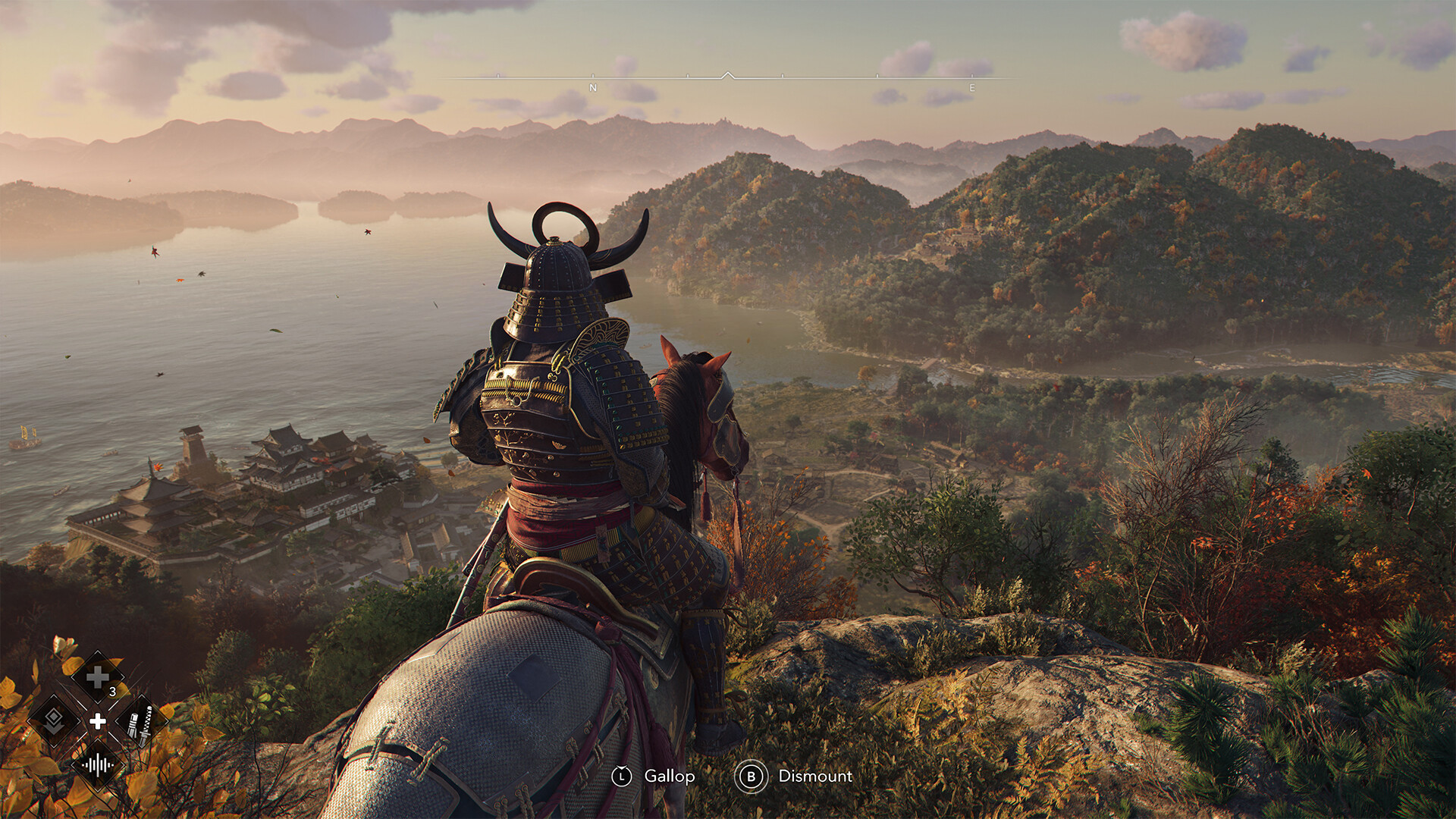
Step into the breathtaking artistry of Assassin's Creed Shadows, where every screenshot looks like a moving painting. From serene temple courtyards wrapped in morning mist to golden rice fields swaying under the sun, the game captures Feudal Japan in mesmerizing detail. I think the images filled with sakura blossoms drifting across rooftops, lantern-lit alleyways, and intricate samurai armor designs practically glow with atmosphere. Each visual tells its own story, whether it's a quiet village by the river or a bustling marketplace filled with paper lanterns and flowing kimonos. Perfect for mood boards, cosplay inspiration, or anyone craving the aesthetic magic of ancient Japan brought to digital life.

Assassin's Creed Shadows

2. Starfield: Jaw-Dropping Cosmic Landscapes and Spaceship Designs

Starfield isn't just a space RPG; it's a gallery of interstellar beauty. Imagine scrolling through boards that showcase shimmering nebulae glowing in purple and gold, planets cloaked in swirling storm systems, and sleek, customizable spacecraft that look ready for liftoff. The lighting in deep space feels cinematic, with distant stars casting halos of icy blue across alien terrain. Visuals capture glowing cities under domes, lonely outposts on red deserts, and astronauts framed against infinite horizons. Each pin feels like a sci-fi poster waiting to be framed, giving dreamers and space enthusiasts endless aesthetic fuel to spark creativity and wanderlust.

Starfield

3. Final Fantasy XVI: Dark Fantasy Artistry in Every Frame

The dark yet magical world of Final Fantasy XVI is a feast for the eyes, blending medieval grandeur with fantasy firepower. Pinterest-worthy visuals spotlight crumbling castles under stormy skies, richly detailed armor sets glistening with steel, and radiant crystal shards glowing like fractured stars. Cinematic landscapes feature sweeping valleys, towering cliffs, and bustling medieval cities bursting with life. Each image feels painterly, whether it's a fierce Eikon battle framed by roaring flames or a quiet moment lit by flickering torchlight. For fans of moody aesthetics, high fantasy fashion, and dramatic visual storytelling, this game provides endless board inspiration.

Final Fantasy XVI

4. Baldur's Gate 3: Magical Realms and Character Customization Highlights

Baldur's Gate 3 paints its D&D universe in dazzling detail, perfect for players enjoying fantasy immersion. Think lush forests glowing with enchanted fireflies, gothic ruins bathed in eerie moonlight, and magical spell effects that bloom like fireworks across the battlefield. Each cinematic screenshot feels like an oil painting pulled from a storybook, rich in color and drama.

Baldur's Gate 3

5. Zelda: Tears of the Kingdom Dreamlike Environments to Explore

In Zelda: Tears of the Kingdom, every environment looks like a dream etched into watercolor. Imagine these breathtaking shots of floating islands shrouded in golden light, ancient ruins hidden among wildflower fields, and cascading waterfalls glowing under twilight skies. The art direction thrives on contrast: lush greenery against weathered stone, mystical shrines glowing like beacons, and Link's heroic poses set against skies streaked with color.

Zelda: Tears of the Kingdom

6. Diablo IV: Dark Gothic Atmosphere in Rich Detail

The grim beauty of Diablo IV offers an entirely different kind of aesthetic—moody, gothic, and dripping with atmosphere. The impressive imagery of Diablo IV is worth mentioning because it captures crypts lined with crumbling statues, candlelit cathedrals echoing with shadows, and armor gleaming with intricate, sinister detail. Diablo IV may be a bit dated, but it remains a classic that still impresses through gameplay and visuals – a fan's favorite forever.

Diablo IV

7. Cyberpunk 2077: Neon Cityscapes and Futuristic Character Designs

If cyberpunk is your aesthetic, Cyberpunk 2077 is a Pinterest dream. Imagine skyscrapers dripping in neon pinks and blues, rain-slick streets reflecting glowing holograms, and characters dressed in fashion that fuses high-tech edge with punk rebellion. Pinterest visuals showcase dazzling car designs under neon streaks, bustling night markets bathed in artificial light, and skyline views that look pulled from a sci-fi movie poster. Every pin tells a story of rebellion and style, whether it's a chrome-arm upgrade gleaming under LED strips or a quiet alley glowing with digital graffiti.

Cyberpunk 2077

8. Elden Ring: Hauntingly Beautiful Landscapes of a Ruined World

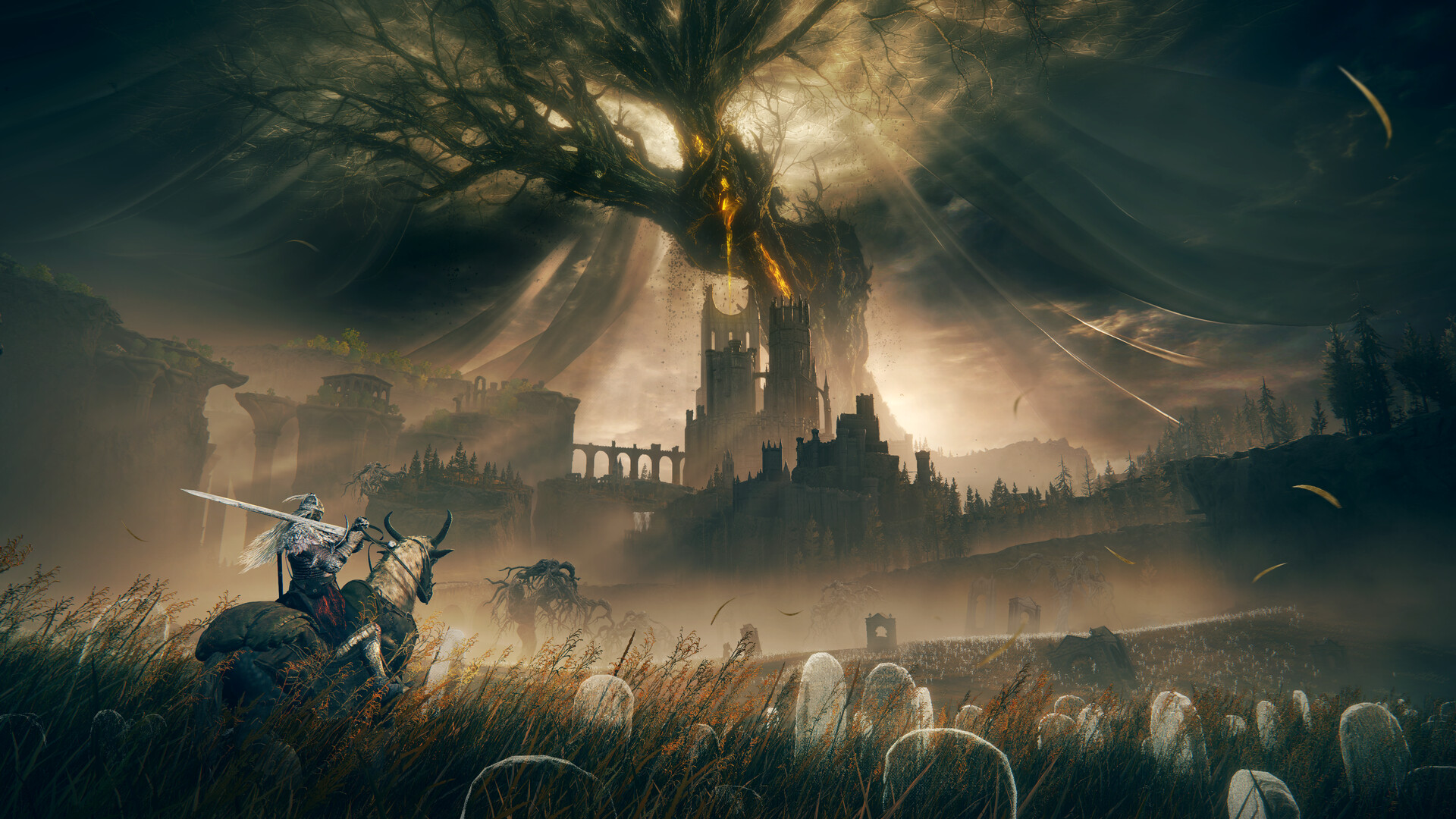
Elden Ring is both desolate and gorgeous, giving Pinterest endless visuals of haunting ruins and sweeping fantasy landscapes. Imagine giant eroded statues looming over foggy plains, golden trees casting light across shattered castles, and storm-wracked skies painted in bruised purples and blacks. Character armor sets sparkle with intricate metallic detail, while crumbling stone bridges and winding valleys stretch into infinity. Each screenshot feels mythic, like a lost painting of an ancient epic.

Elden Ring

9. Horizon Forbidden West: Nature Meets Futuristic Machine Design

In Horizon Forbidden West, every visual blends raw nature with futuristic imagination. The imagery in my mind blooms with lush jungles, coral reefs glowing in aquamarine waters, and towering mechs shaped like dinosaurs and eagles, their metallic forms gleaming in the sun.

Horizon Forbidden West

10. Ghost of Tsushima: Cinematic Samurai Visuals and Landscapes

Ghost of Tsushima remains one of the most visually striking samurai experiences, ideal for players who enjoy games with cinematic inspiration. Imagine crimson leaves swirling across temple courtyards, golden sunsets bleeding across grassy hills, and bamboo forests whispering in the wind. Every screenshot is composed like a film still, with sweeping vistas and soft lighting enhancing the mood. Samurai armor gleams in intricate detail, while villages and shrines glow warmly against dramatic skies.

Ghost of Tsushima

That is all folks!

Let’s not waste any more time, EA Sports FC 25 is a game that has an internal conflict. It has features such as FC IQ, which tries to give more tactical depth to the game by allowing the user to control how the team builds up, defends, or how the players shift into different roles. But then the game brings us to the more user-friendly approach of not paying attention to the more important gameplay features like AI control.

FC IQ: Strategic Control With a Side of Complexity

Let’s start with what moves the needle. FC IQ is a genuinely intriguing addition for hardcore football tacticians. The option allows them to control the team further, like setting the team's pressing triggers, build-up play, or giving a role slot to individual players, such as in the case of Saka.

I'm using the "Positional Fluidity" instruction to let my attacking midfielder roam freely and find pockets of space.

It’s the first time EA has gotten close to replicating tactical presets like Pep Guardiola's positional play or Jürgen Klopp’s gegenpress. You can sense the team’s shape shift based on the instructions given. Under strict settings like Squad Battles or in certain Career Mode situations, it leads to some rewarding moments of chess-like football.

Yet, this elegance of EA Sports FC 25 has its shortcomings. Unless you’re one to analyze Inter Milan’s weekends in their 3-5-2 against a low block, it may be too complicated to grasp. The lack of simple, streamlined presets comes as a letdown for the casual player. This means that the player who opts for a simplified quick kick-off will be overwhelmed by the menus, charts, sliders, and more.

To summarize, FC IQ is a remarkable step towards tactical realism, but the accessibility curve is harsh for anyone who isn't part of the hardcore simulation enthusiasts.

HyperMotion2 vs FC IQ: One More Time, One More Gimmick?

It’s the same story for FC. The newest tagline, “FC IQ,” is a spin-off of last year’s “HyperMotion2,” which supposedly finesses the EA animation systems in order for players to move in a more lifelike manner. Both of them have the same flaw, sharing the complaint of masked and poorly executed animation.

The "Ball Physics" engine creates an unpredictable bounce off a divot, causing my defender to mis-head a clearance.

HyperMotion2 worked to visually improve player animations, but the workflows made animated robots still have the same delayed input mechanics and sluggish, droid-like transitions alongside poorly animated, stuck defenses. The Jogger FC IQ is meant to allow us to devise elegant strategies for more advanced and smarter football. However, the objectives are not properly executed by the players as per the in-game animations.

It is as if one is handed marvellous, but the builders are incompetent and can't even follow the expertly designed blueprint. The ideas themselves seem astonishing, but the artificial intelligence algorithms still have not reached the level of the rest of the systems. The game’s features might be enticing, but the playing experience is disappointing.

Conclusion

While “Simulation Mode” in EA Sports FC 25 has no doubt garnered attention from “sim players” out there, it gets one feature right: a flashy advert should never trump “actual gameplay.” “Simulation Mode” was marketed as a game where a player could outmaneuver, outthink, and outsmart the opponents with proper skill and intelligence, as well as tactical realism and optimized psychology player movement, instead of the chaotic, illogical, arcade clown show that we’ve been fed. Consumer hopes rested on the notion that we would “finally” get a game with proper football AI physics and player movement, instead of the sculpted and “magic” boxed tricks every football game has been packaged with over the years.

My "Set Piece Specialist" just curved a free-kick over the wall and off the inside of the post for a stunning goal.

It’s absurd. What EA refers to as “enhanced CPU AI” boils down to a set slider preset that drastically reduces simulation and turns the game into an infuriatingly unpredictable arcade brawl. Your defenders will continue to ball watch, your midfielders will be utterly irrelevant off the ball, and the CPU will still score goals that defy the laws of physics from angles that are impossible. “Simulation mode” is a placeholder for tacky marketing. It’s terrible. Realistically, if you want a demanding and authentic offline experience, you will still need to scour the community forums for slider user sets that actually uphold the offline simulation promise. It’s rather pathetic that the community has to step in and polish what developers tout as a fundamental selling point.

I am a girl who has a soft spot for JRPGs, even if occasionally I play some gritty ones, like Cyberpunk 2077: Phantom Liberty, for example, to mention a game I wrote recently. Now, I thought I should play Trials of Mana again. The remake captures the original structure of the game very much so; however, this fidelity is tied to certain “relics of the past” systems. Foremost of these is the ungodly RNG for equipment and class upgrades.

Landing a "Critical" "Hit" with "Charlotte's" "Mana" "Miracle," a lucky roll that provided a massive full-party overheal.

The class advanced changes and high-level equipment still farm “is it farm???” seeds from certain enemies, and their drop rates are still, let's say, hit or miss, and the items within are, well, random. What this means is that in rare instances, players are able to find, or unearth, equipment that is absolutely and comically outdated – and that is supposing RNG favors them.

This system still wholly reflects the original design; however, from a contemporary view, it feels overly harsh and punishing. For the spirit of farming, the remake could have included systems to protect players from prolonged bad luck – for instance, guaranteed drops after a certain number of attempts. The authentic system was kept, and that means removing accessibility and imposing restrictions for the sake of authenticity.

Quality of Life Improvements to Character Growth

In the more effective modernizations for those who buy cheap PS4 games, however, it is in the character growth system. The original game prompted players to make a class choice and locked them into class and stat assignments. Such a system could turn out to be extremely frustrating, especially if the first set of decisions were bad, and this is what the original game hoped to address with two very small changes.

I'm rerolling the "Mysterious" "Card" "Player's" game to hit that 8% chance for the "Super" "Sword" "Orb."

As for the second point, the option to revisit the class choices after some time is again a feature that the remake adds to ensure that players do not have to commit to a single option made at the start of the game for the rest of the game.

These changes are essential improvements to the original's most restrictive shortcomings. They have maintained the class system's intricacy while making it more accessible and lenient.

Comparative Analysis: Then and Now

Looking at the changes made to the remake compared to the original made in 1995, one can easily see both the extra work and the shortcomings that have come out of it. The main structure, which includes six protagonists, branching storylines, and multi-tiered class progression, has not changed.

My "Evade" stat is so stacked most physical attacks now have a less than 15% chance to even connect.

In terms of mechanics, the original game is more oriented toward action. The remake includes: dodge rolls, a new combo system, and Class Strikes that are more cinematic. The core enjoyment of the game, however, is that the RPG elements of stat allocation and class specialization have not been lost. This creates a more modern feel to the game while still keeping the essence.

In terms of polish, the remake does an infinitely better job, with better performance and sleek interfaces. Its poor camera control and AI behavior suggest, however, that not all modernizations flag the absence of a slip.

Visual and Audio Review

Artistically, there is a clear success in the 3D remake, which attempts to capture the 2D sprite charm. ​The recolored audio is, as mentioned previously, masterful. The soundtrack further enhances the experience, and the option of switching to the original compositions shows respect for the game's legacy. The voice acting, while uneven in parts, is sufficient to guide the narrative through weaker cinematic animations.

The "Moon" "Energy" "Statue's" blessing seems to have secretly boosted my "Critical" hit rate for this dungeon.

Adjustments: How to Make the Camera More Acceptable.

For the more patient players, the issue of the camera can be somewhat lessened. The options for customizing speed and distance do not work for the camera's focus. Setting it to the maximum speed and then pulling it to the farthest distance available still manages to get the camera to the point of near-comfort. While still far from ideal, this is better for gameplay, especially in more tightly packed encounters.

Comparative Analysis: Success Where Others Failed

Looking at the Secret of Mana project sheds some light in this regard. That project tried to modernize the visuals in an attempt to update the mechanics, and this caused a big discord in the entire experience. Trials of Mana, in comparison, works on its systems and re-engineers them to fit a modern framework.

My "Faerie" "Walnut" used "Revive" on its own, that rare 3% AI intervention bringing my healer back from the brink.

The combat, for example, feels like an authentic extension of the original design, and not a fossilized piece awkwardly stuck to a new shell. These systems, in particular: the class changes and progression systems, alongside the party features, have a relatively easy 3D integration and show how a remake can evolve from its original version.

Critique and Shortcomings

The faults of the remake are not trivial. There is the constant frustration of poor AI and an awkward camera. The RNG-centric equipment system is far too brutal and is outdated, while cinematic animations are far too unfinished for contemporary RPG standards, with emotionally charged moments being undermined by mechanical movement and blank, unexpressive faces.

They are still accompanied by significant advances: adjustable character evolution, detailed aural captures, and imagery that embodies the visual essence of the original.

The opening chords of its orchestral score made my heart beat in tune with booting up Warhammer 40,000: Space Marine 2. In video game development, ten years is a long time since Captain Titus of the Ultramarines was last on that hallowed battlefield in that iconic cerulean power armor. As I gripped the controls, it felt like coming home to a cathedral of righteous violence within seconds. Saber Interactive not only resurrected Titus but also elevated him as well because it is no longer just a sequel but rather an evolution, which leaves behind an awesome wake of destruction.

That moment you try a desperate over-the-shoulder throw of an enemy into another, creating a chain reaction of alien carnage.

The Swarm and the Blade

If you've played World War Z's endless horde, you’ll know Saber has mastered swarms. Except now, instead of zombies shuffling around aimlessly, one is confronted with Tyranids in droves; nightmarish aliens in armor made of chitin who thrive on biomass. The large number of xenos on screen is stunning – it is several hundreds at a stretch, pouring down ruined walls and scratching your shoes like a live river. The Swarm Engine powers this game, and it creates a battlefield that is chaotic and does not stop because it feels appropriately end-of-the-world.

This is where Space Marine 2 excels in combat. Titus moves as if he were the superhero that he actually is. Bolters cause meaty concussion thuds as they pulverize Tyranid warriors into bloody gushes of gore. The chainsword sings its own song by rending alien flesh with a visceral feel. I would shoot at an incoming wave of charging Hormagaunts before parrying the scything talons of a monstrous Tyranid Warrior, only to follow up with a finishing move so brutal that I audibly laughed out loud in disbelief. And this was what being a Space Marine felt like, I concluded silently to myself.

The strategic depth of managing your ammo and health, knowing every round and every bit of armor integrity is precious.

However, the magic does not end with just the weapons. The rhythm of death and destruction during combat is spellbinding. Saber has perfected the technique of keeping you chained together – a parry with a gunshot, a dodge with an incredibly violent striking science. The outcome? You are not playing as a Space Marine; you are one. Now, for a second, you understand what it means to be God’s wrath.

Critiques: Defence Weaknesses

However much I loved playing Space Marine 2, almost as much as Cyberpunk 2077: Phantom Liberty, it does have some drawbacks. On the other hand, pacing in the campaign can sometimes be off; even though they may be of high profile and have set pieces of the rest of it, a couple of its missions feel like fillers. However, there were times when frame rates dropped during battles involving many enemies, which ruined my involvement.

A towering Ultramarine, clad in blue power armor, charges through a swarm of Tyranids, chainsword revving and blood spraying in every direction.

Finally, as much fun as the co-op Operations mode is for me, one should bear in mind that it highly depends on matchmaking or pre-arranged teams. Solo players may find this section a bit too challenging to truly enjoy, especially at higher levels of difficulty.

Summary

Warhammer 40,000: Space Marine 2 is a game with dedicated fans, an awesome masterpiece, particularly if you buy PC games – a welcome return to form for one franchise that has been marginalized for so long. This experience by Saber Interactive not only respects the original but also creates its own legacy under His Majesty’s name. It caters to both ardent Warhammer followers and those who are new to the game because they are excited about extreme action games.

Nevertheless, it’s not perfect, but the absence of polish is balanced with strong emotions. This developer knows what fans of Warhammer 40k want to experience: being Space Marines. So take your bolter, wear your armor, and prepare for battle. The God-Emperor demands nothing less.

Dynamic Weather: Discover Atmospheric Variables

At the forefront of my plans to write about PGA Tour 2K25 is the complete rewrite of the weather engine. Today's offering, even improved over 2K23's largely fixed slate, still feels like a polite wink rather than a true climate. I'm aiming for the real thing: a living sky where every variable—wind shear, dew point, moisture weight—drives the ball's flight, bites the grass, and shifts the whole round, constantly and openly.

That feeling of pure concentration as you focus on the swing plane indicator, striving for that perfect downswing to maximize power and accuracy.

Picture, if you will, an evolving meteorology on the course: an initial whisper of rain, almost negligible, merely kissing the fairways, quickening the rollout imperceptibly. Moments later, the sky opens, and water thunders down, the ground suddenly spongy, every approach now architected for an unforgiving, tiered green. Hold that image, then invite banks of fog moving silently inland, swallowing the horizon, compelling every yardage to be remembered, every slope and grain recalled—not calculated, recalled.

The strategic choice of which caddie advice to follow, balancing their suggestions with your own read on the shot.

Now let overhead storms crack, light and heat leaping across the sky, and a cell of wind fans the leaves sideways, curious trees suddenly guards against a safe fade, the play now a measured layup to negotiate foliage that will never stand that way again. This is no visual flourish for players who buy cheap PS4 games; it is a simulation that demands a golfer think and respond, round to round, hole to hole, tournament to tournament. The aim is disorder milled into the climatic memory, such that the same card printed tomorrow would play to a score that cannot be listed, a course never twice the same, entropy made fair.

Course Creation: Sculpting Dreams into Digital Reality

The current course designer, while already capable, still sits too firmly inside predetermined borders. We do not only require a broader catalog of objects and textures; we require the power to reach into the engine's rendering heart and reshape it. Envision these enhancements:

Seed-Controllable Algorithmic Terrain Templates: Empower creators to enter targeted geological phrases—”links-like undulations,” “craggy peaks with sharp ascents,” “basaltic sweeps”—and watch the engine birth a bespoke terrain skeleton. Designers can then tweak and polish these guided foundations, thereby dodging the perdition of everlasting manual sculpting while still spawning genuinely original canvases.

Procedural Ecosystem and Canopy Authoring: Exchange the grind of point-by-point flora placement for biome rules that breathe life to the entire sweep. Set moisture, altitude, and incident light, then train the engine to distribute pines, ferns, and eagle nests according to a logic that mirrors the earth itself. A “canopy” brush adopts a botanical vocabulary—height, spacing, shading—while a “fen” tool mutes the ground with reeds, mirrors, and languid roots, creating liver and blade without further nudge.

That unexpected joy of finding a secret shortcut on a course you've played many times, offering a new path to the green.

Physics-Responsive Object Interactions: Presently, static objects remain resolutely unmoving. Imagine instead a mountain crumbling under a torrential downpour: loose boulders dislodge, roll, and reshape the very courses players know. Picture a custom bridge rigged so that a well-placed explosion buckles a support and sends half the span tumbling into the ravine. Such moments dissolve the boundary between the unchanging background and the evolving challenge. The guiding principle is clear: elevate the Course Designer from a simple placement tool to a genuine world-forging laboratory, letting creators weave living, breathing hazards into the very DNA of the track.

Game Customization & Intelligent Evolution: Building Icons, Meeting Reality

Progression systems and opponent behavior in the present build serve their purpose, yet they lack the substance that lingers in the memory. My revised framework presents:

Granular Player Attributes and Context-Sensitive Advancement: Ditch the finite sliders in favor of a branching matrix molded by style, not vaults of XP. Hit the long, narrow target holes? Your “precision” dial creeps forward. Heat-of-the-moment draining long birdies? The “clutch stability” metric inches up, subtly steadying that last, tight quarter of the backswing in the shadows of the tournament. The result: living player identities shaped by each swing, rather than the cumulative click of a mouse. Ruin a phase with a series of stray fades? A “reverse lateral hook” trait manifests, and the elbow and wrist respond insecurely, demanding deliberate habit-reteaching on the practice green. The arc and dive of a real golfer's fortunes are mirrored and freshly earned in your avatar's next swing.

The serene beauty of a calm morning fog lifting slowly from the course, revealing its full splendor as the sun rises.

AI Opponent Behavior Overhauls with Emotional Models: Right now, the AI plays well enough, but I want it to feel alive. My vision is for each opponent to have a recognizable “personality”—some may tread cautiously with a blistering swing, others will be bold enough to swing for the island green on the second shot. Imagine a methodical player that pars the risk-reward dogleg and a swaggering counterpart who grabs eagle or lands in the drink.

Conclusion

I will layer scores, tournament context, and a modelled “momentum” scale, so character evolves. One round might start with a reserved back-nine, but the third double-bogey forces a nervous chop on the next tee. Contrast that with a stretch where three straight birdies spark an opponent's putting radar and tilt the match. The goal is to make each round feel like a match with a specific, mutable rival, layering in human-like emotion and second-guessing that makes every swing unpredictable.

From saving the President and simplifying it to a bare, less thought premise, you are given the choice of diving into thrill-packed ruthless politics with manipulation, a quicker surge towards unlocking hidden true freedom. Spoiler alert! That's where the immersive experiences of Phantom Liberty, for RPG fans, truly come alive.

Leading a Barghest patrol right into a pre-placed proximity mine, a classic veteran tactic for clearing out troublesome zones in Dogtown.

After I had some scary moments with Alone in the Dark and one of the most memorable experiences in a video game with Baldur's Gate 3, as a fan of action role-playing games and Cyberpunk 2077, I have decided to give it a shot to the new DLC, Phantom Liberty.

The central premise of Phantom Liberty's story not only lacks basic markers of reality but also shatters standards of sanity – life is devoid of morality and virtue, spinless and devoid of meaning, making anti-heroes gaming.

Dogtown: A Practical Assessment of its Acclimatic and Fighting Features

With respect to Dogtown, the center of the Phantom Liberty wasteland, my first sheer expectation was mainly a structural one. I gauged that there would be a brutal gap in the architectural lingo of the area, maybe a region specialized in verticality tangles or intricate zones that required new traversing and fighting strategies. Although the feeling of a ‘crossed shanty town’ is indeed captured – secrets do indeed “beg to be explored,” the imDogtown’s visible dissimilarity to the rest of Night City is somewhat limited.

My V, leaning into a sharp turn on a souped-up Kusanagi, knowing exactly how to use Night City's chaotic traffic to my advantage in a high-speed chase.

While It does blend well with the urban fabric, which, from a thematic standpoint, makes sense – it’s an organic development, a cancerous tumor of the underbelly of a city, rather than a sterile purpose-built combat arena. For meticulous scavengers of urban ecosystems like many players who buy PC games, however, insightful, striking schematic distinctions provide, at least initially, greater strategic cues. The bar dubbed as The Moth and The Remembrance Tree landmark at Longshore Stacks did not mechanically demand a cover system overhaul, but for some strategical centerpiece-border rethinking were fundamental modifiers of the tactical terrain.

Familiar In Design, Excelling In Execution – Phantom Liberty's Dogtown

Phantom Liberty still feels familiar in design, but its real surprise lies in Dogtown’s complex blend of enemy concentration and overarching archetypes. New strategic challenges emerged when I battled the Scavs and the mighty Barghest Legion under Hansen’s Command. My combat preferences had to be mentally recalibrated midway through my first handful of engagements. Due to the sheer use of aggression and heavy armor in flanking moves, the Barghest demanded more thought when it came to choosing weapons and cyberwar.

My V, initiating a quickhack chain reaction through multiple enemies, watching the chaos unfold, a testament to hours spent perfecting my stealth netrunner playstyle.

Unlike most Night City gangs, the Barghest utilized coordinated pushes toward close combat. My Sandevistan optimized build found difficulty with their coordinated pushes. The overwhelming experience of being forced to adapt, shred a few perk points, or contour the application of my quick hacks was jaw-dropping. The distinction of threats in Dogtown is where Phantom Liberty excels.

Scanning every NPC in the crowded Dogtown market, trying to identify that one elusive fixer who might drop a side quest I haven't unearthed yet.

My distinct theoretical combat plans against the realities of life were hindered. Instead, I was able to immerse myself in the distinct threat outlines of Dogtown, shattering the feeling that I was plunged into visually unrecognizable territory. Phantom Liberty, available in Cyberpunk 2077: Ultimate Edition too, made it possible to reanalyze existing combat mechanics, showcasing refined enemy creation principles that kept me adjusting my ragged model of combat bursts.

Conclusion For The Die-Hard Action RPG Fan

HBO expresses its fervor for American films in coming out with series with deep attention to detail, analyzing every RPG choice in, say, Cyberpunk 2077: Phantom Liberty. The franchise has fans excited and, at points, overwhelmed, considering the amount of storytelling full of achievable goals that it offers. Cyberpunk 2077 was released with what felt like unfulfilled and untapped narrative potential, as it had the world but offered very little when it came to players taking control of it.

That satisfying "thwack" of a silenced pistol headshot, dropping a Barghest guard before they even know what hit them – pure stealth gratification in Cyberpunk 2077.

Phantom Liberty felt as if it required a whole new approach to storytelling- something in the way of evolving narrative structures and multi-structured probabilistic systems with expanding chaotically unfolding story outcomes embedded within the setting. And yes, but the long-awaited purpose that devs in rest retirement homes centered around lore-laden morally intricate decisions with zone masking remained unchallenged.

Personally, I approached this journey with the fervor of a completionist, squeezing nearly 120 hours into the main storyline and side quests. Every nook and cranny of the game world beckoned me to investigate, whether it was the sun-dappled forests or the shadowy depths of ancient ruins. 

What stands out to me is how the pacing varies throughout these acts. Initially, you may find yourself in the thick of combat and character development, as you slowly build up your party from fledgling adventurers to a formidable force. By the time I reached the later stages, my crew had amassed a wealth of abilities, upgraded gear, and a dazzling array of spells that would make any seasoned wizard proud. There’s a real thrill in going from a timid level one character struggling against goblins to a level twelve powerhouse blasting foes with fireballs, all while maneuvering through the chaos of battle with style.

Adapt and Strategize: Enriched Gaming Experience

The Richness of Combat: Strategy Meets Chaos

What truly sets Baldur's Gate 3 apart is the combat system, which is a delightful blend of strategic depth and chaotic fun. Combat is turn-based, allowing for thoughtful maneuvers and tactical planning—think of it as a dance where every move counts. During my skirmishes, I relished the freedom to experiment with my environment; whether it was pushing enemies into fire or triggering a cascading series of traps, the satisfaction of orchestrating a well-laid plan was second to none.

Prepare to be Amazed: Your Own Adventures Await in BG3

However, even the most seasoned players might find themselves grappling with certain nuances. Baldur's Gate 3 does not hold your hand when it comes to its mechanics; saving throws and attribute ties are concepts that can easily slip through the cracks, particularly for those who might not be well-versed in D&D lore. I could easily envision a novice player missing a critical moment because they overlooked how an attribute modifier affected their chances of success. This aspect is both a charm and a challenge of the game—its complexity rewards patience and curiosity.

Cantrips and Spells: The Wizard's Toolbox

As a Wizard, the vast array of spells available is akin to having a multi-tool in your pocket, ready to adapt to any situation. Starting off at level one, you're gifted three cantrips and a whopping six level one spells, which is nothing short of exhilarating. The possibilities feel endless. Want to control the battlefield with a well-timed spell? Go for it. Feel like turning an enemy into a toad just for kicks? You can do that too.

Captivating Qualities: Moments of 'Wait... You Can Do That?!?!'

Engaging Storylines: Companions with Heart

Beyond the combat and mechanics, what keeps me hooked is the depth of the characters that accompany me on this journey. Each companion has their own narrative threads woven intricately into the main storyline, complete with personal quests filled with drama, humor, and conflict. I often found myself pausing mid-adventure, engaged in heartfelt conversations that revealed their backstories and motivations.

Drawn into the Wondrous World: BG3's Extraordinary Journey

Conclusion

While it does not shy away from complexity—offering an intricate system that can overwhelm the uninitiated—it provides a playground for those willing to dive into the fray. As I wrap up this latest chapter of my adventure, I’m left eagerly anticipating what lies ahead, past Baldur's Gate 3, both in this game and in the broader genre. If you’re seeking an immersive experience where your choices truly matter, look no further than Baldur's Gate 3. The realm is vast, the stories are rich, and your journey is just beginning.