3 Things You Absolutely Need to Do in Elden Ring: Shadow of the Erdtree
From the moment I first stepped into the Land of Shadow—sky bruised in perpetual dusk, distant ruins silhouetted against a golden tree that feels more accusatory than benevolent—I realized Shadow of the Erdtree isn’t just more Elden Ring. It’s denser. Meaner. Less interested in onboarding you gently and more interested in seeing whether you’ve actually internalized everything the base game taught you about curiosity, patience, and hubris.
This expansion doesn’t hand you its best moments. You have to go looking.
Here are three things you should absolutely be doing.
1. Chase the Map Fragments, Then Ignore the Roads
Though your instinct might be to follow the most visible path forward—castle on the horizon, enemy camp bristling with soldiers, obvious golden beam marking progress—Shadow of the Erdtree rewards lateral exploration more aggressively than the base game ever did. The first thing I did in each new sub-region was hunt down the map fragment, not because I wanted completion percentage, but because the topography itself is a clue.
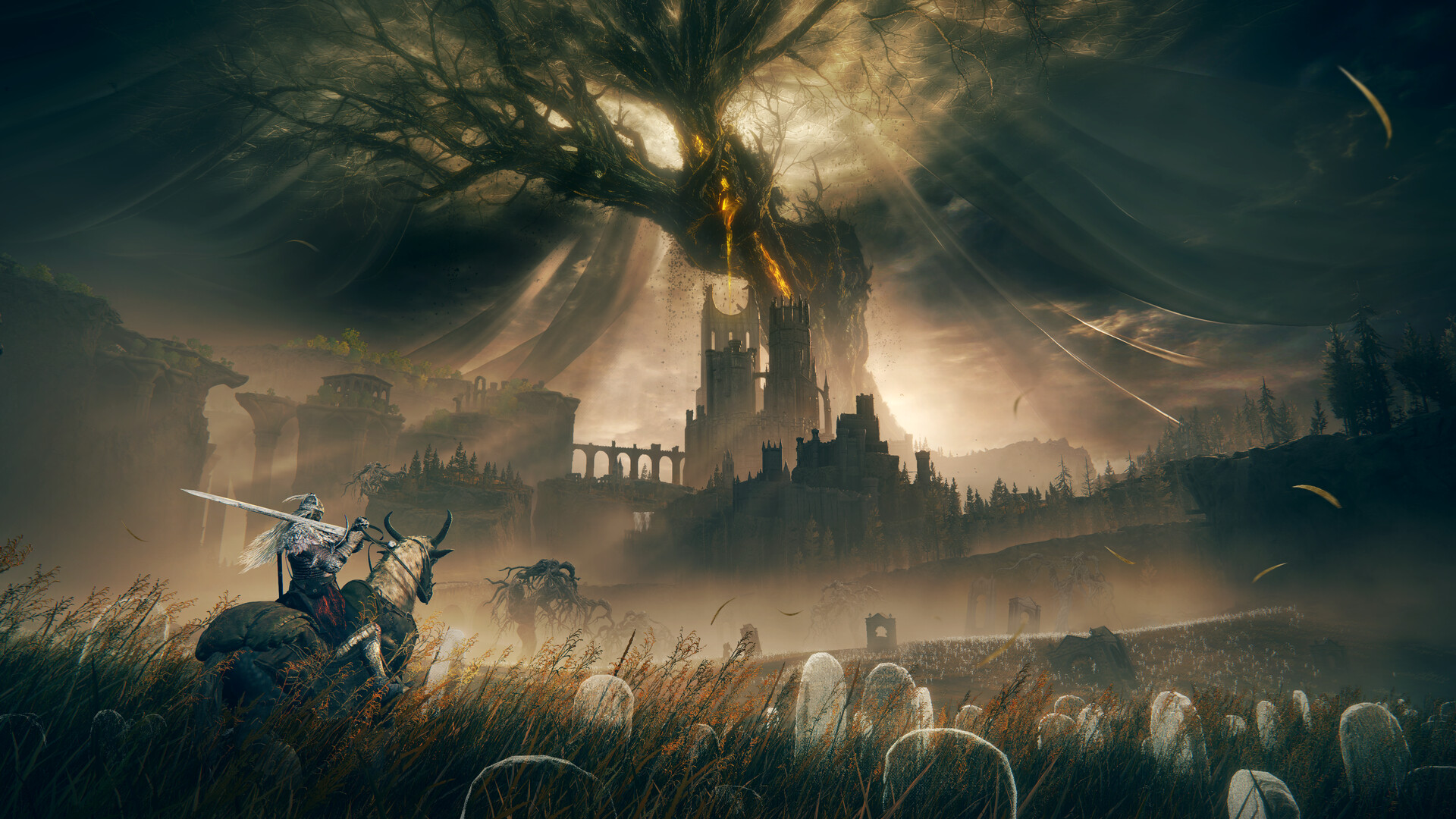
The terrain is the level design.
Once you have the fragment, stop beelining objectives and start scanning for oddities—unnatural cliffs, suspiciously empty plateaus, ravines that look too narrow to matter. In one early stretch, I found a minor dungeon not by following an NPC breadcrumb, but by noticing a broken wall halfway down a vertical rock face that only becomes visible if you angle your camera just right while riding Torrent. That dungeon held a weapon that reshaped my entire build.
If you treat the map like a checklist, you’ll miss the point.
Shadow of the Erdtree is built like a spiral, not a straight line.
2. Rebuild Your Loadout Around the New Scaling System
Though you can brute-force your old meta build into the Land of Shadow—yes, your overleveled bleed setup still works, and yes, you can spam familiar Ashes of War—this DLC quietly encourages you to rethink your stat allocation through its new progression layer. The Scadutree Blessings system changes how incoming and outgoing damage scale in this realm, which means raw rune level isn’t the only lever that matters.
I died more than I expected.
Early bosses hit like freight trains, and my complacent “I’ve beaten the base game” swagger evaporated within minutes. Once I started actively seeking out Scadutree fragments and Revered Spirit Ash upgrades, however, the difficulty curve felt less punitive and more deliberate. This isn’t just a numbers tweak—it’s FromSoftware forcing you to re-engage with exploration as power progression.

You can’t just outlevel the content.
You have to earn survivability through discovery.
And while you’re at it, experiment with the new weapon categories and Ashes of War instead of clinging to comfort. I swapped out my trusty greatsword for a faster, faith-scaling blade found in a side dungeon, and the change in pacing—quicker trades, more reliance on positioning—made encounters feel fresh rather than familiar. The DLC wants you to adapt.
So adapt.
3. Follow the NPC Questlines All the Way Through
If you’ve played Elden Ring before, you know FromSoftware’s NPC questlines are equal parts opaque and revelatory, threads that weave through the world in ways that only fully cohere if you pay attention to offhand remarks and shifting locations. In Shadow of the Erdtree, that design philosophy is dialed up, not down. Characters drift across the Land of Shadow like ghosts, reacting to your progress in subtle ways.

Miss them, and you miss context.
In my first ten hours, I almost wrote off one wandering knight as flavor text—just another cryptic monologue about faith and betrayal—until I realized his dialogue changed after a major boss, hinting at a hidden area I would have otherwise ignored. That detour led to one of the expansion’s most haunting vistas, a place where the art direction alone justifies the price of admission.
These questlines aren’t just narrative garnish; they unlock alternate boss outcomes, additional items, and in some cases, entirely different interpretations of what’s happening in this fractured realm. Shadow of the Erdtree is less explicit about its lore than ever, but more cohesive if you do the work.
Talk to everyone. Then talk to them again.
Conclusion
Shadow of the Erdtree isn’t interested in holding your hand, and it certainly isn’t content to be “more of the same.” It reshapes how you approach progression, exploration, and even your own build identity, quietly asking whether you’re still playing on autopilot or actually engaging with its systems.

Chase the map, but trust your eyes more than your markers. Rebuild your loadout instead of coasting on muscle memory. And treat NPCs like narrative anchors, not background noise.
Do those three things, and the Land of Shadow stops feeling hostile for hostility’s sake. It starts feeling intentional.
And that’s when it truly opens up.