Sprig and Quill

A blog musing about methods that could create an optimistic future

With wildfires and dust storms seeming to happen more often, many are looking into ways to make the air in their homes safer to breathe.

A do-it-yourself (DIY) air filter is an affordable air-cleaning device that typically uses a standard household fan paired with a filter medium to remove particulate matter (PM) from indoor air. Such filters have gained attention during events such as wildfires and sandstorms, when commercial air purifiers may be prohibitively expensive or unavailable. This setup draws air through the filter before it reaches the fan, purifying the air as it passes through. [1]

Register Vent Filter Implementation

Rather than having a filter sitting in the room, some instead buy vent filters so that the air from heaters or AC's is filtered. [2] These sometimes have magnets or stick-on velcro to attach the filters to the vent covers.

Circular Fan Implementation

Rather than furnace filters, some people propose using washable fabric filters mounted to a fan. These filters may be reusable, though typically offer lower filtration efficiency than MERV-rated filters. The performance depends strongly on the fabric's structure and fiber composition, but layering fabrics can filter between 12%-96% of particles. [3] [4]

A better option for circular fans is to get a filter shroud with a filter rating. The shroud covers the sides, and in doing so ensures that more air is pulled through the filter, instead of around it.

Box-Fan Implementation

  1. Use a box fan with safety certification and thermal protection.
  2. Attach a MERV-13 (or higher) furnace filter to the intake side of the fan, ensuring the arrow on the filter aligns with the airflow direction.
  3. Consider using multiple filters (e.g., four filters in a cube) to increase surface area and reduce pressure drop.
  4. Monitor and replace filters when they become dirty or loaded; replacement frequency depends on air quality and particulate loading.

#diy #airfilter #smoke #health

SprigLogo

Right-to-repair refers to a movement where people are fighting worldwide for the right to continue to repair products the we own, as well as for the right for us to choose who repairs them.

“The right to repair refers to proposed government legislation to forbid manufacturers from imposing barriers that deny consumers the ability to repair and modify their own consumer products.” | Wikipedia

Why Right-To-Repair is Needed

  • Planned Obsolescence: companies are purposely building their products to break faster, so you have to pay to replace them sooner.
  • Unfixable Products: some products will have their components soldered, glued, or riveted, to stop people from being able to repair.
  • Brand-Specific Parts: These parts may cost more than buying a new product. As well as that, some companies refuse to let independent repair technicians purchase their parts to try and force costumers to only use the product company for repairs.
  • Restrictive Programing. For these, the programs refuse to let you fix your own products (a large example of this happens to farm equipment, where farmers have to hack their own equipment if they want to repair on their own).

How to Help

#righttorepair #repairing #fixing #communitybuilding

SprigLogo

Did you know that you can grow your own bath sponges?

“Luffa is a genus of tropical and subtropical vines in the pumpkin, squash and gourd family.“ Wikipedia

Image of a Luffa

Luffa plants are from southeast Asia, and can be grown in places with a long warm summer. The fruit can take a long time to grow and toughen it's inner fibers (about 150-200 days), but after that time, they are ready to become sponges. Explaining it simply, you peel the skin, wash the insides, hang them to dry, then you are done.

“Getting all the seeds out can be a challenge, but the drier the sponges are, the easier the seeds will fall out. Save the best ones for next year. You can also cut open the sponges in any shape you want to remove seeds or make a loofah fiber mat.“ luffa.info

When done, you can use the sponges for bathing, washing dishes, and even as industrial filters. [1]

Luffa sponge photo


Suggested Videos


#gardening #farming #greenliving #plasticfree #zerowaste #FarmingAndGardening

SprigLogo

As you might have guessed, this was one of my gradma's recipes. It is for a cheese sauce that you make in bulk and freeze so that you have a sauce ready to grab for a quick meal.

Ingredients

  • 8oz sharp cheddar cheese
  • ¾ cup boiling water
  • ⅓ cup butter or margarine, melted
  • ½ cup instant blending flour
  • 1 ½ tsp salt
  • 1 tsp dry mustard
  • 2 tsp worcestershire sauce
  • ½ cup milk powder

Directions:

  • Shred cheese with electric shredder or grate. Place the shredded cheese in a blender.
  • Pour boiling water into the blender and blend until smooth and cheese is melted. 
  • Add remaining ingredients in order listed then mix. 
  • Pour sauce into 8 ½ “ x 4 ½ “ loaf pan or aluminum ice cube tray. 
  • Freeze until consistency of ice cream. 
  • Cut into 16 one-inch cubes; remove to chilled tray. 
  • Freeze until solid.
  • Package and store in freezer.

To Use:

Vegetables: Cook one, 10-oz package frozen lima beans, broccoli, or asparagus in ¾ cup lightly salted water until tender. Add 4 cheese sauce cubes. Stir and cook until sauce is smooth and thick.

Pasta Sauce: To prepare a separate sauce, stir 3 cubes into ¾ cup milk. Cook over medium heat until smooth and thick. Use with macaroni or vegetables.


#recipe #recipes #preserves #traditionalskills

SprigLogo

z2oxwdFxo9fsnb7.png

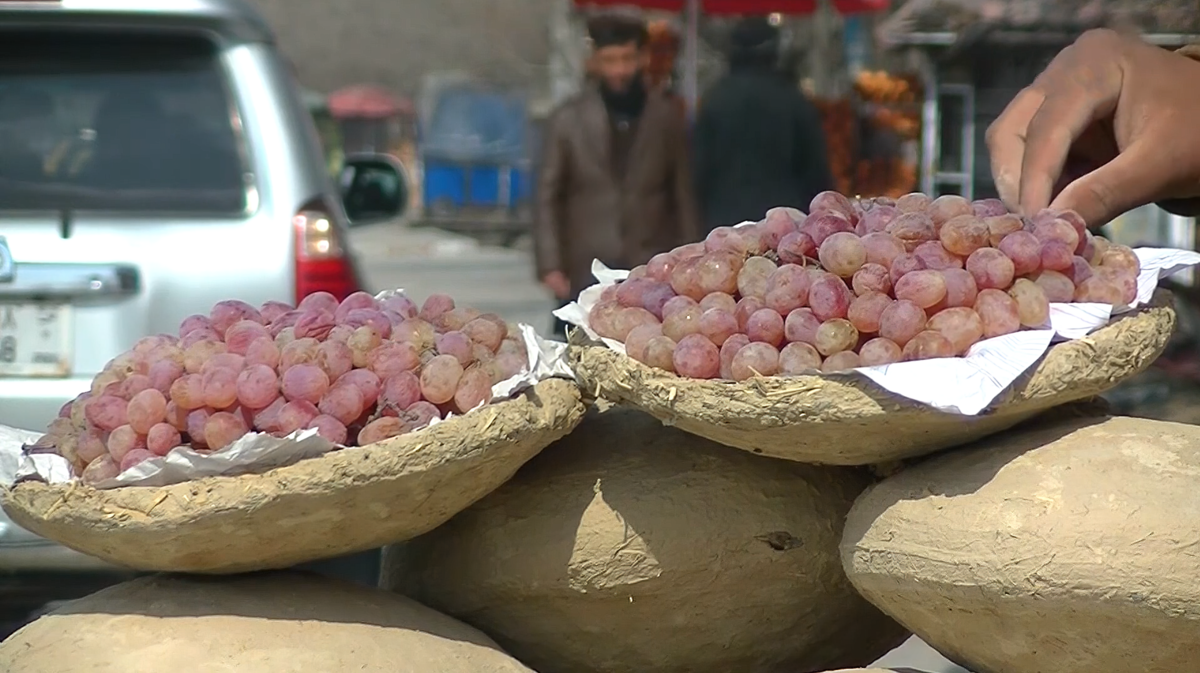
Two open kangina full of red grapes in Afghanistan. Image Source

What Kangina Are:

Kangina is an ancient preservation technique still used in Afganastan today that makes use of clay. Produce is sealed within two clay bowls, and stored somewhere cool.

It is thanks to Kangina that even people in remote communities can still enjoy fresh produce in winter months. [1]

If stored somewhere cool, they will remain fresh for up to 6 months. This is because the vessels are a form passive controlled-atmosphere storage. Due to restricting the airflow and moisture, is is harder for microbes to thrive, but at the same time, the clay still supplies enough oxygen to keep the grapes alive. 2

How They are Made

After making bowls out of clay, they are left in the sun to bake. Once they are completely dried, they are ready to use. [3]

The produce (often grapes) are placed inside a bowl, and another bowl is placed on top and the seams are sealed with mud. [4]


#preserves #food #greenliving

SprigLogo

If you want an easy way to help your local pollinators, then consider building a water station. Not only do pollinators also need water to drink, but some rely on water sources for other needs: such as how a mason bee needs mud to create their nests. [1]

Many plants and crops rely on pollinators, so the more you attract and help, the healthier your garden will be. For example, bee pollination improves crop production and can increase produce shelf-life. [2]


Water Station Tray

Supplies:

  • Tray or dish
  • Rocks
  • Water

Instructions:

The tray or dish is to hold everything, and the rocks are to give the pollinators something safe to land on. Without the rocks, you will likely end up with drowned bees.

Due to evaporation, you may have to fill the dish once or more a day.

tray with rock and water


Refilling Bowl

If you would like an option that some beekeepers even use is refilling dog bowls.

Supplies:

Directions:

Put rocks into the bowl so pollinators have a safe place to land. Place the bowl in a shady spot to help reduce algae growth. [3]

#gardening #permaculture #pollinators #FarmingAndGardening

SprigLogo

If you are ever in need to get in contact with friends and family in your area without the use of cell towers, one way you could do it is through Bluetooth. While this tech might seem odd to need when you can message someone over the internet or cell signal, there are situations where having this set up could help keep you and those you care about safe.

For example, lets say a natural disaster hits your area and knocks out the cell service and power grid. You need to both get in touch with your loved ones, and send a message to rescuers that you need help. So, you send your messages over Bluetooth and wait.

Since the messages do not go to a server, another use case is for organizing protests where protesting is considered illegal. For example, in Hong Kong several years back, protesters used Bluetooth messaging to make it harder for Chinese authorities to trace who was there.

Other uses are: you are camping somewhere with no signal, you are on an airplane and want to messages someone you know who is not sitting with you, or you can't afford a phone plan but still wish to send messages.

Benefits:

  • No Cell or Wifi Needed.
  • Security. Bluetooth messages are encrypted.
  • No server communication.
  • Messaging is free.

Downfalls:

  • People you are trying to communicate with must be using the same app as you.
  • There are distance limits (though most some apps will device-hop to increase limits).

Apps:

Suggested Videos:


#digitalfreedom #digitalprivacy

SprigLogo

FOSS stands for Free and Open Source Software, and it is exactly as it sounds: software that is free that allows you to see the source-code so that you can ensure there is nothing suspicious.

Quite often, the projects run off donations, and communities may work together to improve the code for everyone.

Here is a list of some popular options:

Arts:

  • Krita: Open source free drawing program
  • Inkscape: Free open-sourced program for Vector format files
  • Seamly2D: A program for creating fabric patterns
  • Scribus: InDesign alternative
  • FontBase: A program for sorting and previewing your fonts.

3D:FreeCAD: a free alternative to AutoCAD – Blender: pro-level 3D creation software

Animations:Synfig Studio: 2D animations – OpenToonz: 2D animations – Enve: 2D animations

Music and Audio

Streaming and Video Editing

Photography:

  • Dark Table: Photo editing that supports RAW files
  • GIMP: photoshop alternative program

Office, Writing, and Business:

Creating Writing Specific:

Accounting and Money Management:

Entertainment:

  • VLC: a media player that can play pretty much anything
  • Kodi: Video media manager
  • Jellyfin – A personal media server and client.
  • HandBrake – An open-source video transcoder.
  • VidCoder – An open-source DVD/Blu-ray ripping and video transcoding application.
  • Metastream – Watch streaming media with friends
  • Syncplay – Syncplay synchronizes the position of media so people can watch the same thing at the same time.

Ebooks:

Gaming:

Farming:

Other:

  • GRAMPS: family tree maker
  • uBlock Origin: Ad Blocker
  • Eraser – A secure data removal tool for Windows.
  • Powertools: Productivity tools for Windows.
  • KDE Connect: Connect your devices: including by syncing notifications between phones and computers.
  • Grocy: “Grocy is a web-based self-hosted groceries & household management solution for your home.”
  • Devtoys: “Swiss army knife for developers”
  • VSCodium: “VSCodium is a community-driven, freely-licensed binary distribution of Microsoft's editor VS Code.”

Text-to-Speech:


#digitalfreedom #foss #opensource

SprigLogo

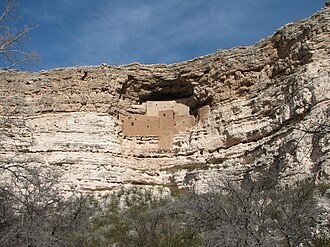
Within Arizona(USA) is a beautiful cliff-dwelling built by the Sinagua people in 1100-1425 AD. Montezuma Castle (renamed to this by colonizers) has around 20 rooms, and is built using a method that today people call “passive solar building.”

wWiwY3gKw5hoWCC.jpg Montezuma Castle National Monument, Arizona, USA

“In passive solar building design, windows, walls, and floors are made to collect, store, reflect, and distribute solar energy, in the form of heat in the winter and reject solar heat in the summer. This is called passive solar design because, unlike active solar heating systems, it does not involve the use of mechanical and electrical devices.” Wikipedia

For the cliff dwelling, that included a design that ensured the buildings were hit with the heat of the low-winter sun, but protected from the high-summer sun by overhang. It also made use of ventilation, small windows and doors (to reduce temperature loss), and more.

For greenhouses, even in colder climates where temperatures can reach -40c(-40f), passive solar designs are enabling greenhouses to run all-year. [1]

For houses, they can save the owners money on both heating and cooling, which is why they are very common in both earth-houses [2] and earth-ship [3] designs.

Window Awnings

qwc01MzNb38OW9L.png

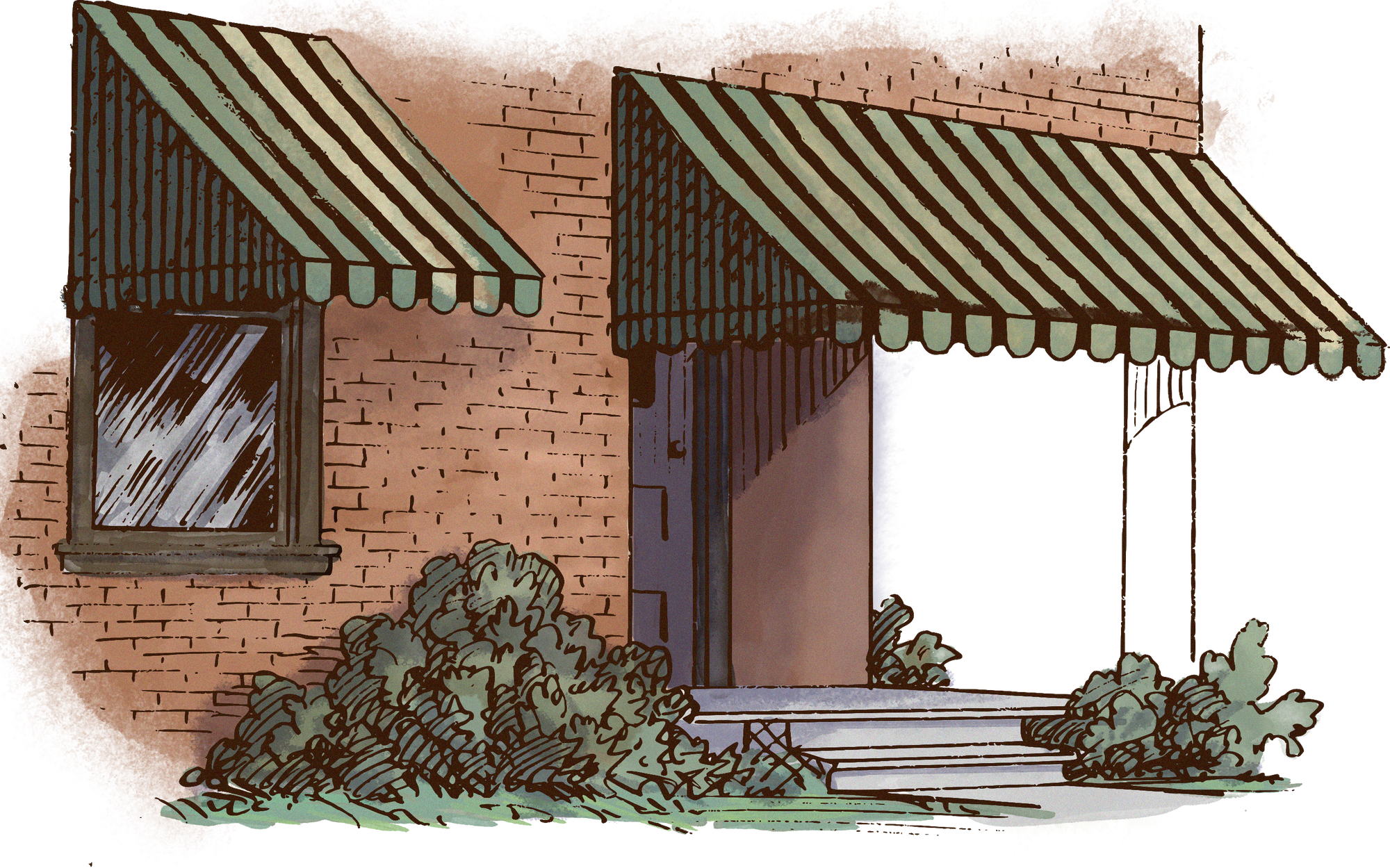
By reducing the need for artificial cooling and protecting windows from damage, Window Awnings support a future that's more comfortable, energy-efficient, and resilient to extreme weather.

In hot weather, windows become major heat sources—-especially those facing south or west. Sunlight pours in, heating up rooms and overworking fans or AC (if you have it). Awnings offer passive solar cooling by shading windows and blocking direct sunlight before it reaches the glass.

According to the U.S. Department of Energy, awnings can reduce solar heat gain by 65% on south-facing windows, and 77% on west-facing windows. [1]

This not only cools your home naturally but also protects furniture and flooring from UV damage. Well-placed awnings also let in low winter sun, making them effective year-round in passive solar design.

Types of Awnings

  • Fixed Awnings: Permanent structures that consistently block sunlight. Simple and effective for sunny windows.
  • Retractable Awnings: Can be pulled in or out depending on the weather or season. More adaptable, but usually more expensive.
  • Clamshell Awnings: Durable, hinged panels (often aluminum) that can be propped open for shade or dropped fully closed during storms.

Why Clamshell Awnings Deserve a Comeback

Clamshell-style awnings are a practical choice for anyone in storm-prone areas—-or for those off-grid who want a multi-use, no-power-needed solution. When closed, they form a protective shell over the window, guarding against extreme weather.

Tips for DIY Installers

  • Angle awnings to block the high summer sun but allow in low winter sunlight.
  • Choose durable, weather-resistant materials like aluminum, treated wood, or fabric with UV protection.
  • For clamshells, check salvage yards or second-hand stores—-they're often available for cheap and easy to repaint.

#GreenLiving #Housing #Building #FarmingAndGardening

SprigLogo

Swap:

If you swap something with someone, you give it to them and receive a different thing in exchange.

Collins

Many people today are focused on being hyper-independent; this, however, is not how life has always been for everyone.

Have you ever heard of the term “barn raising?” Barn raisings (aka a raising bee) was when a whole community — especially in 18th-19th century North America — would get together to build a barn or other structure. With so many hands at the ready, they could build an entire barn in a day.

No one would be paid for their work, and the whole community was expected to help. Often, finishing would be celebrated with a feast and dance.

The idea of this is that you help your neighbor with the knowledge that you may need that help in the future.

Instead of taking on every task yourself, you lean on a community to take on some of the load. Here are some examples of how some people are working on this:

Seeds and Seedling Swaps

Some communities organize seed swaps, where you have a gathering for people to exchange seeds. This is a great way to swap something you have a lot of for something you have never tried before.

This system is particularly helpful for people who seed save from the previous harvest.

Can’t go with the community option? There are online seed exchanges as well.

Note: in some places, this is illegal. For example, in some of the USA states, patents are held on the seeds themselves. As well as that, there are also laws “intended to protect farmers” from weeds. Some people host these events anyways, while lobbying their local governments to make changes.

Harvest Exchanges / Crop Swaps / Food Swaps

While seed swaps tend to happen before the growing season, harvest exchanges happen during harvest times. By then, you will hopefully have produce of some kind from your garden, and if you have extra, you can exchange it with the produce of someone else. For example, if you grow tomatoes, you could leave with some carrots and apples.

This does not have to be on a large scale, either. You could set up a plan with friends where you each grow something different, then plan to swap at the end of the season.

There are also online options for this as well.

Some of these also expand into finished goods; such as baked food, canned foods, and so on. These are called “Community Food Swaps.” There are online directories for these.

Clothing Swaps

I hope you are getting the idea by now, but just in case, people gather, and exchange clothes that no longer fit or no longer match their style, for clothes they do need.

Putting it simply, the events have tables (organized by clothing type and size) for you to put your clothing onto. You can go to any table, and grab the clothes you need.

If there are any clothes not claimed by the end of the event, they can be donated.

Knowledge Swaps

If you have a skill of some kind, you may be able to swap it for the knowledge someone has on a different subject. For example, if you know how to fix jewelry, that might be worth trading for someone who knows how to mend clothing.

For these, you literally exchange the skills by teaching the other person. Any skill you have, even holding chopsticks properly, could very well be a skill someone wants to learn, so do not doubt yourself.

Work Swaps

Just as it sounds: you exchange a job for a job. For example, let’s say you are good at graphics design but need a sink fixed; you could give a plumber the logo they need for marketing, while they repair your sink.


#communities #communitybuilding

SprigLogo