okmana

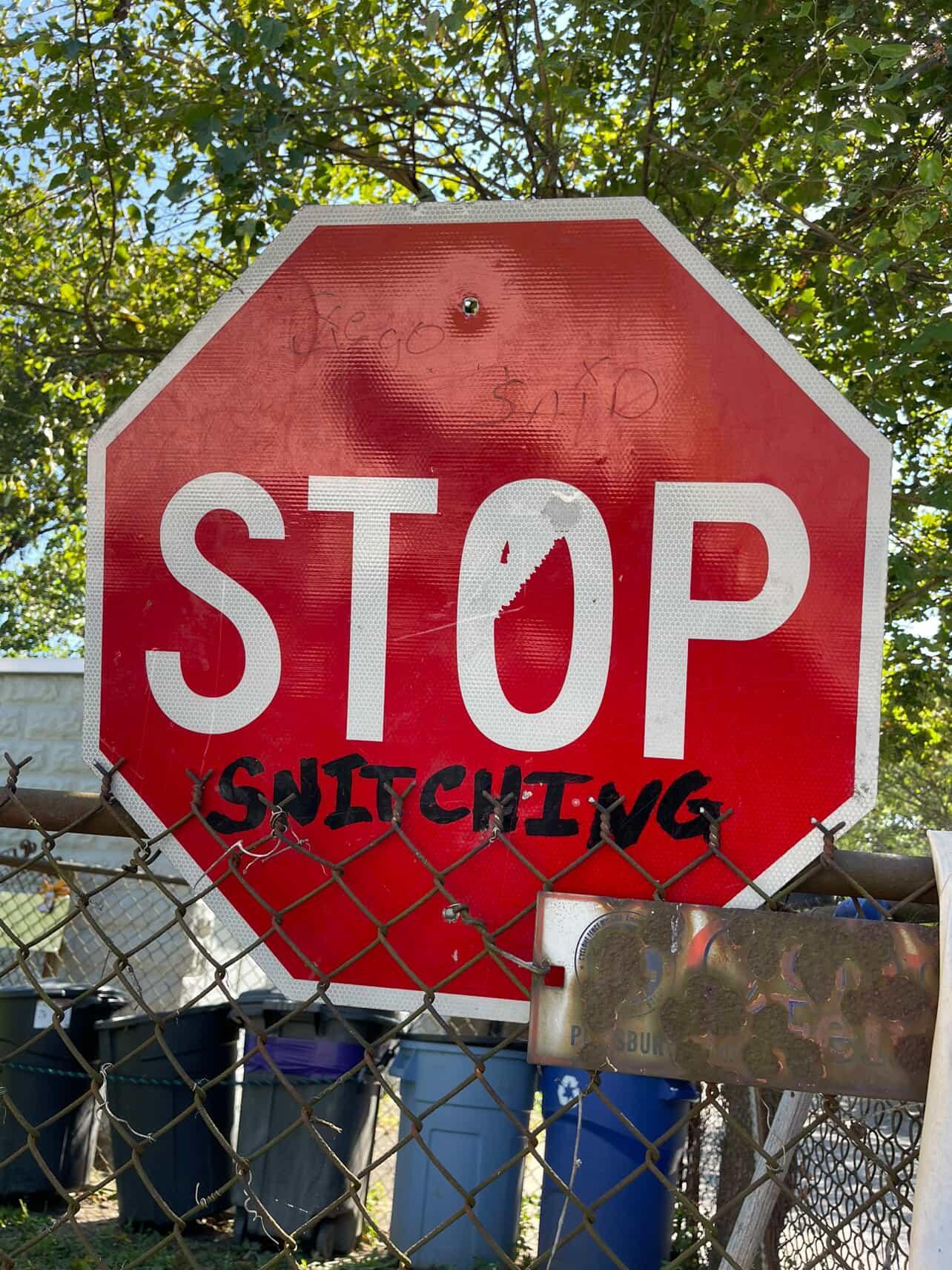
in may of this year, captives at Wallens Ridge State Prison (near the administrative border between virginia & west virginia) attacked their captors, injuring three guards. six of them were formally charged with 66 (🙄) felonies last month.

another captive has managed to get out an update about the repressive conditions at the prison since then, sharing it with a Maoist prison support organization:

Wallens Ridge State Prison in Big Stone Gap, Virginia, has been on News Nation due to five Corrections Officers being stabbed. But what they haven’t said is that three prisoners have been beaten to death since then and one has overdosed. The daily oppression and censorship is at an all-time high. We were forced 80 days without phone or JPay (tablet) usage and writing letters hardly ever make it out past the censors. It is a climate of racism and abuse that permeates here.

(the above link also has a Tor website here)

•

okmana is a tool for troublemaking near the ohi:yo'. you can learn more or reach out by clicking here.

Hospitals as a mode of health management have been, & continue to be, imposed around the globe through the genocidal destruction of indigenous societies & their diverse approaches to sustaining & nurturing life.

Hospitals hold a special place within the united states empire. “Healthcare” in the imperial core is a for-profit industry; people must pay to receive treatment, or submit themselves to capitalists (directly as workers or indirectly as recipients of government “benefits”) who will pay for them.

Built by a slaveholding aristocracy at the widest point of a river with many names, “louisville” is no exception. Norton healthcare and the university of louisville are 2 of the city's largest employers, between them controlling dozens of the most prominent hospitals, clinics, & academic institutions in “jefferson county” and the surrounding area.

Like all other ruling institutions in u.s. society, norton and UofL health are direct products of Black chattel slavery.

Norton healthcare was founded on the wealth of mary louise sutton norton, widow of reverend john nicholas norton, who—like other white “kentucky” elites—personally enslaved Black people.

Decades earlier, charles caldwell co-founded the “louisville” institute of medicine, which would grow through mergers into UofL's school of medicine. Caldwell was a slaveholder & prominent phrenologist, using skull measurements to support his belief that “by original organization and therefore radically and irredeemably, the African is an inferior race.”

Today, these healthcare institutions are in lockstep with the rest of the city's rulers: led, staffed & attended by people who are opposed to masking & similar protective measures; people who believe that “criminals” belong in jails or prisons or graveyards; people whose awareness of disablement & houselessness fosters ambient hostility towards the disabled & unsheltered; people who conform to daily routines as if COVID is over; people who believe entities like the “united states” or “israel” or “china” or “russia” or “india” have a “right to exist.”

There is a straight line from the founding of hospitals by white enslavers & genocidaires to the pop eugenics of today's COVID pandemic erasure. Call it history, progress, democracy, civilization, anything you like: it remains, with legions of police & soldiers patrolling the borders.

•

okmana is a tool for troublemaking near the ohi:yo'. you can learn more or reach out by clicking here.
from the TIME/cut website:

TIME/cut is a quarterly publication for Indiana prisoners and their families and friends. It includes news, analysis, and resources from inside and outside the walls and around the world. The articles in the publication do not necessarily reflect on its contributors, creators, readers, distributors, or readers. Its contents are for informational purposed only. TIME/cut does not provide financial or legal assistance or romantic arrangements.

The following are welcome as submissions, contributions, and responses to TIME/cut: reports of conditions inside, book reviews, poetry and artwork, tips for surviving and navigating prison, advice for mental and physical health, educational history, and offerings toward collective organizing and getting free. Please state explicitly if you would like your writings to be considered for publication and if you’d like your name published with it. This publication depends on participation of those incarcerated in Indiana and their loved ones. TIME/cut may choose not to publish some contributions due to limitations of space or the nature of the content. Send submissions to: 5868 E 71st St Suite E #105 Indianapolis, IN 46220

TIME/cut is free to all prisoners in Indiana. Email us to have your loved one added to or removed from our mailing list. If you on the outside are interested in receiving and engaging with TIME/cut, reach out! Thanks for reading and writing!

you can view, download, print the latest issue or back issues of TIME/cut online at this link. TIME/cut can also be reached through the email address timecutindiana {“at” symbol} rise up {dot/period} net.

•

okmana is a tool for troublemaking near the ohi:yo'. you can learn more or reach out by clicking here.
As people take the streets against the colonial state of indonesia (FREE WEST PAPUA!!) – here is a poster from that context (found here), modified to fan the flames locally. Use, improve (please), remix as desired.

COLOR IMAGE (PNG)

Digital poster with three lines of block capital letters on top, each reads "THE PRESIDENT IS STILL SHIT" "THE GOVERNMENT IS STILL SHIT" "THE POLICE ARE STILL SHIT" . In the middle is an outline drawing of a pile of poop. Then in color, the logos for the cities of louisville, cincinnati, columbus, and indianapolis have a big red "X" drawn over them…Finally at the bottom block capital letters read "RESIST THE OCCUPATION"

https://cloud.disroot.org/s/5FyKRrqS3wbHYcE

COLOR PDF (LETTER SIZE)

https://cloud.disroot.org/s/gJHBGjtPCRkpM7y

BLACK/WHITE PDF (LETTER SIZE)

https://cloud.disroot.org/s/c6egHapMM9yxejT

•

okmana is a tool for troublemaking near the ohi:yo'. you can learn more or reach out by clicking here.

in less than 3 months, 2 “correctional officers”—the official euphemism for prison guards here—were permanently “corrected”

on christmas day 2024, andrew lansing got beat to death by one of the captives at “ross correctional institution” which is one of more than 2 dozen ohio state prisons—each & every one entirely illegitimate, ofc

then in the middle of february 2025, michael saye wehdah—guard at a jail that's ended the lives of more than 20 human beings in the last four years—was shot dead

maybe labor shortages at jails, prisons, asylums, zoos, & other industrial cages will increase, until no one shows up to work :')

•

okmana is a tool for troublemaking near the ohi:yo'. you can learn more or reach out by clicking here.

A Directory for Free Online Property Records

Remember, oftentimes land is “owned” by a corporate entity rather than an individual or individuals. However, most of the “united states” also make it possible to search online for corporate filings, which can reveal the human beings responsible for the relationships of domination (such as the commodification of land) we wish to pulverize.

ALLEGHENY county

Free users can search for one address at a time. Clicking a result displays the “owner[s],” how much the state says it's worth, & the unique parcel ID for that section of land along with further information. There are tabs with the ownership history & a photo.

CLARK county

Free users can search (you have to click “Agree” to use it) for individual addresses, address ranges, or “owner” names. Clicking a result displays the “owner[s],” an overhead map photo, & the unique parcel ID for that section of land along with further information.

FRANKLIN county

Free users can search for individual addresses or “owner” names. A result displays the “owner[s],” how much the state says it's worth (including history), & the unique parcel ID for that section of land along with further information.

HAMILTON county

Free users can search for individual addresses, address ranges, or “owner” names. Clicking a result displays the “owner[s],” a photo, how much the state says it's worth (including history), & the unique parcel ID for that section of land along with further information.

JEFFERSON county

Free users can search for an individual address, an address range, or even all addresses on a street. Clicking a result displays the “owner[s],” how much the state says it's worth, & the unique parcel ID for that section of land along with further information.

MARION county

Free users can search (you have to click “OK” to use it) for individual addresses or “owner” names. Clicking a result allows you to download a “Property Record Card” (PDF with ownership history, parcel ID, state valuation, & more information) or the “Parcel Detail History” (PDF with detailed information about property taxes).

MCCRACKEN county

Free users can search (you have to click “Agree” to use it) for individual addresses, address ranges, “owner” names, or navigate to locations on the map. Clicking a result displays the “owner[s],” a photo, how much the state says it's worth (including history), & the unique parcel ID for that section of land along with further information.

MONROE county

Free users can search (you have to click “Agree” to use it) for individual addresses, address ranges, “owner” names, or navigate to locations on the map. Clicking a result displays the “owner[s],” a photo, how much the state says it's worth (including history), & the unique parcel ID for that section of land along with further information.

VANDERBURGH county

Free users can search for individual addresses or “owner” names. Clicking a result displays the “owner[s],” a photo, how much the state says it's worth (including history), an overhead map of the area, claimed ownership history, & the unique parcel ID for that section of land, along with further information.

WOOD county

Free users can search for individual addresses or “owner” names. Clicking a result displays the “owner[s],” how much the state says it's worth, sale history, & the unique parcel ID for that section of land.

•

okmana is a tool for troublemaking near the ohi:yo'. you can learn more or reach out by clicking here.

This text has been republished via Puget Sound Anarchists. Though a couple paragraphs are specific to that region, the dynamics described exist within the progressive & radical left in colonial cities elsewhere. Some links included in the article have been redirected to a mirror.

“In any case, a system which springs up spontaneously, under stress of immediate need, will be infinitely preferable to anything invented between four walls by hide-bound theorists sitting on any number of committees.” – Kropotkin, The Conquest of Bread

““Spontaniety organizes”. That is something few political leaders and students of politics recognize. They don’t see that because organization is foremost in their heads; or better, the type of organization they are accustomed to is their only conception of organization. To them organization is something fixed, permanent, and holy. It is structured with an identifiable leadership separate from the rank-and-file. And the most concrete form organization takes in political leaders’ minds is a political party.” – Kimathi Mohammed, Organization and Spontaniety

As more and more of the formal organizations that have had a stranglehold over struggle show themselves for what they are – opportunists, power hungry and in many cases active counter-insurgents – I see the some of the critiques of large formal organizations becoming more widespread. I couldn’t be happier about individuals refusing to be unwitting foot soldiers or cannon fodder for projects that aren’t theirs, that they are refusing to have their rage and desire to fight doused by the socialist realism of the wasteland – that realism that says forever that we must wait, that any individual expression of rage and desire isn’t just unimportant but an active hindrance to the struggle.

I want to, for newer people, expand and deepen this critique of the formal organizations and maybe for comrades who have been around for a bit to refresh this critique. Then I want to offer a proposal for individuals to consider, discuss, and take up or leave behind as they see fit.

Probably the issue with large, formal organizations and political parties that people have run into the most right now is that they have an internal logic outside of the struggle – first and foremost they are trying to assure their own reproduction. Recruit more members, put their name and logo in the front of demonstrations to gain more political capital and project themselves as a “leadership” over a movement. This is obviously in oppositions to autonomous movements which are trying to develop on their own terms and win particular fights and at best can be an annoyance but at worse can actively sap energy from movements.

To see this, we can look at the actions of the Party for Suckers and Losers (PSL) across the country over the years, but particularly a few days ago at anti-ice demonstrations in Seattle where they chose to platform a candidate who was running for some kind of office over autonomous undocumented individuals who had to physically snatch the mic from PSL. To an even worse end, we can look at the airport occupations in 2017 against the muslim ban where at SeaTac airport people were occupying the airport stopping people from being deported. Socialist Alternative and their figure head at the time Kshama Sawant prematurely declared victory, told people to go home and come to the Socialist Alternative rally in Seattle the next day, entirely against the asks of the lawyers for the people to be deported. SAlt left and took with them a large amount of the crowd and those who stayed no longer had overwhelming numbers and so the police attacked and cleared them.

To reiterate, large formal organizations have a logic of their own that is often contrary and actively opposed to autonomous struggle, where they will try to co-opt movements to make themselves look better, stronger, more important than they actually are as they vie for a seat at the table of power.

In a similar way, large organizations will mistake themselves for the struggle. They try their best to shift discourse and popular ideas away from ‘what can we do?’, away from thinking for ourselves, discussing, planning and acting together towards the need to join an organization – their organization. They will call people undisciplined, unstrategic, unorganized to kill the development of autonomous self organization in the cradle – the kind of organization that threatens their power. On the other hand, being a large visible organization with easily identifiable leaders puts pressure on them to not get too radical lest they face the repressive apparatus of the state, so they have to try to reel in, control and diffuse the combative energy of the autonomous movements they are trying to position themselves in front of. They confuse their own safety and chains with that of the movement and in trying to hold back the destructive energy of the exploited and dispossessed they play the role of the faithful controlled opposition for the play put on by our enemies.

I want to add a caveat here that while it’s easy and important to point to these large socialist organizations anarchists certainly haven’t been free of these dynamics. We, too, have at times confused ourselves for the whole of the struggle or have engaged in politicking in one form of another. And we too in the past have built large, formal organizations. Not to bring up an old history but it’s a lesson worth repeating – that of the betrayal of the CNT during the spanish civil war, who became an organ of the republican state and helped it crush the pro-revolutionary sections of the anarchists and the autonomous self organization of peasants and workers who didn’t want to give up what they had won. To paraphrase old Malatesta – we don’t want to emancipate the people, we want the people to emancipate themselves. But just as much we must remember that – if “the people” exist – we are not outside of them but are just as much are them.

There’s more I could go into in this critique – how these organizations entrench the division of labor, how they get individuals to identify with the organization rather than their own struggle, how they create a false separation between individuals and movements, how organizations with mass appeal will water down ideas, discourses and goals, how they train people out of initiative taking, etc. Others have written more in depth about this and I will leave links at the bottom.

A Proposal of Coordination

“If the question moves away from how to organize people for the struggle, it becomes how to organize the struggle. We think that archipelagos of affinity groups, independent one from the other, that can associate according to their shared perspectives and concrete projects of struggle, constitute the best way to directly pass to the offensive. This conceptions offers the biggest autonomy and the widest field of action possible. In the sphere of insurrectional projects it is necessary and possible to find ways of informally organizing that allow the encounter between anarchists and other rebels, forms of organization not intended to perpetuate themselves, but geared towards a specific and insurrectional purpose.” – Anonymous, Archipelago: Affinity, Informal Organization and Insurrectional Projects

So then, if not large formal organizations, what do I suggest? On the base level, the development of individual initiative, the practice of discussion and reflection, and the formation of fluid and agile affinity groups.

Individual initiative is easy to explain, but hard to practice especially for a people who have been largely trained into submission. But in every revolt, the current included, it comes back to the forefront as people see things that need to be done and do them. This simply needs to be encouraged and cultivated. But along with that, we need to encourage and cultivate discussion and reflection. Even in riots there is downtime were people can discuss, even in high intensity situations there are a few moments where people can get together, look around, discuss plans and possibilities. Then, in the aftermath, we take time to reflect. What went well? What went poorly? Knowing and having experienced what we did, what would we do differently next time? This should be a reflexive practice of individual-collective self-reflection, analysis and decision making.

Then the last bit – fluid and agile affinity groups. Small groups of comrades who come together on the basis of trust and shared analysis to intentionally intervene in struggle. Maybe in a particular time and place they come as fighters with extra tools and masks and defensive supplies to share with people, maybe they come as medics, maybe they focus on producing and sharing analysis in the forms of posters and fliers, maybe while the forces of order are concentrated in one place they decide to be somewhere else. Maybe they do all of this or none of this. I say fluid because affinity is fluid and individuals will and should move between different groupings as the network of affinity grows and shifts.

Then we must talk about larger coordination across time and territory. Many people are currently experiencing this already in different ways and forms and I think these should be recognized for what they are – the chats where people discuss and coordinate, the autonomous calls to actions that individuals, crews and networks of affinity choose to respond to. I want to add a few more tools to the arsenal.

The tools I’m about to discuss are oriented to the development of multiple free federations of individuals and affinity groups which come together and split apart as necessary for struggle.

To this end we can talk about intentional closed meeting between people and groups that have some knowledge of each other – whether direct relations or relations in networks. These are good for discussing more specific plans and coordination and sharing resources.

There are more or less public assemblies which are best used for doing larger strategic discussions, people coming with already in the works plans and projects for people to plug into, and sharing information between groups and individuals. Assemblies that try to form consensus, make specific plans or decisions will end up with nothing getting done.

There are spokescouncils where individuals and groups come together around coordinating various plans around a goal – like maybe shutting down a particular federal building. Usually only one person from each group speaks, they share what support is available, generally what they are going to be doing, and any supply requests. It’s very logistical oriented, but also for making sure that fighters and pacifists don’t step on each others toes.

Then, of course, there is the sharing of analysis and debates in counter-information sites – like this one! – or offline papers circulated through spaces and movements. A really interesting example of this was during the 2016 railway blockade in Olympia a struggle-specific paper called The Olympia Communard was circulated and people contributed their thoughts and ideas to it. Similarly in a lot of forest occupations they’ll usually release zines during it.

Well, to close, I want to reiterate that the formal organizations are a dead end and will sell us out and to the formal organizations I say we should on one hand encourage the continued development of autonomous self organization based on the building of direct relationships in struggle; encouraging the development of individual initiative, continuous discussion, analysis and reflection for the development of affinity groups aimed to the larger coordination of horizontal federations of affinity groups.

Let a thousand affinity groups bloom and bring the fire to I.C.E!

Further Reading

Affinity

Individual Projectuality and Affinity

Autonomous Course and Permanent Discussion

A Project of Liberation

No More Organizers

The Insurrectionary Act and the Self Organization of Struggle

•

okmana is a tool for troublemaking near the ohi:yo'. you can learn more or reach out by clicking here.

(reposted with modifications)

The cover of In Tension: an anarchist agitation, issue 3. It features a black-and-white photo of the side of a building behind a fence. Table of contents of In Tension: an anarchist agitation, issue 3.

Issue 3 Read (8.5×11)

Issue 3 Print (11×17)

This is the latest (summer 2025) issue of an anarchist magazine, centered around the white-hijacked outpost “Bloomington, Indiana.”

The magazine's PDF files are not indexed or text-searchable, so okmana has typed up a table of contents below. The files have also been re-uploaded in case there are any issues with noblogs (though you can go to the original website to access the noblogs uploads if you prefer).

Table of Contents • page 1 Stories of Water • page 2 Confrontation in the Age of Surveillance • page 4 Setting our own priorities: beyond defending the liberal status quo • page 7 June 11th • page 9 How To: Asphalt Mosaics • page 10 A Lexicon: Vegan • page 11 Defined by Action • page 12 Unpacking Queer Joy • page 14 Best Beach Reads of 2025 • page 16 Enemy Territories: Gentrification as the Regulation of Life • page 17 Collapse Features: Strategies for Safer Travel • page 20 Go for a walk • page 22 Summer Fashion: get ready to bring the heat • page 23 Substance for the Shadow: A Column of Art and Culture | YUCK • page 24 “What if the Summer Never Ends” | Sean Bonney • page 25

•

okmana is a tool for troublemaking near the ohi:yo'. you can learn more or reach out by clicking here.

This story of lawbreaking, border hopping, & cop bashing was first printed in the book Fugitive Slaves and the Underground Railroad in the Kentucky Borderland by J. Blaine Hudson (available as an eBook on shadow libraries or as a paper copy).

Thornton and Lucie Blackburn were two notable fugitives from Louisville in the early 1830s. Thornton Blackburn was born about 1814 in Maysville, Kentucky. He moved to Louisville with his owners in 1830 and escaped on July 3, 1831. In the fugitive slave advertisement placed after his flight, Blackburn was described as “about 5 feet, 9 or 10 inches high; stout made, and of a yellow complexion; light eyes, and of good address.”[1] His wife, Lucie Blackburn—called “Ruth” or “Ruthie”— described herself as “a Creole from the West Indies.” She was purchased by Virgil McKnight, later President of the Bank of Kentucky, only a few weeks before she fled with her husband.[2] The possibility that Lucie would be sold to settle the estate of her former owner might have precipitated their flight.

The Blackburns crossed the Ohio River to Jeffersonville and, posing as free people of color, boarded the steamboat Versailles. Disembarking at Cincinnati, they traveled to Sandusky, Ohio, by stage coach and reached Detroit on July 18, 1831. The relative ease with which they escaped suggests that they had a sound plan, possibly contacts in Jeffersonville and Cincinnati—and that they had funds.

They remained in Detroit, living humbly but happily by all accounts, until discovered by a member of the Oldham family in 1833. They were arrested and jailed, and a trial ensued to determine whether or not the couple should be returned to bondage in Kentucky. The presiding judge ruled in favor of their owner(s). However, Detroit’s free black community refused to accept this decision and “took matters into their own hands.” First, Mrs. George French and Mrs. Madison Mason, wives of ministers of Detroit’s “Black Baptist Church” were allowed to visit Lucie Blackburn. While unobserved, Mrs. French changed clothing with Lucie, who then escaped the jail in this disguise and was “spirited … across the Detroit River and into Canada.”[3]

Not surprisingly, Lucie’s escape tightened the restrictions on her husband. On June 17, when he was bound in chains for his long return journey to Kentucky, the black and now also many white citizens of Detroit became so incensed that four hundred of them marched on the jail where he was held captive. They wrested Thornton from custody after beating the Sheriff so severely that he died of his injuries a year later. Thornton was then placed in a wagon and a wild race began toward the Detroit River with a posse in hot pursuit. Thornton’s entourage thought it best to abandon their wagon and hastened through the forest to the riverbank on foot. There, one of Thornton’s eight rescuers sacrificed his gold watch to pay his passage across the river.[4]

The Blackburns settled eventually in Toronto and became pillars of the Canadian anti-slavery movement.[5] Interestingly, the “Blackburn case” remained in the Kentucky court system long after the Blackburns left the United States. In McFarland v. McKnight (June 1846), several related suits were brought

… against the owners and master of the steamboat, Versailles for having taken on board, in the Circuit of Jefferson … a female slave called Ruthy … and a man slave (her husband) called Thornton Blackburn…. The owners of the slaves resided in Louisville, the slaves ran away from their owners … and were taken on board and registered as passengers on the books of the Versailles, conveyed on board to Cincinnati, and there landed, whereby they have been lost to their owners.[6]

  1. Louisville Public Advertiser, July 7, 1831.
  2. Karolyn E. Smardz, “There We Were in Darkness, Here We Are in Light: “Kentucky Slaves and the Promised Land,” in Craig Thompson Friend, The Buzzel About Kentucky: Settling the Promised Land (Lexington: University Press of Kentucky, 1999): 243–248.
  3. Ibid., 249–250.
  4. Ibid., 250–251.
  5. Ibid., 254–255; Karolyn E. Smardz, “From Louisville to the Promised Land: The Story of Thornton and Lucie Blackburn,” unpublished paper prepared for the Kentucky African American Heritage Commission, April 2000.
  6. Smardz, 1999: 382

(A note on the notes: “Ibid.” just means “same source as the last note.”)

•

okmana is a tool for troublemaking near the ohi:yo'. you can learn more or reach out by clicking here.

Numerous local governments are being paid by ICE to keep people jailed. They include, but are not limited to:

(additions, corrections welcome to: rant.li/okmana / [email protected] / [email protected])

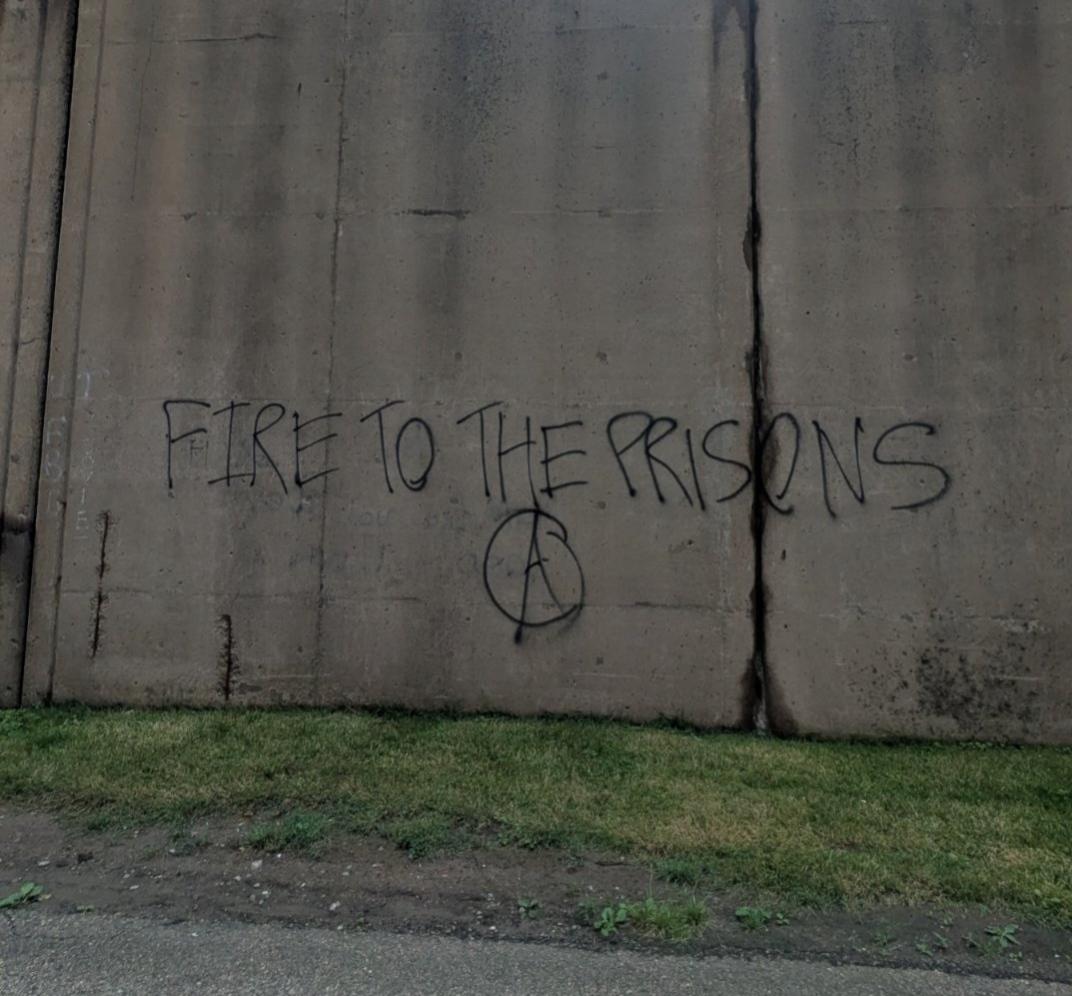
All institutions of the united states government, including its prisons and jails, are illegitimate. The targeting of jails that are already under popular scrutiny offers an opening to challenge the regime in its entirety. Let's strike back however we can, in support of the uprisings on occupied Tovaangar (so-called “Los Angeles”).

FIRE TO THE PRISONS!

SMASH THE STATE!

•

okmana is a tool for troublemaking near the ohi:yo'. you can learn more or reach out by clicking here.