The Rebirth of Prince of Persia
The Prince of Persia franchise has captivated generations of gamers with its unique mix of puzzles, combat, and movement since its founding in 1989. Today, however, Prince of Persia has become synonymous with mixed reviews. Ranging from the animation of the original trilogy to the recent entries published by Ubisoft, there has never been a dull moment with the franchise. PUBG Montpellier aims to redefine the Andres' lost relevance with the release of the Prince of Persia: The Lost Crown.
The studio has gained notoriety and acclaim thanks to the seamless worlds they engineer in their work on the Rayman franchise, so they certainly know how to design games where players can have both precision and creative expression. Because of this, a hybrid of The Lost Crown’s modern Metroidvania styles with Rayman's platforming expertise ensures that it is both nostalgic and groundbreaking, offering a compelling experience for players who buy cheap PS4 games but still want innovation alongside familiar gameplay.
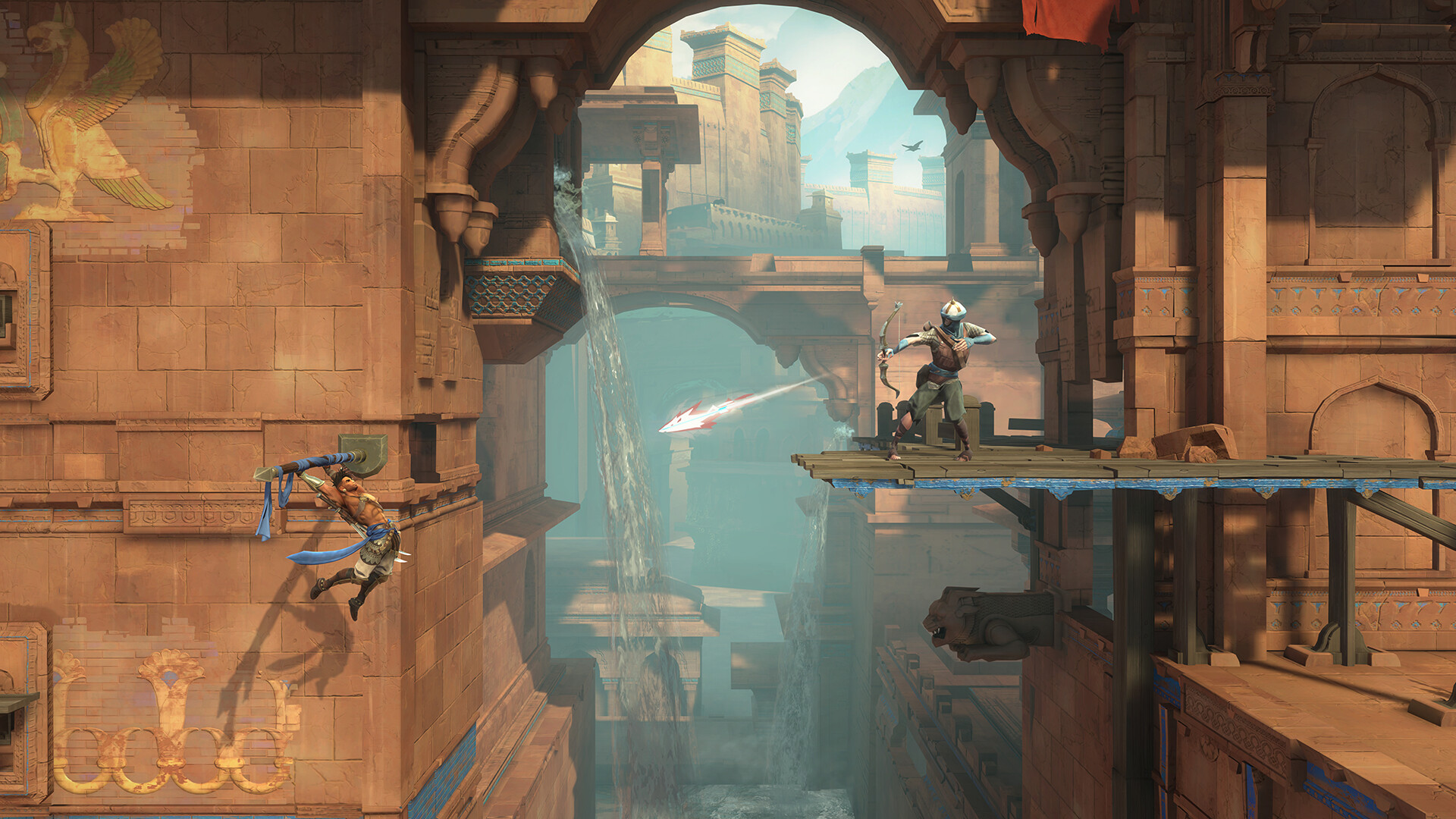
Seamless Synergy of Core Gameplay The core of The Lost Crown has a wonderfully woven game loop where combat, advancement, and traversal are combined with elegant intricacy. Unlike other contemporary action titles where mechanics feel disconnected, in The Lost Crown, every element of every facet flows fluidly. Players are climbing, leaping, and swinging through and over various terrains and obstacles. They are not only testing their reflexes. They are exercising clever problem-solving as well. Each traversal sequence is designed to maintain momentum, allowing the user to embrace and enjoy the active world and find the space rewarding to discover and explore.
Combat is equally enhanced with the equilibrated system of timing, position, and skill. The opponents are not simply hindrances. They are a vital element to the game’s rhythm and assist in melding the play to tackle an odd set. Pace is well measured and progression is orchestrated so the unlocks in the form of, for example, amulets and Athra Surges, elevate player power and ability without causing immersion to break. The enhancements feel in the right place. They are not given as gifts. Therefore, each discovery becomes an ecstatic moment. There are enough rewards to boost the enthusiasm, which, combined with a gentle difficulty slope, guarantees every encounter, puzzle, and story point has weight. Players are encouraged to explore new ideas and mechanics to dominate the game without feeling pressure to master tantamount elements.

Analysis: The Lost Crown's Story
Although Prince of Persia: The Lost Crown focuses on action and exploration, it also has some narrative ambition. The story has some character moments and plot twists, and that’s enough to lift it above most others in its genre. The players are presented with beautifully crafted NPCs. Each one adds to a greater narrative that suggests there’s a world beyond the main objectives of the game. These stories are implemented as rewards for watching closely. They are there to be appreciated rather than distract from the gameplay, providing an extra layer of depth that players who buy cheap games can enjoy without compromising the core experience.
With that said, the game does have some shortcomings in its narrative. The ending does have a thematic punch, but unfortunately, it also feels a bit anticlimactic due to the lack of setup and payoff. It’s also an ending that’s polished enough to be beyond a “minor step.” It’s a more than fitting reminder that integrating a story in an action game is a challenge that is well-received and openly accepted.
The Lost Crown touches upon the artistic and cultural identity in a way that is steeped in commitment and detail. Persian history and mythology, along with their music, mythology, and terminology, pour into the world in every corner. Mythical motifs and music permeate every corner, with Persian history and terminology woven into the very fabric of the land. The intricate palaces and vast, dismal deserts, along with the Persian culture that surrounds them and the temples that wind like a dizzying maze, make the environment vibrant and alive, and unlike a static backdrop. The deep connection of the culture to the world is heard and felt in the visual style that is framed by the sound landscape, created through tenderly crafted soundscapes and traditional instruments, used to strengthen the immersion. The effort of cultural detail is by no means simple, and in The Lost Crown, it is felt in the context of meaningful combat, traversal, and world exploration. The detail is The Lost Crown's weapon against contemporary titles, banking on the generic fantasy.
Setting New Goals for the Franchise
The combination of losing the previous games' chain and focusing on new ideas has the potential to elevate the games to a stronger position and solidify their social status, with the new lost Crown. Using the new lost crown with the prince of Persia, the gap created with Assassin's Creed will be nullified, and a new top-tier Metroidvania will be born. Add a soul-gripping story on top of the new era of resonating creativity, and it instantaneously completes the challenges, while adding on to the new franchises in a pivoting manner for its core.
The creative approach taken for the “lost crown” has a combination of new aspects while observing the history of the series, which highlights the predicted growth of the new titles. Along with that, the marriage of gameplay and historical aspects also proves the core of the old franchises, and with the lost crown system, a harmonious change will unfold. Broad Appeal Beyond Genre Fans
As far as it concerns our fans, The Lost Crown is sure to bring them joy, but it is also a much broader experience beyond the core fans of the franchise. Players who enjoy Metroidvania games will also appreciate the intricate design of the game: multilayered worlds, inventive puzzles, and combat that balances strategy and reflex. Players with no prior experience in the genre will still appreciate the game’s design, pacing, and well-thought-out control scheme. The game’s polish adds to the accessibility. Even during the most chaotic and action-oriented scenes, players can expect pristine frame rates, which enhance the experience of maneuvering and combat. The mind is stimulated with puzzles that are not overly difficult. The combat is also action-oriented but does not have a repetitive quality. This balance of challenge and enjoyment makes The Lost Crown a perfect combination of niche genre appeal and common recognition.

Minor Critiques and Refinements
Like most games out there, The Lost Crown has its pros and cons. A few minor glitches seem to pop out here and there, especially in the more extreme, traversal sections, but they are so few and far between in the context of the overall experience that they hardly matter. The more serious and aforementioned narrative blunders regarding the anti-climactic ending speak to the existential focus of the game’s narrative structure. This doesn't settle well within the context of the achievement and omni-shambles of expectations the game desperately tries not to outstep. There are too many here to simply say that these issues are nothing more than extremely small blips in an otherwise stellar game…and quite possibly solved in future patches or reliant sequels.

Conclusion
Prince of Persia: The Lost Crown does not restrict its elements to nostalgic mechanics and elements of the game. It boldly ventures out to focus on newer, more intricate aspects of advanced platforming, exploration, and the magic of a rich story that expands the horizon of the culture it draws from. The game uplifts its players with clean, smooth, seamless, and reward-filled mechanics that are interspersed within the core loop, engaging them to the very end. Each element, irrespective of loose narrative threads, integrates with the character of the game and enriches it, giving it more prosperous beauty. The integration of multiple cultures and the frame within beauty gives birth to an experience that uplifts the players, resonating deeply with their core.
It's no surprise that The Lost Crown is the Prince of Persia franchise's most promising title to date. Unlike most Ubisoft properties, The Lost Crown has managed to break free of the company's oversized shadow, maintaining Ubisoft's crucial identity while establishing its own. The title is certainly an intriguing one; if you are a gamer who enjoys beautifully developed, culturally rich expeditions, The Lost Crown will offer you a thrilling challenge. Ubisoft's thoughtful design, narrative ambition, and artistic integrity stand proudly for the franchise and have added to the legacy by putting The Lost Crown in good hands.