Prince of Persia: The Lost Crown – A Polished Metroidvania Wonder
First Impressions: An Arrival with Intent
Prince of Persia: The Lost Crown arrives after years of abandonment for the series, and it does so with an unprecedented sense of clarity that immediately comforts longtime supporters. The first hour has the game poised as a confident assertion of the Metroidvania sub-genre. The specifics remain recognizable yet audacious: speedy, precise movement, robust jumping, and a mastery-worthy combat setup. When I first executed a simple three-hit combo and air juggle, it was clear that the intention was not merely to pay homage to the series, but to fundamentally redefine the 2D action-adventure landscape, making it a standout experience for players who buy cheap PS4 games yet still expect innovation and depth.
When it comes down to it, The Lost Crown's combat system happens to be something to relish in. Ubisoft Montpellier developed what could be an exquisite dish of 2D fighting. The complexity of this dish cannot be appreciated until it is thoroughly understood, even if it looks superficially simple. The combat system is a combination of rhythm and juggles from fighting games. Even while having three base buttons, you are still able to execute grounded strings, launch enemies to the heavens, and follow the enemies mid-air in juggles. The combination of light and heavy hits strikes so much freedom, and the game appreciates creativity rather than only repetition. Combat in this manner is exciting at the beginning, and as the game progresses, the complexity of combat increases as the user understands the basics. Combat becomes a wonderland of creativity once you gain access to Athra surges and special abilities. Athra surges mixed with mid-combo launchers, chaining into mid-air dashes, and finishing with burst strikes, making every fight feel like a performance aligned with the player's reflexes.

A Step Beyond Defense: The Art of Parrying and Sidestepping
The game’s flow also possesses a defensive aspect that is as critical as the offensive. The Lost Crown does not let players lean on aggression alone. In combat, glowing signs display different types of enemy attacks – the standard ones that can be parried, red flashes that have to be dodged, and yellow flashes that signal a thrillingly timed parry. Overcoming such a challenge feels rewarding; executing it results in a stunning climax where the whole battlefield freezes, adding a stylish flair. One can only marvel at how satisfying it feels, offering the kind of thrilling payoff that makes players who buy cheap games feel truly gratified.
The game manages to maintain the balance between fairness and tension, which is extremely important. A parry, when timed incorrectly, does not just fail; it also punishes the player with a higher amount of damage as a consequence. Therefore, it is better to never hesitate. In the dying moments of battle, between the dodges, the parries, and the counterattacks, there is a rhythm: a rhythm that turns even the most basic and trivial encounters into moments of excitement. A rhythm that is beautiful and flows with the combat.

Boss Battles: The Pinnacle of Design
In any game, regular combat is akin to a dance, whereas boss battles are a performance, intricately choreographed and executed, full of art and excitement. With each new boss, you not only have to complete a multi-phase duel, but you must also determine what the boss is testing you on. These duels, intricate and deliberate, require you to use your creativity, reflexes, and stamina. Here, the thrilling, climactic duels of Hollow Knight are revised in a new identity, complete with cinematic style.
Although the bosses are patternless, their overwhelming creations gradually become synchronized and harmonious. Each boss who ‘transforms’ in the middle of a fight changes the rhythm, requiring adaptations in the player's strategy. With the use of anime-style flickering, intense slow-motion clashes, and beautifully crafted areas, each duel, in addition, feels stimulating enough to be classified as a game on its own. Each combat is the zenith of the game, blending in the players’ parry timings and combos with awareness of the surroundings. Their mastery of the game is on full display, as each combat is a chore, with the results portraying intense focus and effort.
Traversal Puzzles: Powers in Motion.
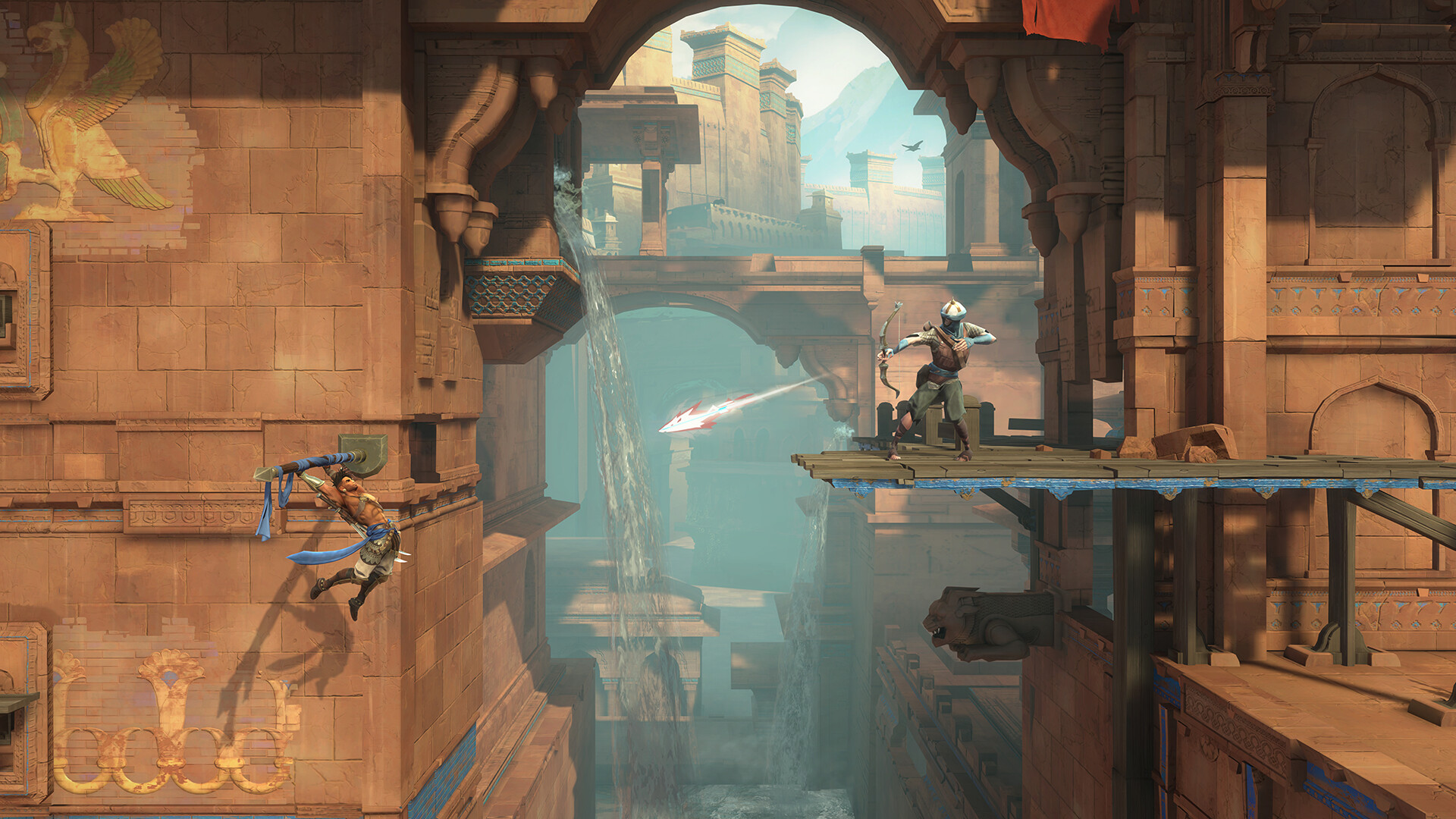
Combat in a game is often very exciting, but in The Lost Crown, there is an equally important aspect: traversal. The game gives you new 'movement vocab' by starting with simple wall jumps, adding air dashes, and then adding time powers that change how you see the game. The puzzles are not brainteasers, but rather, puzzles that require physical and mental effort.
The first puzzles are simple and teach the player the basics. However, as the player's skills improve, the game makes complex 'obstacle courses' that require the player to use a combination of skills. In one moment, you freeze a platform with a time marker, and in the other, you are dashing and weaving through spikes and walls to another time box. These puzzles seem to flow like a smooth, skillful game rather than an interruption, giving the player a feeling of satisfaction.
Influences Worn with Pride The Lost Crown holds a visible connection with inspirations from other games, such as the more modern and comparable Metroidvanias of that caliber, ‘Hollow Knight.’ The impact of the game shines the brightest with its refined, yet repetitively spanned, combat and robust map structure, which is filled with little uncovered tricks and layered verticality. Still, the game does not feel like an imitation. Rather, with a smile, it recognizes the benchmarks of its predecessors while forming its own uniqueness with the addition of time powers, a Persian culture influence, and a different combat philosophy. These influences do not diminish the identity of the game, but enrich The Lost Crown with the genre's history, while making sure that the game has its own, unique identity. The trade marks of advancements within The Lost Crown will appeal to the fans of Hollow Knight, as well as the new, captivating intertwining of combat, lore, and traversal.

Aesthetic Craft: World and Atmosphere
In the case of The Lost Crown, the aesthetics not only showcase the art but also the gameplay of the title. The game is graphically pleasing thanks to the combination of smooth character animations and colorful backgrounds. The Persian mythological setting provides a range of biomes, including sunlit courtyards and shadowy ruins, all of which are clear and vivid, which enhances the traveling challenges. The animations, especially in combats, are smooth and balletic, emphasizing motion and impact. The Audio also enhances immersion and is just as devoted. The music strikes the right chord, making combat strikes and intense focus parries sound, as well as the boss, which is perfectly timed to their entrance and helps set the stage as the music crescendos as they enter the arena. The score is a nice touch, as it weaves together and meshes traditional and modern instrumentation, emphasizing the cultural influences of the title, all the while increasing culture within direct proportional action. The performance hinges on the score, suggesting remaining focused on timing and reflex, which is equally important.
The challenge in The Lost Crown is never vain. The game is designed to punish those, and only those, who have done fumbled strikes, misplaced dashes, and missed windows of opportunity. Each mistake, whether it be dashes or missed windows of opportunity, is in service of learning. Each failure only helps clarify the pattern, reinforce timing, and encourage improvement. This only leads to the conclusion that the challenge is difficult and the player's growth is equally fair, as the growth from the game is substantial. Exploration rewards, too, contain this philosophy. There are hidden amulets, shortcuts, and lore fragments that provide both mechanical and narrative rewards. Each discovery stands as a monument to curiosity, reinforcing the core satisfaction of the genre – mastery lies in observation, and determination begets deeper understanding.
The Lost Crown is a remarkable game that lingers in memory and invites return visits. When the credits roll, it is the combat system that creates a strong incentive to replay, as new combinations of defensive and offensive maneuvers beckon the player to push the system’s limits. The secrets of the world are an invitation to completionists, and the rich culture and atmosphere reward players who appreciate the experience as much as the mechanics.
For the Prince of Persia franchise, this one is an entry that goes beyond a return, as it is also a reinvention. For the Metroidvania genre, it is a passionate piece of refinement, proudly sitting on the shelf with the best while also making its own very distinctive mark.

Conclusion
The Lost Crown in Prince of Persia works because it does not forget its roots and audience. It crafts an odyssey. Players learn, create, and master. The fights are a gourmet blend of imagination. The boss fights are grand shows, and the movement puzzles pulse with rhythm. It understands its influences and creates a new path. This means genre fans will also get to experience new ideas. This is not just a revival. This is also a metroidvania marvel.