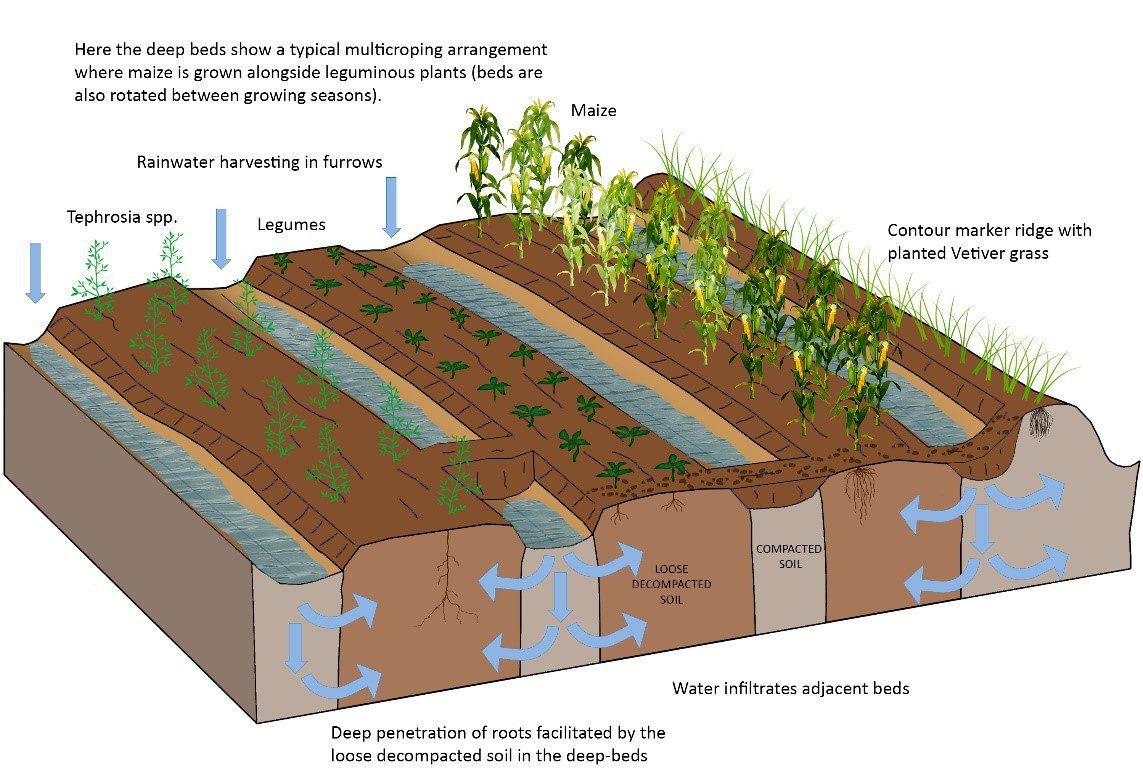
Deep Bed Farming (DBF) is a regenerative agriculture method developed by the Tiyeni Trust in Malawi and studied by Loughborough University and Aftrak. It is designed to overcome widespread soil compaction (“hardpan”), improve water infiltration, and significantly increase crop yields.
Break the Hardpan: Farmers dig through the compacted sub-soil layer once during the first year, allowing roots, air, and water to move deeper into the profile.
Construct Deep Beds: Beds about one metre wide are formed alongside shallow ditches. These ditches capture rainfall and reduce runoff, while the beds are kept permanently unwalked to prevent re-compaction.
Intercrop and Rotate Crops: DBF replaces monocropping with mixed planting (e.g., maize with legumes or pumpkins) and seasonal rotations to improve soil nutrients and reduce pests.
Mulch and Compost: Weeds and plant residues are used as mulch or compost, boosting organic matter and reducing dependence on synthetic fertilisers.
Benefits
Major yield increases have been recorded—maize rising from ~1.7 t/ha to over 8 t/ha in some trials.
Strong reductions in soil erosion and improved water retention.
After year one, the system shifts toward low-till or no-till.
Farmers report improved food security and higher incomes.
Limitations
High labour demand in the first season.
Best suited to regions where rainfall or runoff capture is practical.
Requires training to adopt new bed layouts and crop diversity.
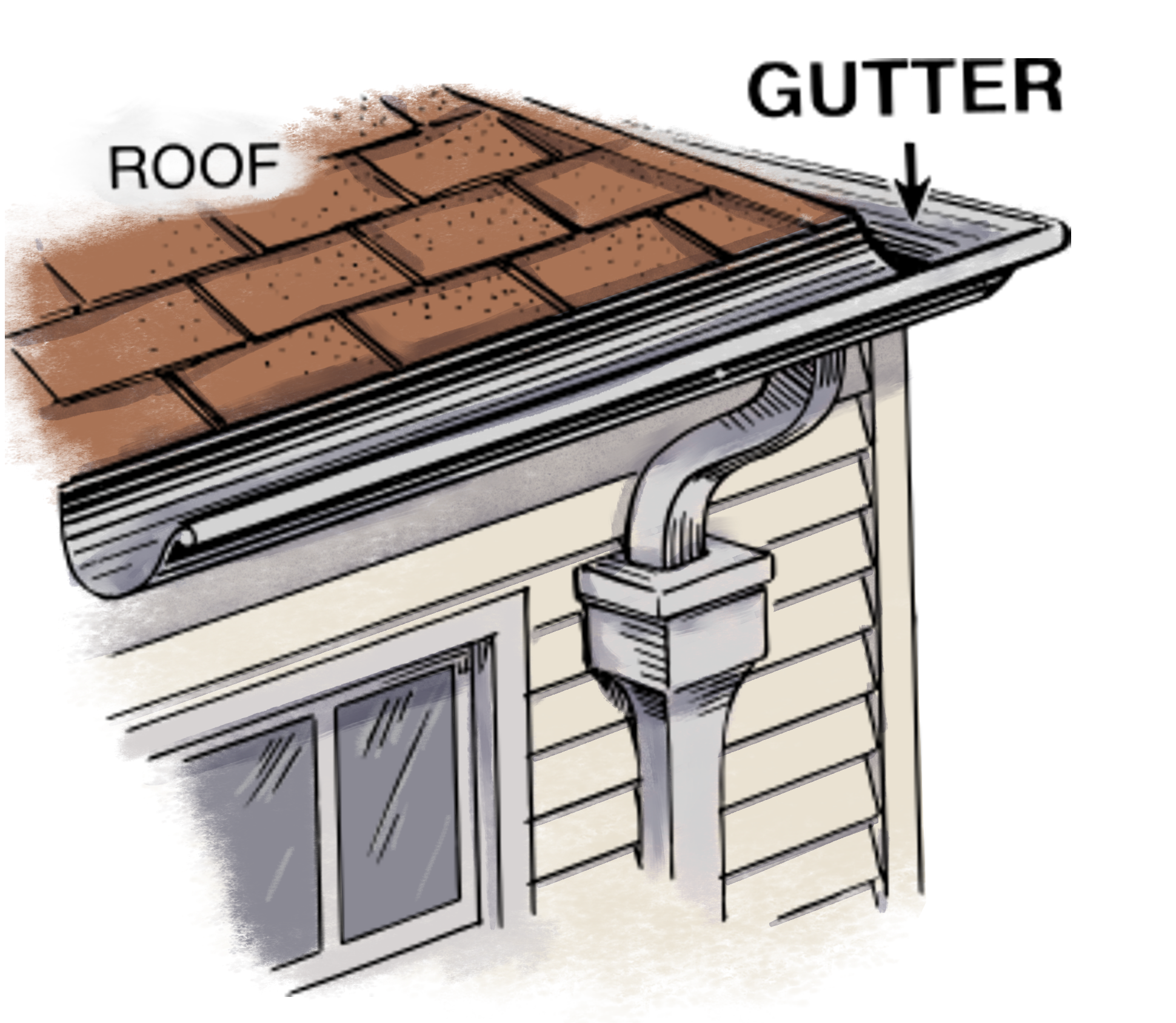
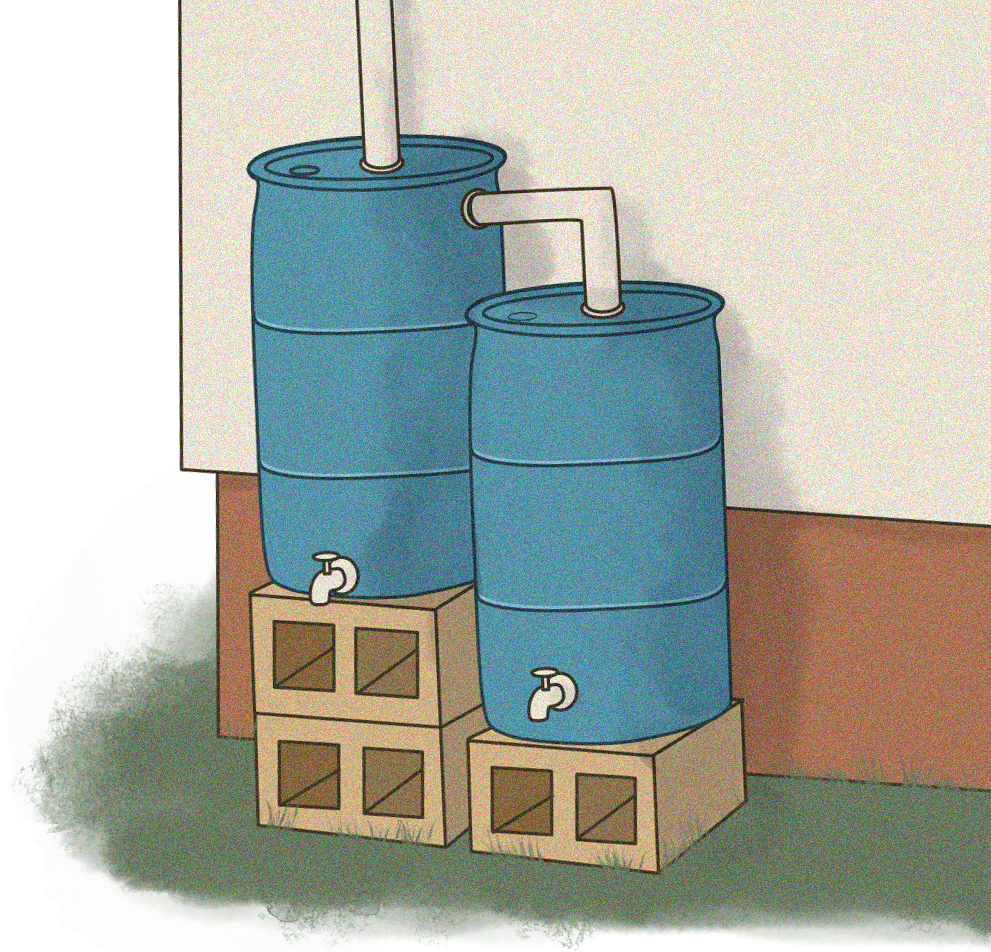
Rain barrels (also called rainwater tanks) collect rainwater runoff from rooftops by using eavestroughs and downspouts to carry and funnel water into the barrel.
Since this is untreated water, it is healthier for the plants in your garden [1] while also saving you money on your water bill.
The use of the barrels can assist drought-prone areas by collecting water in the rainy season which can then be used during the dry season. This reduces the strain on local water reserves.
Before Buying
Many cities do also have incentives to buy rain barrels, so be sure to do some research on that for your area.\ Some places (such as some USA states) have different regulations regarding water capture, so please look into that as well. [2]
Tips:
Barley: If you are having trouble with algae, try barley. It helps restrict algae growth. [3]
Mosquito Dunks: If you have a open-faced (no mesh or cover) barrel, consider a mosquito Dunk to help deal with mosquito larvae in a safe way. [4]
Timers: If you water at the same time every day, consider a battery-operated faucet timer and a soaker hose
Gravity: If you can get your barrels higher than the ground you are planning to water, you should be able to water without problems
DIY Option
Supplies:
Garbage can with a lid
Valve Spigot
Screening
Drill and drill bit
Waterproof duct tape
Instructions:
Use the drill and drill bit to make a hole near the bottom of the container for the valve spigot.
Install the valve spigot (installation instructions will vary depending on what you buy)
Use the drill and large drill bits to make a hole or several holes in the lid.
On the top side of the lid, cut the screening so it will cover the holes, and tape in place with the water proof duct tape.
Place the lid upside down over the container so the rim of the lid helps to funnel the water
Place your new rain barrel under your downspout.
Optional: Add another tap near the top of the container if you want to link multiple containers.