

Rusty Shackleford

Banner photo

Rusty Shackleford

October 27, 2025


How The Modern Antifascist Learned to Party Again — And Why That Matters


A photojournalistic primer to the history and resistance of fascism — a work in progress

Looped atmospheric audio
Library, composed by Hiroshi Tanabe, Naoko Ishii, Waichiro Ozaki, December 9, 1999

Egotronic - Raven Gegen Deutschland


 In 2006, a vital resistance to opression pulsed through Germany’s leftist underground. Protesters gathered on trucks blasting distorted techno, waving banners that read, “Germany must die so that we can rave.” From that pointed slogan, Egotronic’s Raven Gegen Deutschland was born — and with it, a new political ritual: the rave as resistance.


May 1, 2019 Protestors march with flags during a demonstration of the far-right party 'The third way' on May Day in Plauen, Germany. - Photo via AP
May 1, 2019 Protestors march with flags during a demonstration of the far-right party 'The third way' on May Day in Plauen, Germany.
Photo via AP


 But this moment of resistance wasn’t happening in isolation. It echoed a much older lineage — one rooted in the antifascist networks that would later be called Antifa. To understand the movement that embraced Raven Gegen Deutschland, we need to understand antifascism itself: its origins, its principles, and its evolution.


August 8, 1925 General view of the Ku Klux Klan on parade along Pennsylvania Avenue in Washington, D.C. It was estimated that nearly 60,000 klansmen marched in the parade while nearly a million persons viewed the demonstration. Photo via Getty
August 8, 1925 General view of the Ku Klux Klan on parade along Pennsylvania Avenue in Washington, D.C. It was estimated that nearly 60,000 klansmen marched in the parade while nearly a million persons viewed the demonstration.
Photo via Getty


Antifascist Origins
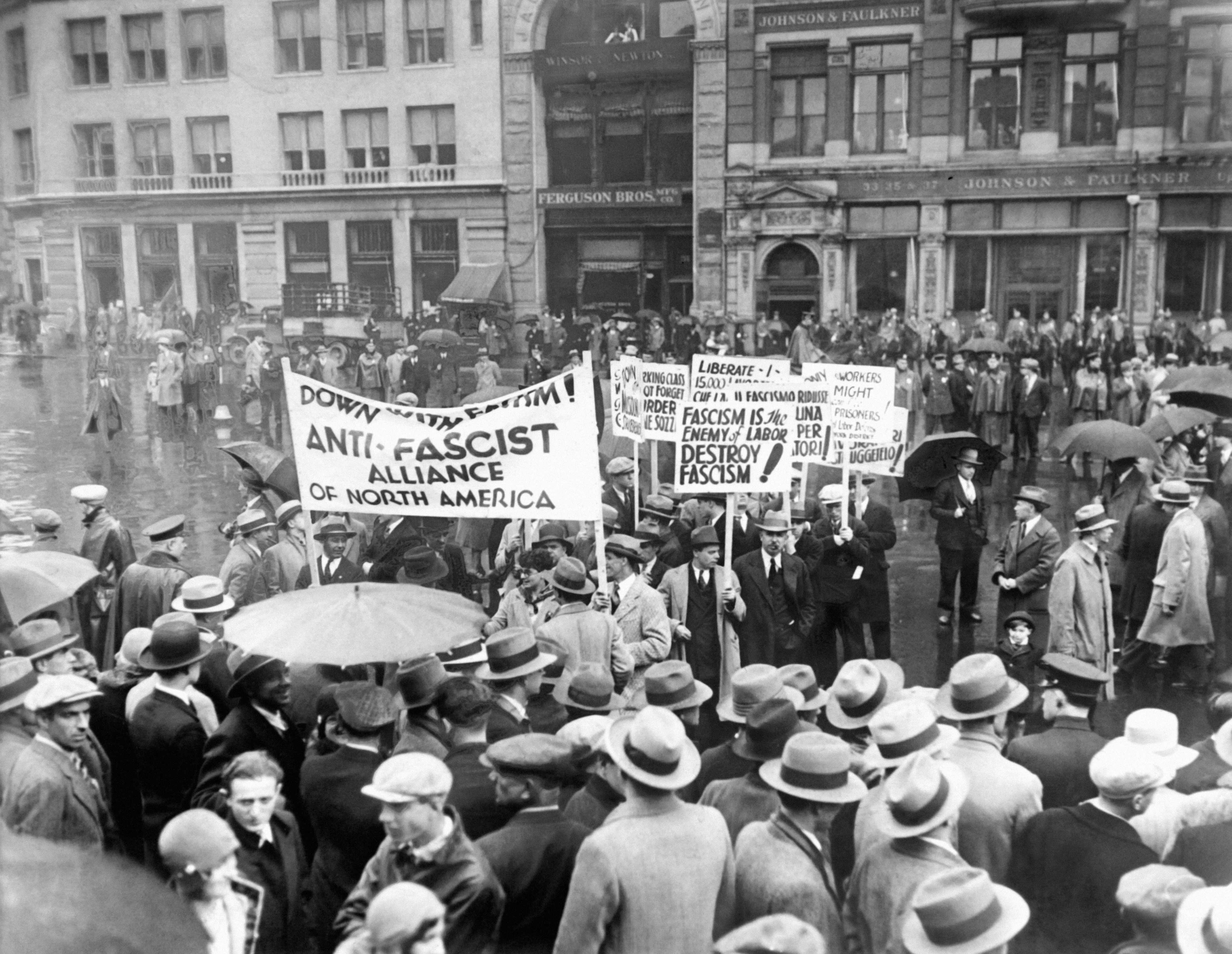


May 1, 1929 Antifascist demonstration on May Day in New York City, New York. Photo via Getty
May 1, 1929 Antifascist demonstration on May Day in New York City, New York.
Photo via Getty


 Fascism as a term was first coined in Italy in the 1920s under Benito Mussolini, whose Blackshirts terrorized opponents and dismantled democratic institutions. By 1925, Mussolini had declared himself dictator.
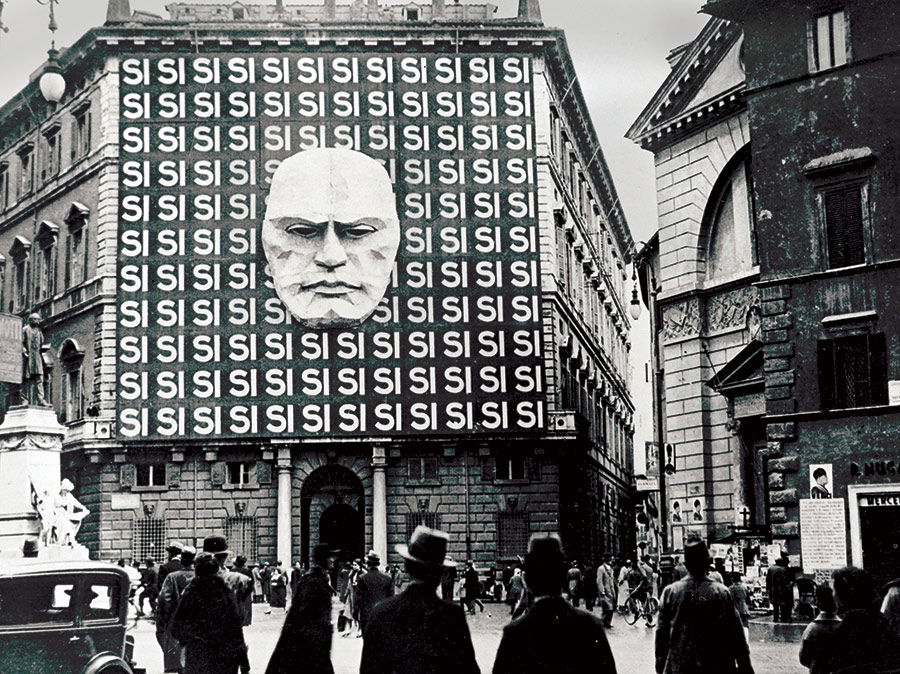


A stoic face stares down from the facade of the Fascist Party Federation building in Rome, Italy, 1934


Historian Stanislao Pugliese of Hofstra University explained,

“Italy has the distinction, unfortunately, of having the first fascist movement. But it also has the distinction of having the first antifascist movement,”, “In the 1920s, even before fascism came to power, there were antifascist groups in Italy who, similar to today, understood that fascism was a completely different phenomenon on the political spectrum.”


Benito Mussolini makes a speech in Italy. Known for his charisma and persuasive rhetoric, the future fascist dictator rose to power amid growing discontent in the early 20th century.<br>NPL - DeA Picture Library / Bridgeman Images By Erin Blakemore
Benito Mussolini makes a speech in Italy. Known for his charisma and persuasive rhetoric, the future fascist dictator rose to power amid growing discontent in the early 20th century.
NPL - DeA Picture Library / Bridgeman Images By Erin Blakemore


 Even before Mussolini seized power, Italian antifascists recognized fascism as uniquely dangerous — an ideology blending nationalism, violence, and control over culture. Through fascism, authoritarian leaders co-opt religion, education, technology, and even leisure to control citizens and punish dissent.


1934 Leone Ginzburg, Italian editor, writer, journalist, teacher, considered a resistance hero, after his arrest for “Antifascist Conspiracy”<br>Courtesy: “Casellario Giudiziario” Archival Series.
1934 Leone Ginzburg, Italian editor, writer, journalist, teacher, considered a resistance hero, after his arrest for “Antifascist Conspiracy”
Courtesy: “Casellario Giudiziario” Archival Series.


Fascism Spreads


1931 Students at the University of Vienna saluting in a torchlight parade together with the Rector, Hans Übersberger.<br>ÖNB Bildarchiv. H 780 B
1931 Students at the University of Vienna saluting in a torchlight parade together with the Rector, Hans Übersberger.
ÖNB Bildarchiv. H 780 B


Adolf Hitler soon adapted this model in Germany. The Nazi Party used spectacle, propaganda, and terror to crush dissent, personal freedom, and the press — replacing democratic culture with orchestrated conformity.


 In 1932, the Communist Party of Germany (KPD) established Antifaschistische Aktion — “Antifascist Action” — to oppose the Nazis. The organization’s original logo, two flags in a circle, is still used by antifascists today.


1926-1933, Karl-Liebknecht-Haus, the KPD's headquarters where the Antifaschistische Aktion (a.k.a. “Antifa”) logo can be seen prominently displayed on the front of the building.<br>Credit: The German Federal Archive, CC BY-SA 3.0 de
1926-1933, Karl-Liebknecht-Haus, the KPD's headquarters where the Antifaschistische Aktion (a.k.a. “Antifa”) logo can be seen prominently displayed on the front of the building.
Credit: The German Federal Archive, CC BY-SA 3.0 de


 Simultaneously we began to see a new age of both fascist and antifascist art emerge from those who either worshipped or resisted these ideologies.


1932-33 Cliff Rowe: The Struggle between the Unemployed and the Police Forces


Painted in the early 30's by Benedetta Cappa, one of the few female Futurists, these three murals celebrate modern communication.<br>Credit: Suzanne DeChillo/The New York Times<br>Benedetta Cappa's involvement in the Futurist movement places her within a context that was closely associated with Fascism. However, her artistic expressions, activism in feminist spaces, and journal entries indicate a more nuanced position that both embraced and critiqued the two ideologies.
Painted in the early 30's by Benedetta Cappa, one of the few female Futurists, these three murals celebrate modern communication.
Credit: Suzanne DeChillo/The New York Times
Benedetta Cappa's involvement in the Futurist movement places her within a context that was closely associated with Fascism. However, her artistic expressions, activism in feminist spaces, and journal entries indicate a more nuanced position that both embraced and critiqued the two ideologies.

1935 Futurist artwork titled 'Sintesis Fascista' by fascist artist Allessandra Bruschetti shows their support for Mussolini and his militaristic plans.


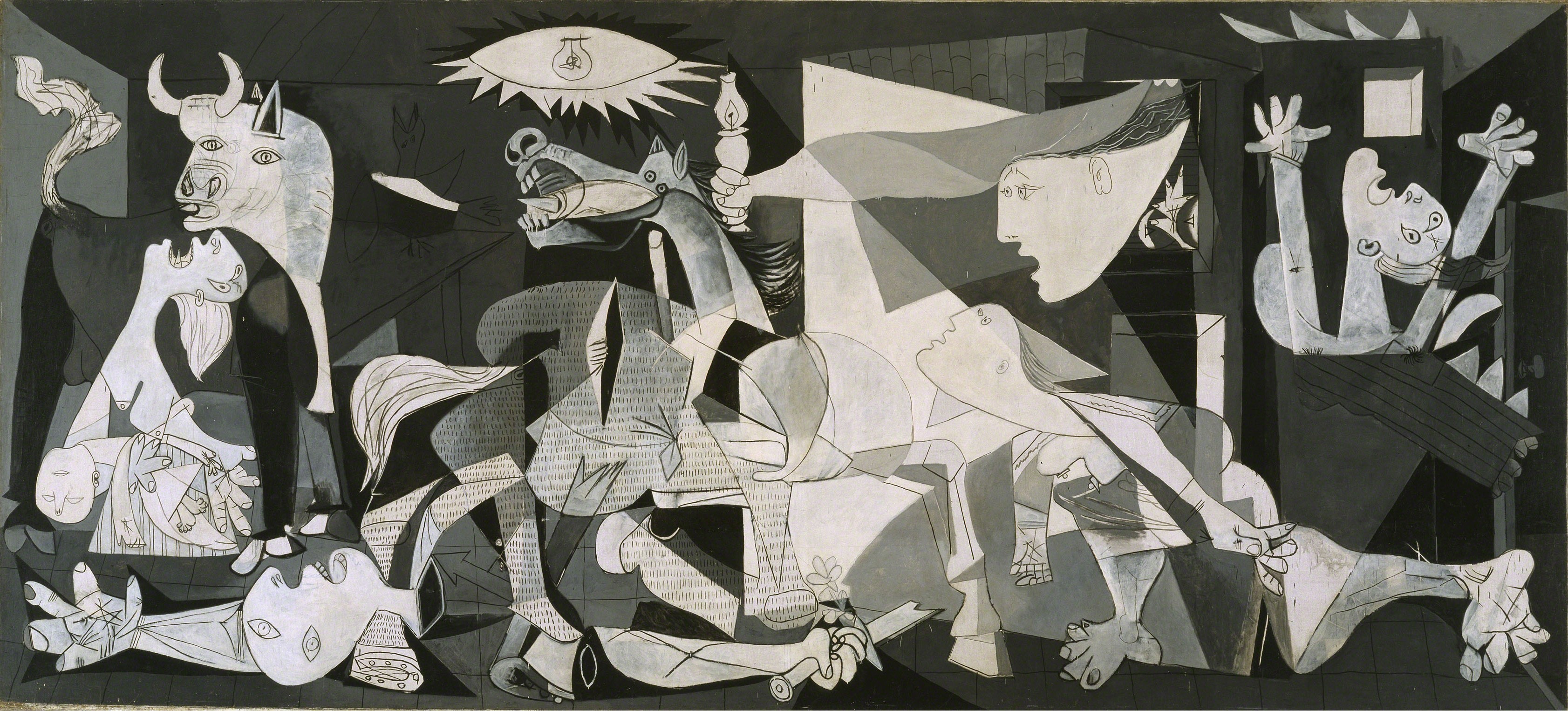
1937 Inspired by the bombing of the Basque city, Picasso’s mural Guernica is one of the most famous anti-war paintings in history.<br>Photo via Museo Nacional Centro de Arte Reina Sofía
1937 Inspired by the bombing of the Basque city, Picasso’s mural Guernica is one of the most famous anti-war paintings in history.
Photo via Museo Nacional Centro de Arte Reina Sofía


 As fascism spread across Europe, antifascists of all political backgrounds — socialists, communists, anarchists, and even liberals — formed coalitions to defend democracy.
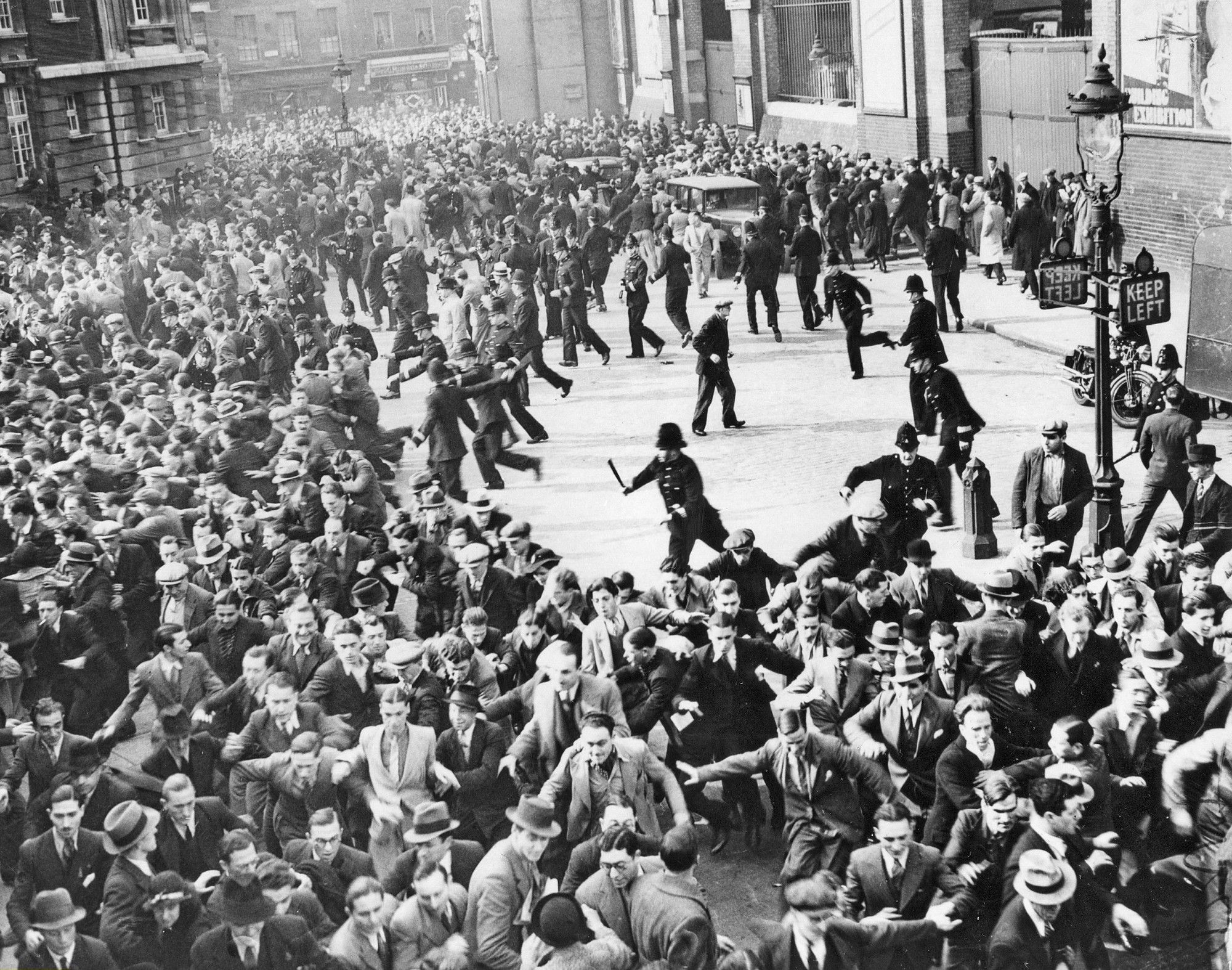


October 4, 1936 British police attempting to clear antifascists from the streets for a march by the fascist Blackshirts and their leader Oswald Mosley. The antifascists shut down the march, an event that’s commemorated in East London as the Battle of Cable Street.<br>Photo via TIME and Getty
October 4, 1936 British police attempting to clear antifascists from the streets for a march by the fascist Blackshirts and their leader Oswald Mosley. The antifascists shut down the march, an event that’s commemorated in East London as the Battle of Cable Street.
Photo via TIME and Getty


 Historian Federico Finchelstein has noted how the opposition to fascism formed popular fronts that brought together leftist groups and, in some cases, liberal and conservative forces to resist fascist movements, especially in countries like Argentina. Finchelstein notes that such coalitions played an important role in contesting the spread of fascist ideology outside of Europe, highlighting the complexities of alliances and consensus-building among diverse political factions.


Madrid, 1939 Before the city fell to Franco, it was considered the antifascist capital of the world, thanks to the propaganda of the Republican government and the well-known antifascist intellectuals who passed through there during the war. The victors considered moving the capital to Seville, Salamanca or Burgos, to get rid of that Madrid vibe. But they decided to change Madrid itself. The events that followed have recently been collected by the historian Pablo del Hierro in his book Madrid, metropolis (neo)fascista, Crítica, 2023
Madrid, 1939 Before the city fell to Franco, it was considered the antifascist capital of the world, thanks to the propaganda of the Republican government and the well-known antifascist intellectuals who passed through there during the war. The victors considered moving the capital to Seville, Salamanca or Burgos, to get rid of that Madrid vibe. But they decided to change Madrid itself. The events that followed have recently been collected by the historian Pablo del Hierro in his book Madrid, metropolis (neo)fascista Crítica, 2023)


 Federico Finchelstein described antifascism In his book, From Fascism to Populism in History (University of California Press), as both national and transnational, emphasizing “global connections” that were critical for the development of both fascist and antifascist movements in the 1920s and 1930s.


October 30, 1937 The pro-Nazi German American Bund holds a parade on East 86th Street in New York City.<br>Photo via Library of Congress
October 30, 1937 The pro-Nazi German American Bund holds a parade on East 86th Street in New York City.
Photo via Library of Congress


Federico Finchelstein further noted that,

“As many antifascists noted at the time, fascism used democracy, and even democratic alliances, in order to destroy democracy.”
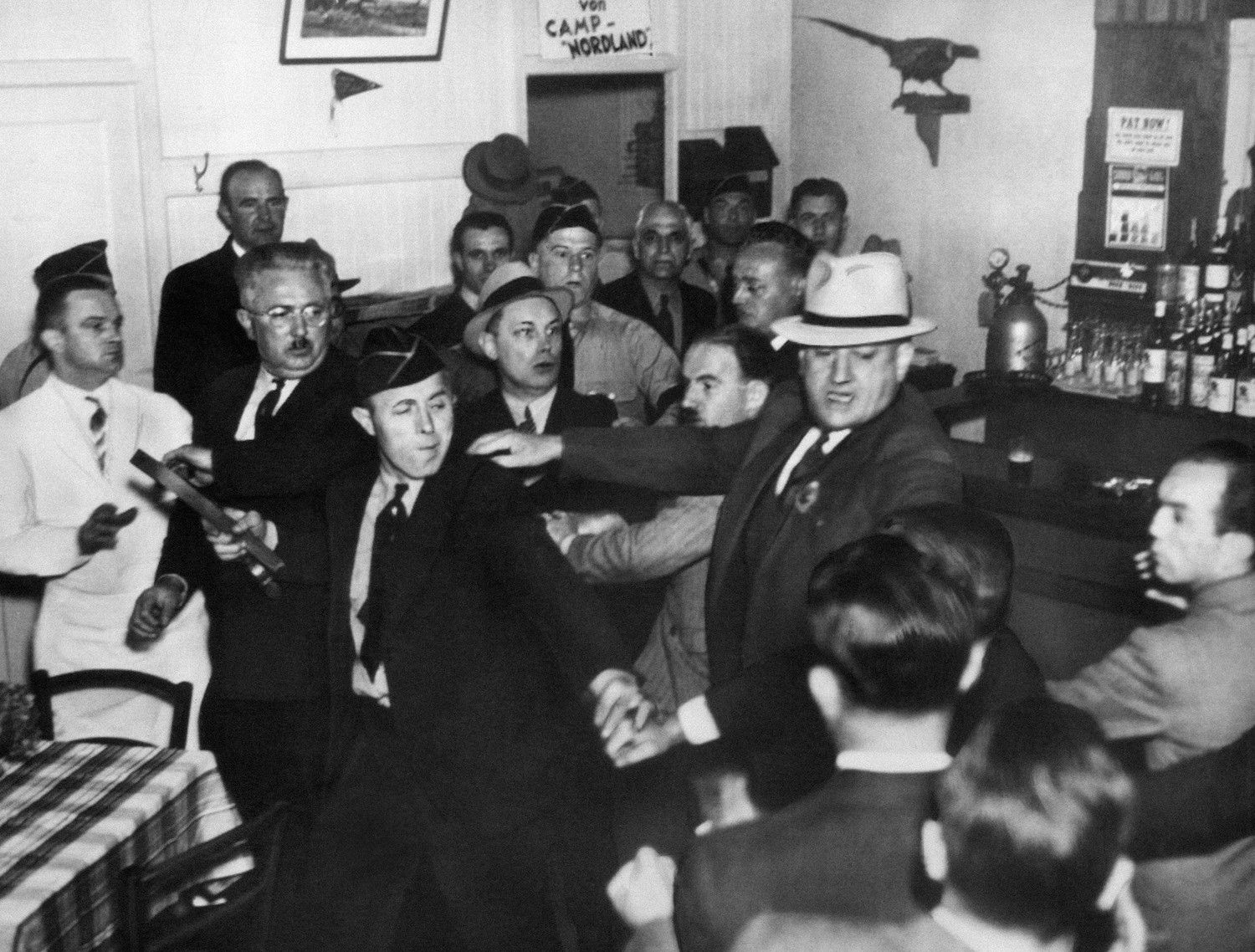


1938 Protesters raiding the headquarters of the Nazi German-American Bund Hall in Union City, New Jersey.<br>Photo via The Atlantic
1938 Protesters raiding the headquarters of the Nazi German-American Bund Hall in Union City, New Jersey.
Photo via The Atlantic


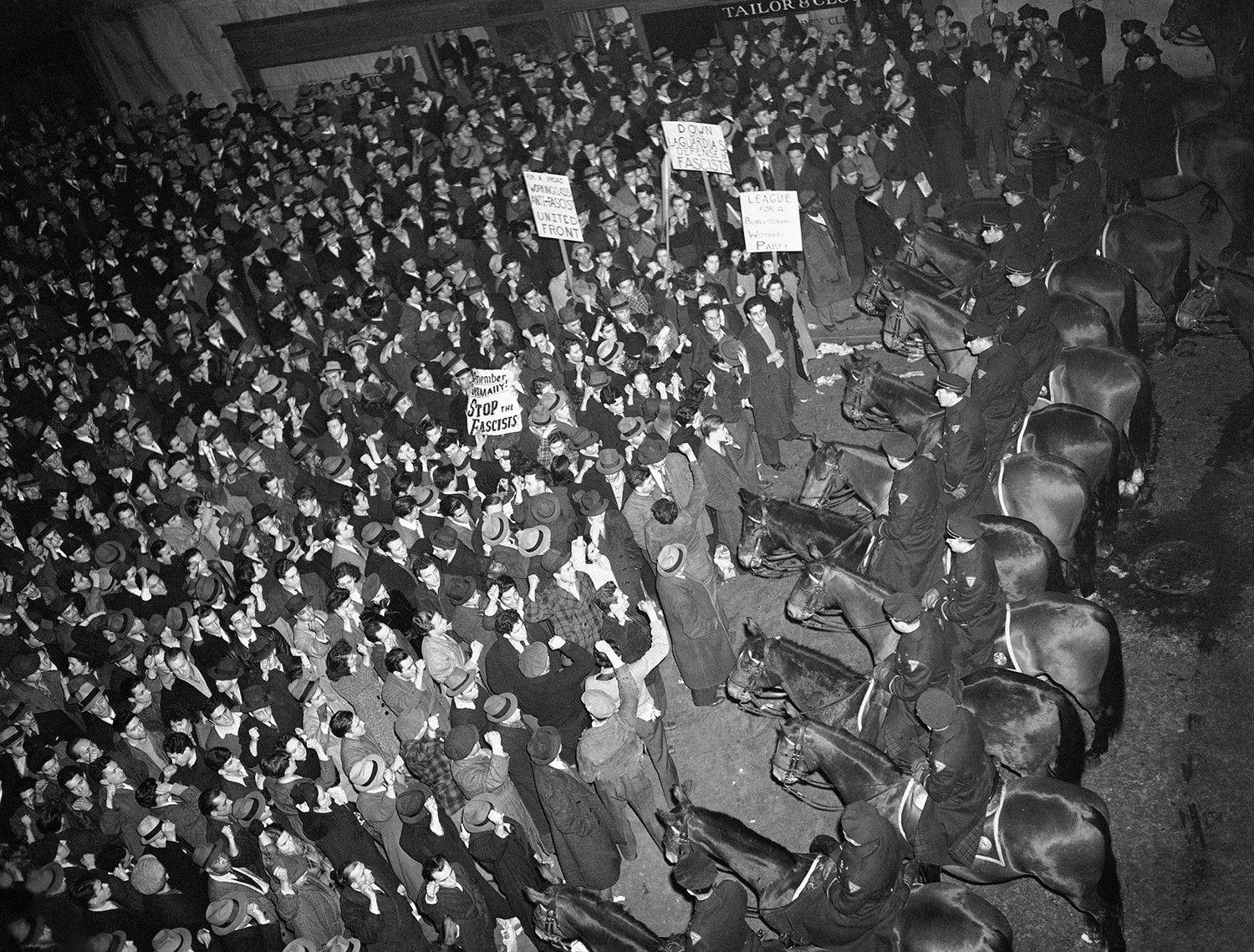
1939 Protestors outside Madison Square Garden, where 20,000 fascists gathered<br>Photo via The Atlantic
1939 Protestors outside Madison Square Garden, where 20,000 fascists gathered.
Photo via The Atlantic


1939 20,000 fascists fill the aisles as the crowd sings
1939 20,000 fascists fill the aisles as the crowd sings "The Star-Spangled Banner" at the opening of the German American Bund's rally at Madison Square Garden
Photo via Larry Froeber/NY Daily News Archive


Postwar Fascism & Neo-Nazism


1960 Protestors shut down an Oswald Mosley event again.<br>Photo via Museum of London
1960 Protestors shut down an Oswald Mosley event again.
Photo via Museum of London


 But fascism didn’t die out in 1945. The ideology had already taken root worldwide.


Ruth Ben-Ghiat, Professor of History and Italian Studies at NYU said,

“There were fascist movements in America, in Switzerland, in France, in Spain, and then fascism spread in Argentina. It’s a transnational movement. That’s how it stayed alive after 1945,”


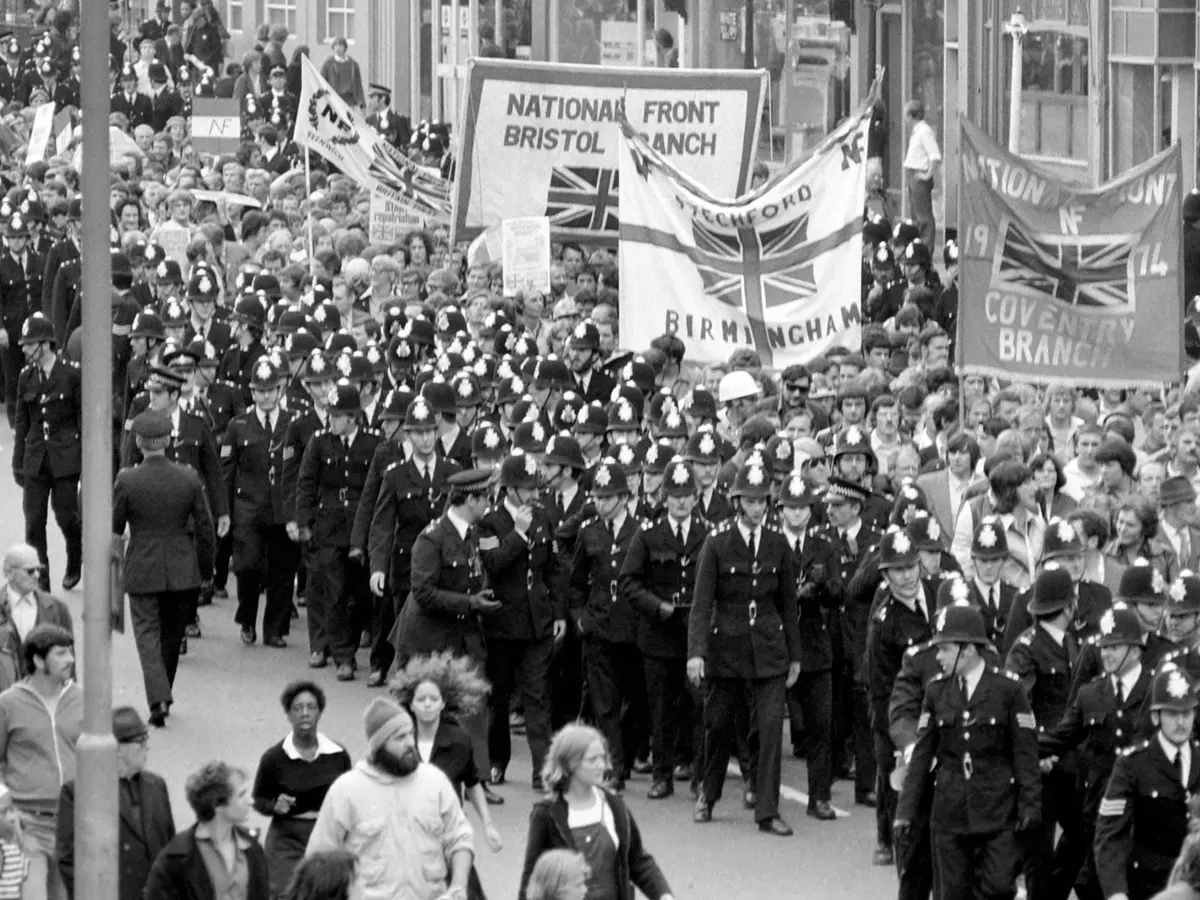
August 13, 1977 The NF began targeting South London – home to Afro Caribbean and South Asian immigrants – to make their stand. They announced plans for an “Anti-Mugging March” from New Cross to Lewisham. <br>Credit: Colin Jones
August 13, 1977 The NF began targeting South London – home to Afro Caribbean and South Asian immigrants – to make their stand. They announced plans for an “Anti-Mugging March” from New Cross to Lewisham.
Credit: Colin Jones


August 13, 1977 The Metropolitan Police (MP) sent 5,000 officers, including the Cavalry Division, employing riot shields for the first time in mainland Britain. The MP escorted the NF carrying Union Jacks through the streets.


 Neo-Nazi and anti-immigrant groups re-emerged in the 1970s and 1980s across Great Britain, Eastern Europe, and the U.S. — and renewed antifascist activity followed in response. Participants often identified themselves as “antifa,” mobilizing through punk music scenes and squatter communities, Pugliese noted.
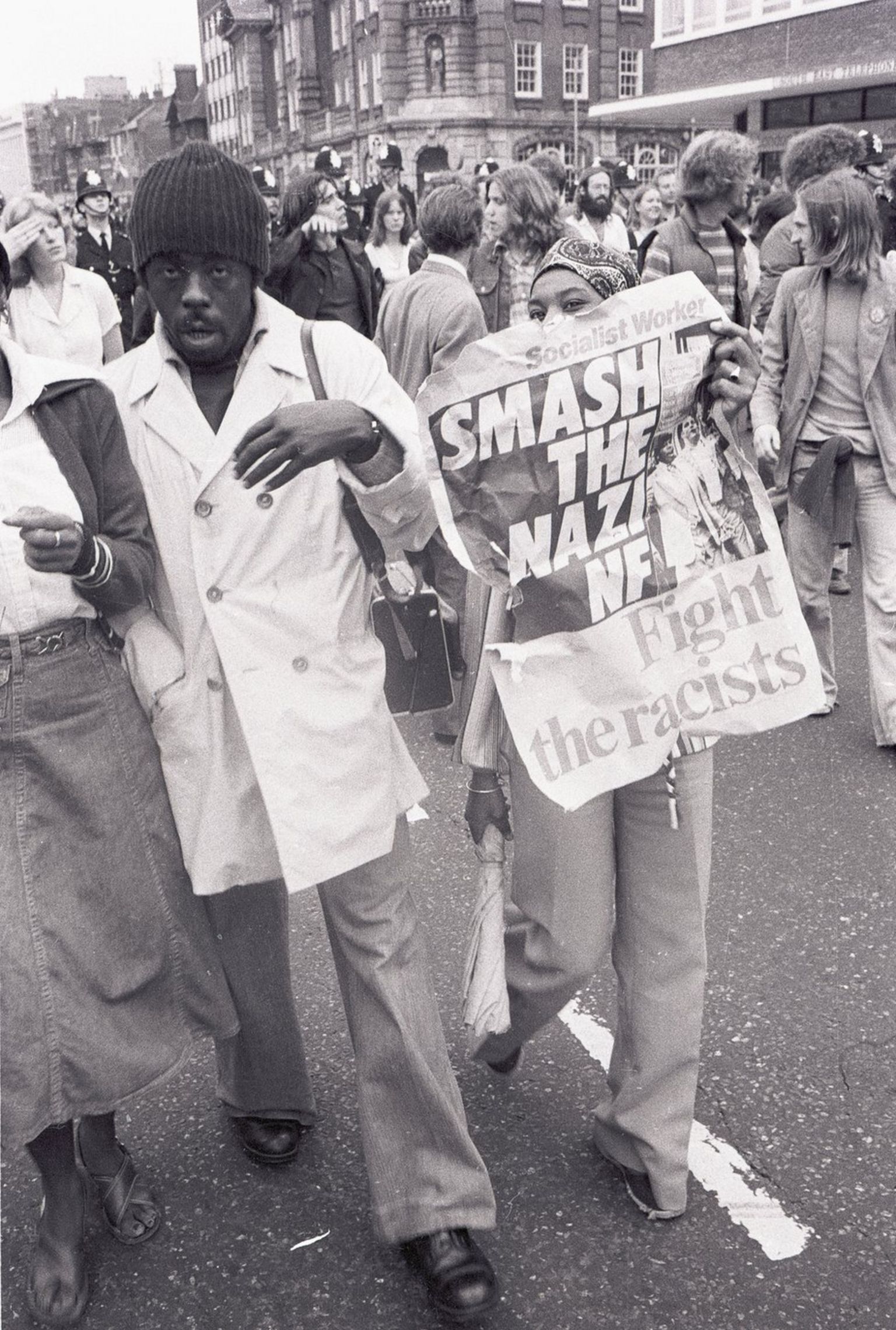


August 13, 1977 At 11:30 a group of peaceful demonstrators known as the All Lewisham Campaign against Racism and Fascism (ALCARAF) gathered near Ladywell station.<br>After hearing speeches from the mayor of Lewisham, the bishop of Southwark and the exiled bishop of Namibia, the group marched towards Lewisham High Street. Credit: Chris Schwarz
August 13, 1977 At 11:30 a group of peaceful demonstrators known as the All Lewisham Campaign against Racism and Fascism (ALCARAF) gathered near Ladywell station.
After hearing speeches from the mayor of Lewisham, the bishop of Southwark and the exiled bishop of Namibia, the group marched towards Lewisham High Street.
Credit: Chris Schwarz


Syd Shelton, who documented the events in the book, The Battle of Lewisham, August 13th 1977 (Café Royal Books) said,

“It was about intimidating and frightening people just as the Nazis had done in the streets of Germany in the 1930s,”
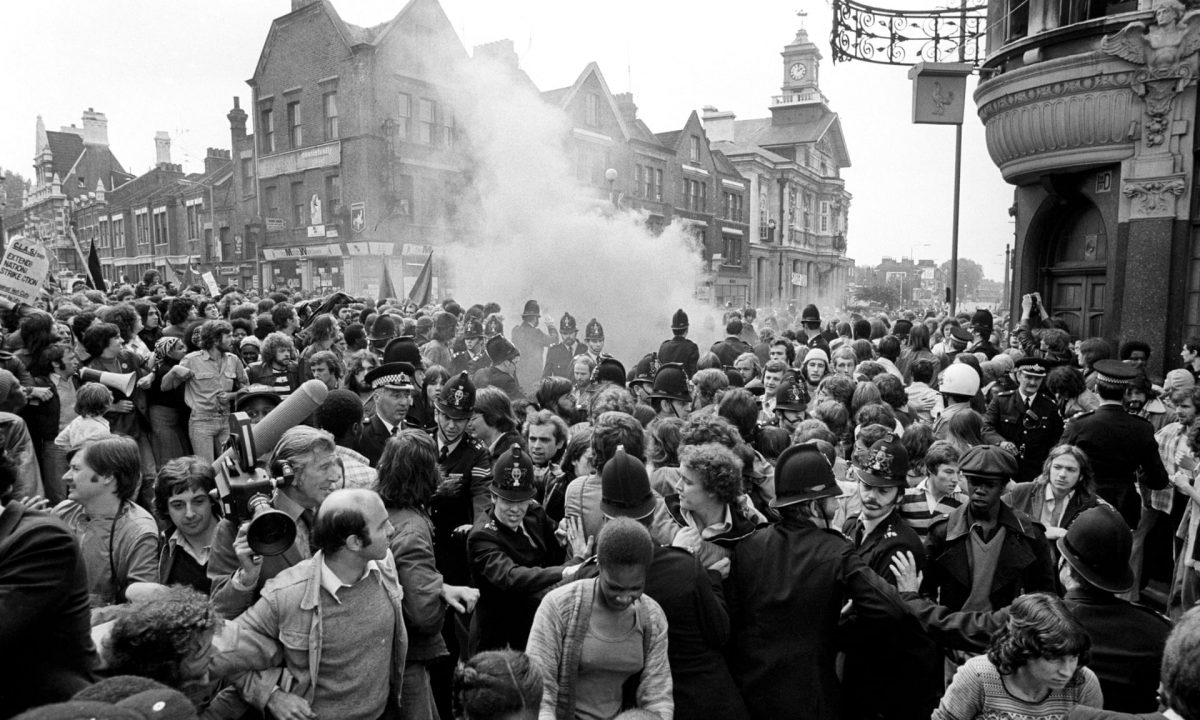


August 13, 1977 The Observer reported, “violence threatened to spill over when a crowd of about 200 Millwall football fans arrived shouting “Up the National Front, kill the blacks”’. But the NF was outnumbered.


 The link between antifascism and subculture had always been more than aesthetic: it was a way of reclaiming community through art. In occupied squats and smoky clubs, punk bands railed against surveillance and state repression, while krautrock’s hypnotic rhythms offered a vision of freedom through participation and trance. Together, they built the emotional and sonic vocabulary that would later feed directly into Germany’s electronic underground.


Fascism’s Persistence Today
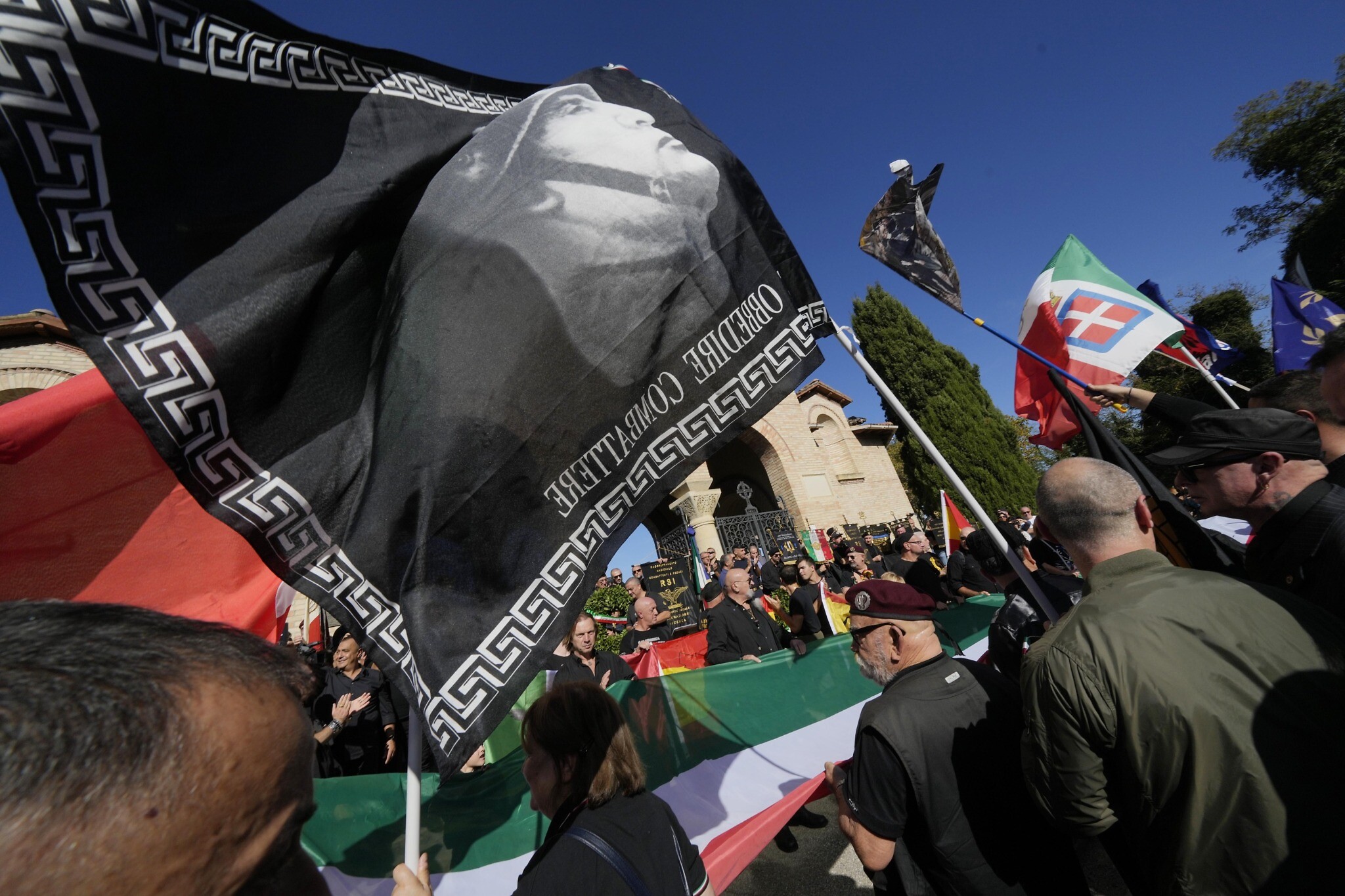


October 30, 2022 People march in the hometown of former dictator Benito Mussolini to mark the 100th anniversary of the coup d’etat by which he sized power in 1922, in Predappio, Italy.<br>Photo via AP
October 30, 2022 People march in the hometown of former dictator Benito Mussolini to mark the 100th anniversary of the coup d’etat by which he sized power in 1922, in Predappio, Italy.
Photo via AP


 That persistence isn’t abstract — it’s visible today. As reported in 2022 thousands of fascist sympathizers once again filled the streets of Predappio, Mussolini’s birthplace. The annual march — ostensibly held in memory of Mussolini — has become a pilgrimage for neo-fascists from across Europe.


Supporters of the former dictator Benito Mussolini show the
Supporters of the former dictator Benito Mussolini show the "Roman salute" Photograph: Francesca Volpi / Getty Images


 The report described participants dressed in period-style uniforms, carrying black flags and banners celebrating “Il Duce.” Chanting crowds offered the Roman salute in unison, while vendors sold Mussolini-themed souvenirs and nationalist memorabilia. Italian police maintained a distance, citing civic “order,” but the spectacle was unmistakably ideological: a revival of fascist nostalgia cast as local tradition.
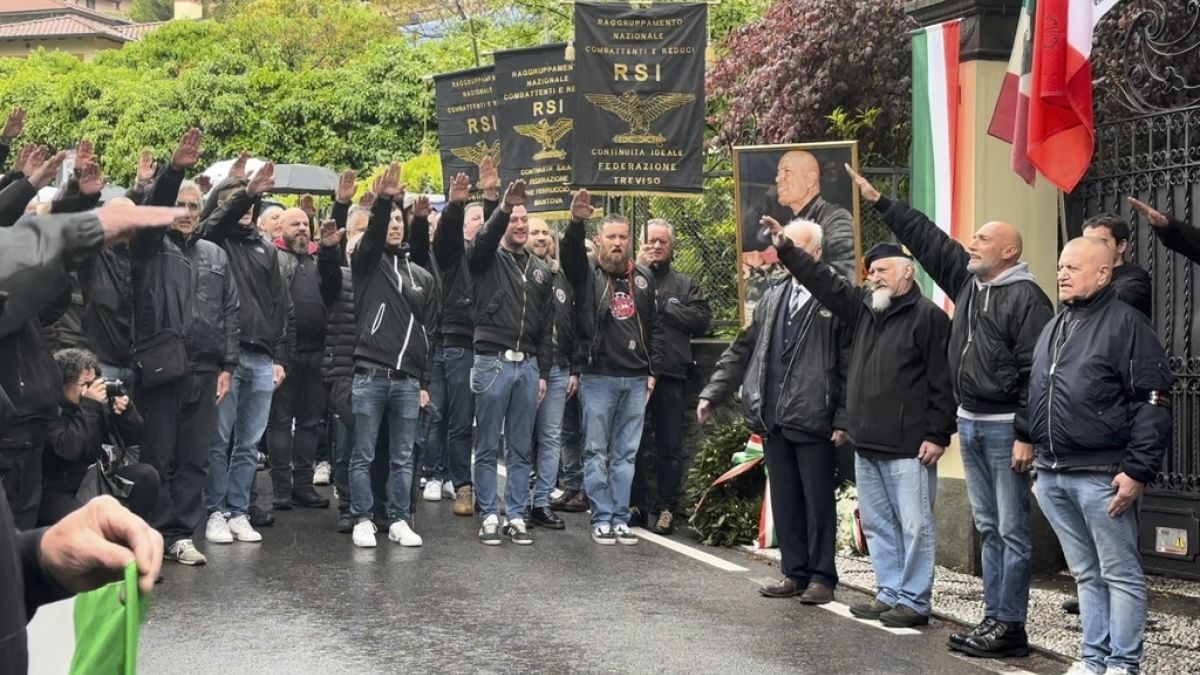


April 27, 2024 Greetings and fascist chants on the 79th anniversary of the death of dictator Benito Mussolini, the same day that Premier Giorgia Meloni was leading her far-right Brothers of Italy party in an election rally in the city of Pescara. Brothers of Italy traces its roots to the Italian Social Movement, which was founded in 1946 by a chief of staff in Mussolini’s last government and drew fascist sympathizers and officials into its ranks after Mussolini’s fall.


 The event has grown over time — attracting both overt neo-fascist movements and populist sympathizers who frame Mussolini’s legacy as “patriotic rebirth.” Some attendees told reporters they viewed fascism as misunderstood rather than criminal, echoing rhetoric seen elsewhere in Europe and the United States.


 The march’s normalization — covered by Italian and international outlets but rarely challenged by local authorities — underscores what antifascists have long warned: fascism doesn’t return through coups. It seeps back into culture through spectacle, nostalgia, and moral fatigue.


November 9, 2013 Members of the National Socialist Movement
November 9, 2013 Members of the National Socialist Movement "salute" a speaker during a neo-Nazi rally at the Jackson County Courthouse, Kansas City, Missouri
Photo via Dave Kaup/Reuters


 What was once history’s warning has become a recurring stage show — proof that authoritarian aesthetics retain mass appeal when societies forget their cost.


July 2022, Patriot Front holding a flash march through the streets of Boston, Massachusetts, where they assaulted Charles Murrell III, a Black man.


The Song That Started a Movement


Egotronic live im Club Amp in Münster anno 2008. Foto von Felix Wirtz/Bierschinken.net


 By the early 2000s, when Egotronic emerged from that lineage of persistent oppression and resistance, their blend of rave energy and antifascist defiance made perfect sense.


 As Torsun Burkhardt turned his street protest into song, he wasn’t just making electronic music — he was rewriting what opposition could feel like. Raven gegen Deutschland became one of the first tracks to fuse thumping electro beats with overt antifascist, anti-nationalist politics.


 Its message was simple and subversive: we will not let hate or despair dictate how our bodies move.


 At a time when many left-wing spaces frowned on club culture, the song carved out room for hedonism in activism. Burkhardt recalled that in the early 1990s, electronic music was unpopular in radical circles; only “drunken parties” were tolerated in social centers. But by the time Raven gegen Deutschland dropped, the floorboards of those same centers were shaking with bass.


Protesters and students rave in Frankfurt to air their anger at video surveillance and lack of space with a protest rave and policemen in front of the Old Opera House April 13, 2013 (Source: Bernd Kammerer)


 Egotronic’s approach proved you could fight fascism and dance — not in contradiction, but in concert.


Turning Protest Into Joy


Grzegorz Żukowski - Antifascist street party, Warsaw, 11th November 2022.
Grzegorz Żukowski
Antifascist street party, Warsaw, 11th November 2022.


 The song’s true revolution wasn’t lyrical — it was bodily. To rave against Germany meant rejecting rigidity, nationalism, and shame through collective pleasure. It redefined joy as defiance — a refusal to let austerity or fascism steal communal euphoria.


 As Burkhardt told THUMP:

“Yes, we’re partying. Yes, we’re going over the top with it. And no, we’re still not ready to accept conditions as they are.”


 This ethos taught modern antifascists that resilience isn’t just endurance — it’s celebration. Dissent doesn’t have to be dour; it can be ecstatic, sweaty, and loud. The track became the heartbeat of a new generation that balanced resistance with release.


Grzegorz Żukowski - Antifascist protestors carrying a banner that reads
Grzegorz Żukowski
Antifascist protestors carrying a banner that reads "They shall not pass"-"No parasan"::"faszystowskie skurwysyny"-"fascist 'bastards/ cock suckers/ mother fuckers/ sons of bitches'" Independence Day, Warsaw 2022.


Photographer Grzegorz Żukowski wrote of the 2022 march:

The Antifascist Street Party under the slogan: “For our freedom and yours” is yearly organized by left wing movements and social organizations. The march is also opposing the so called “Independance March” organized by nationalistic organizations and attended among many by fascist movements. During the antifascist march there are music platforms and many people dancing, a large number of police is visible even though the atmosphere is peaceful with people just having a good time.


The Politics of Ecstasy


A performance from The Dead Kennedys, a 1980s-era American punk band that sings the antifascist anthem “Nazi Punks Fuck Off.” Getty Images


 Critics argued that such “partying” weakened the left — that it dulled antifascism into lifestyle activism. But that critique misses the point.


 To dance together in defiance of fascist violence is itself a political act — bodies moving freely where others would confine them. Collective joy is solidarity, denying fascism’s aesthetic of control.


 Burkhardt’s later tracks, such as Tolerante Nazis (2011), extended this contradiction — mocking fascists’ attempts to appear modern or tolerant while celebrating the liberatory chaos of youth and sound.


Raven gegen Deutschland became the template for cultural resistance in the 21st century: showing that pleasure and politics, rhythm and rebellion, can share the same beat.


Why It Still Matters
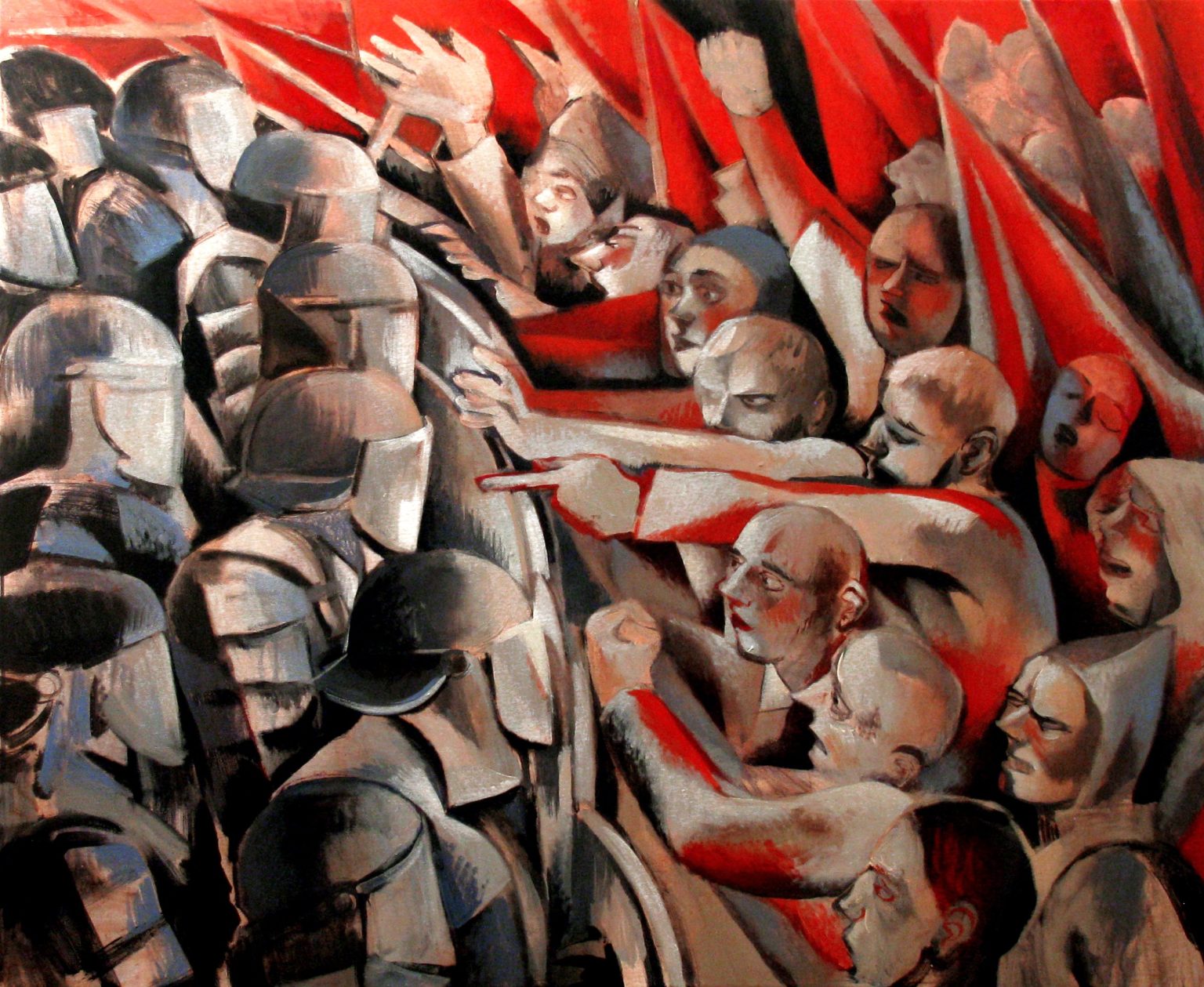


2017 ACAB by Juliusz Lewandowski, queer antifascist artist


 Today’s antifascists face familiar enemies: nationalism, isolationism, and the far right’s rebranding of control as pride.
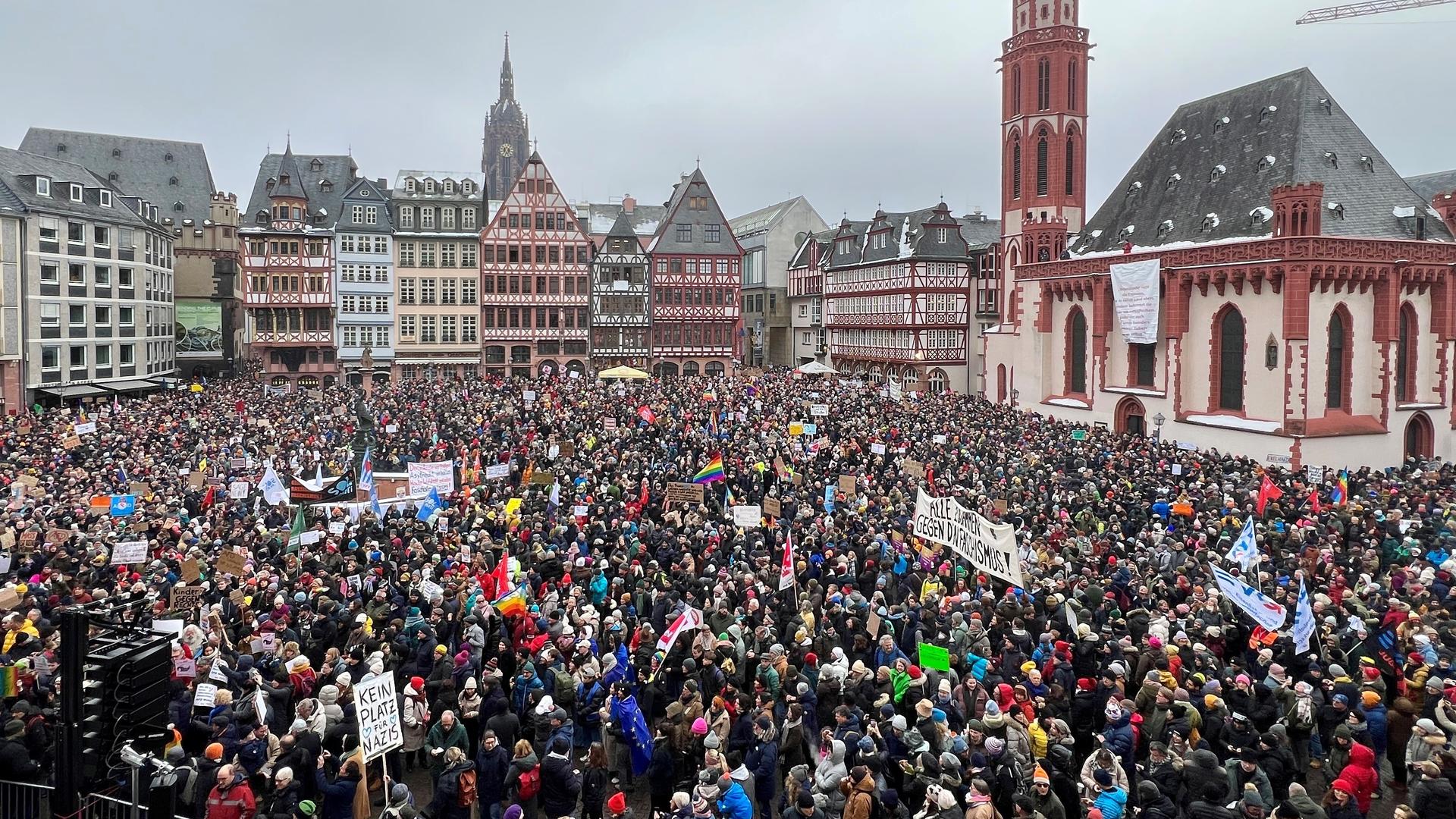


January 20, 2024 Thousands protest against the AfD party and right-wing extremism in Frankfurt on Saturday. Credit: Michael Probst/AP


 Fascism thrives on fear and conformity. Sometimes, the most radical thing you can do is turn up the music, take the street, and rave like there’s no Reich tomorrow.
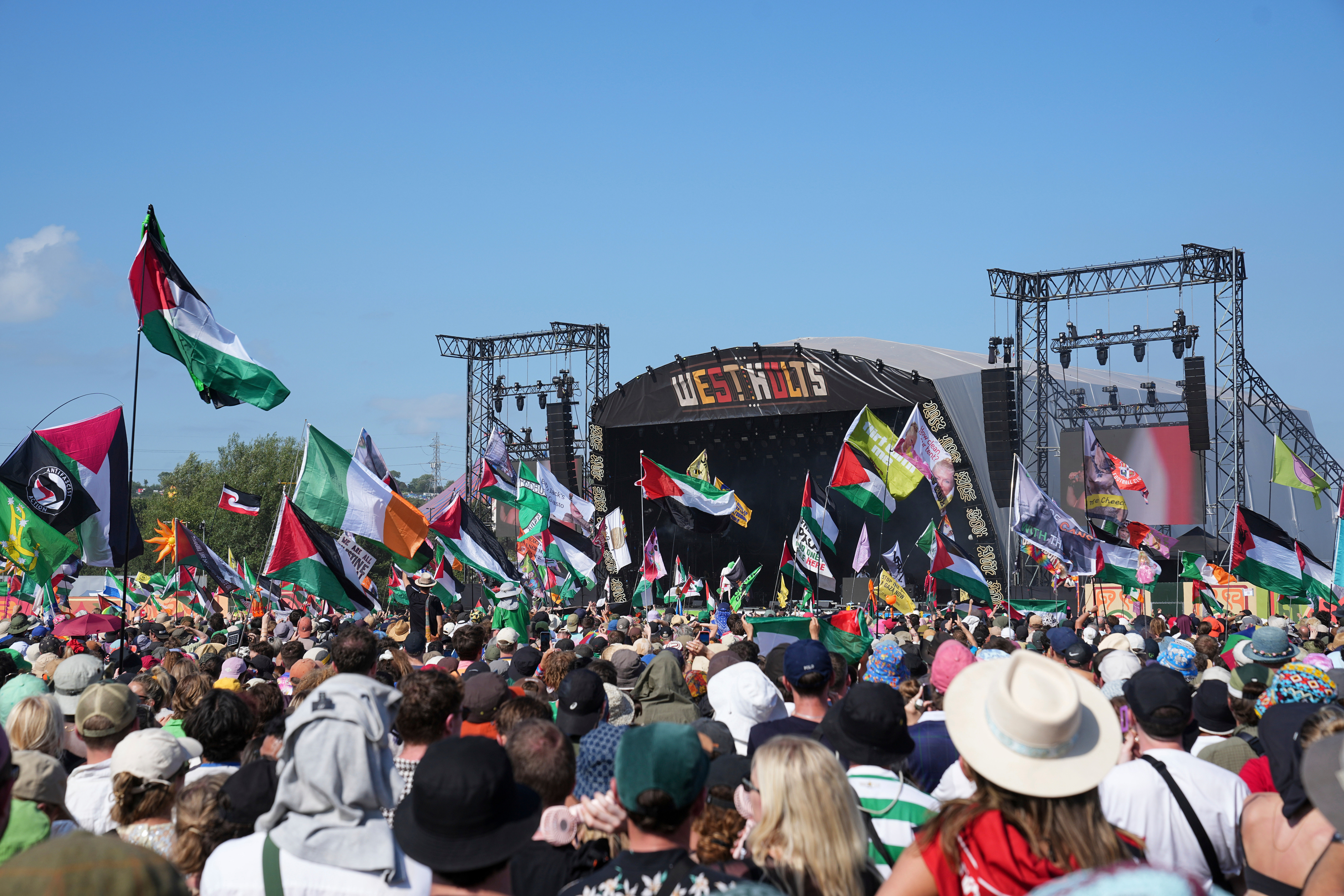


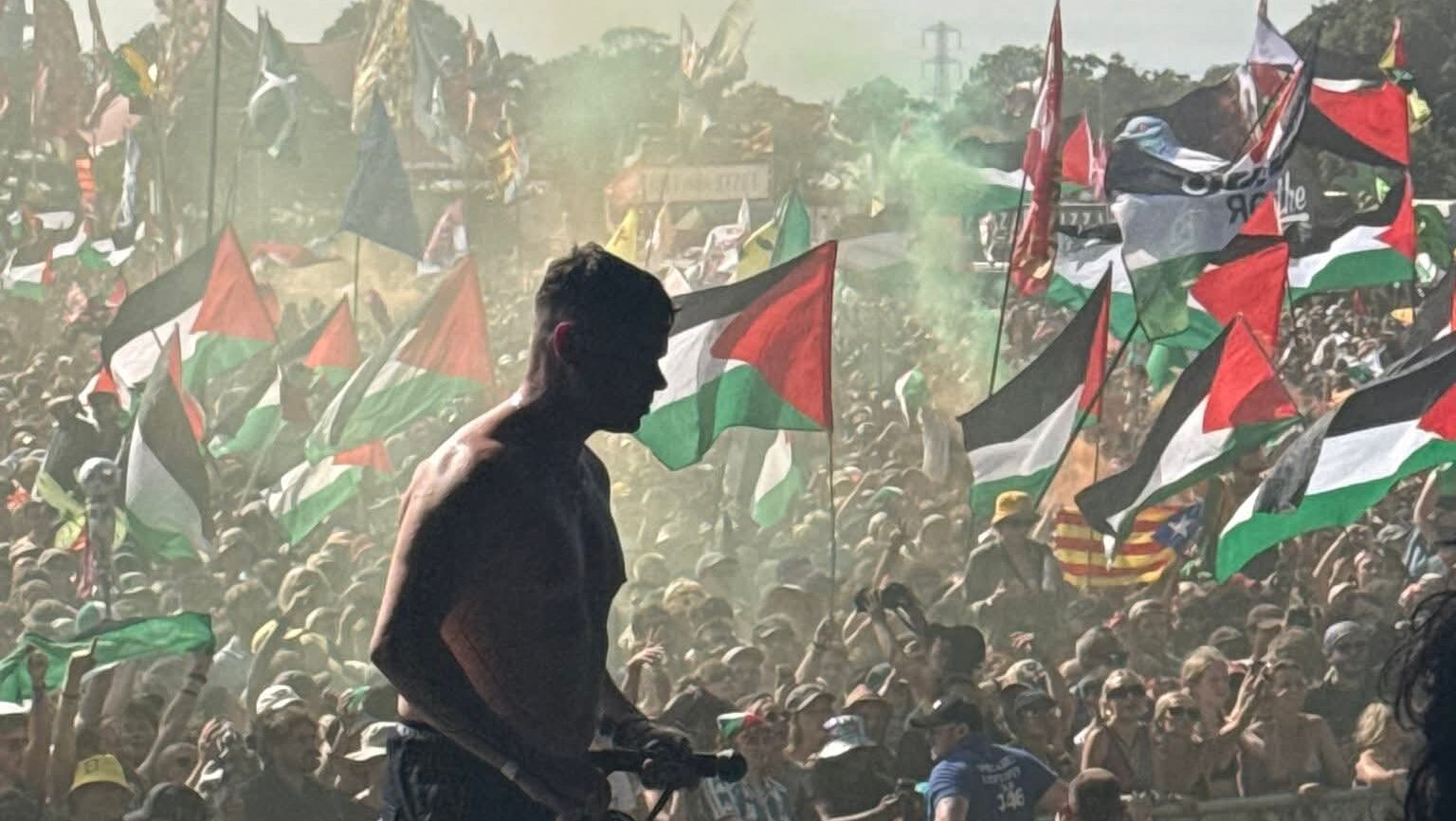
Crowds wave Palestinian flags during hip-hop trio Kneecap’s set at the Glastonbury festival in Worthy Farm. (AP pic)


Vigilant, Rebellious, Revolutionary


Festival participants waving Palestinian flags, Glastonbury Festival 2025.


“We just want to stop people from being murdered,” Kneecap members told The Guardian before the festival. “There’s people starving to death, people being bombed every day. That’s the stuff we need to talk about, not fucking artists.”


 Two decades on, the spirit of Raven Gegen Deutschland echoes beyond Germany. From river to sea, Belfast to Glastonbury, Ireland to Palestine, artists are channeling the same defiance against fascism and colonial violence.


January 24, 2025 Members of the far-right Patriot Front group, during a rally in Washington D.C. / Dominic Gwinn/Middle East Images/AFP


Antifascist Action


Antifascist.Antihero686@passinbox.com