Unlock Precision Power How Servo Pressing is Reshaping Modern Manufacturing ⚙️✨
Imagine a symphony where every note hits with perfect timing, where force and movement dance in flawless harmony. That’s servo pressing in today’s industrial world—a quiet revolution transforming how we shape metal, assemble components, and build everything from smartphones to spacecraft. Forget the clunky, energy-guzzling presses of yesterday. Servo-driven systems are rewriting the rules, delivering unprecedented control, efficiency, and versatility. Ready to dive deep? Let’s explore why this tech isn’t just an upgrade—it’s a game-changer. THE HEARTBEAT OF MODERN PRODUCTION At its core, servo pressing replaces brute force with brilliant finesse. Traditional presses rely on fixed-stroke mechanisms or hydraulics, like a hammer swinging blindly. Servo tech? It’s a scalpel. By integrating high-response servo motors directly into the press drive, engineers gain real-time command over every millimeter of ram movement, speed, and pressure. Think adjustable acceleration mid-stroke, programmable dwell times, or feather-light touch for delicate materials. This isn’t just pressing—it’s artistry in motion. WHY FACTORIES ARE RACING TO ADOPT SERVO PRESSES Walk any forward-thinking factory floor, and you’ll hear the hum of servos. The reasons stack up fast. First, precision. Need to form a 0.2mm titanium medical implant without micro-fractures? Servo presses deliver repeatable accuracy down to microns, slashing scrap rates by up to 40%. Then there’s flexibility. One machine handles deep draws, coining, and embossing just by loading a new program—no mechanical tweaks. Changeovers? Done in minutes, not hours. Energy savings scream for attention too. Unlike hydraulic systems that run pumps constantly, servo presses sip power only when moving. We’re talking 30-60% less electricity, turning overhead costs into profit. Noise drops dramatically as well—imagine replacing a jackhammer’s roar with a whisper. Workers cheer, and OSHA logs smile. But the magic lies in data. Every stroke generates metrics: force curves, temperature shifts, alignment deviations. Connect this to IIoT platforms, and you’ve got predictive maintenance spotting bearing wear before it fails, or AI optimizing press profiles for each batch of material. Downtime? Practically mythical. FROM AUTOS TO AEROSPACE: SERVO PRESSING IN ACTION 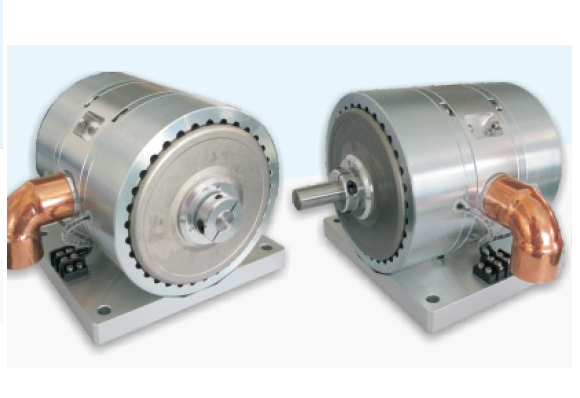 Let’s get concrete. In automotive plants, servo presses forge hoods with complex contours while maintaining uniform thickness—critical for crash safety. BMW reported a 25% cycle time reduction after switching to servo lines. Electronics giants? They bond fragile circuit boards using pressure-sensitive adhesives, with servos applying exact force to avoid micro-crack disasters. One Samsung plant cut rejects by 90% post-adoption. Even aerospace benefits. Forming turbine blades from nickel alloys demands insane precision; servo controls prevent stress hotspots that could fail at 30,000 feet. Medical device makers craft bone screws with zero tolerance variances. The versatility spans industries—anywhere metal bends, joins, or forms, servos shine. BUSTING THE THREE BIG MYTHS Some still hesitate, clinging to old doubts. Let’s dismantle them. Myth one: \“Servo presses are too pricey.\” Yes, upfront costs run 10-20% higher than hydraulics. But factor in energy rebates, scrap reduction, and 50% longer tool life from optimized impacts, and ROI often clocks under 18 months. Myth two: \“They can’t handle heavy jobs.\” Modern servo press es hit 3,000 tons—enough to stamp truck frames. Advanced models even outperform mechanical presses in high-tonnage deep drawing. Myth three: \“Programming is rocket science.\” Today’s interfaces mimic smartphones. Drag-and-drop stroke profiles, simulate sequences in 3D, or use AI-assisted tuning. Training? Most operators master basics in a day. THE HUMAN ADVANTAGE: SAFER, SMARTER, SUSTAINABLE Beyond specs, servo pressing elevates work environments. Ergonomic loading heights reduce back strain. Quieter operations mean no more ear-splitting clangs—workers actually hear each other speak. And with fewer oil leaks or airborne particulates (goodbye, hydraulic fluid), facilities stay cleaner and greener. Sustainability wins big, too. Less energy use equals lower carbon footprints. Recycled materials press easier under servo precision, supporting circular economies. One German automaker slashed CO2 emissions by 200 tons annually per press line—proof that efficiency and eco-ethics align. FUTURE GAZE: WHERE SERVO TECH IS HEADED Hold onto your hard hats—innovation’s accelerating. Next-gen servos integrate machine vision, using cameras to adjust stroke paths in real-time if materials warp. AI-driven predictive quality will flag flaws before unboxing. We’re also seeing cobot-assisted servo presses where robots hand-feed parts while the press adapts stroke-by-stroke.
  Material science pushes boundaries too. Servo systems now handle \“unpressable\” composites or shape-memory alloys for biomedical implants. And with 5G enabling near-zero latency control, remote fine-tuning from Tokyo to Texas is routine. The future? Fully autonomous press cells that self-optimize for each job. CONCLUSION: YOUR INVITATION TO THE REVOLUTION 🏭💡 Servo pressing isn’t just another machine—it’s the backbone of Industry 4.0. It merges mechanical muscle with digital intelligence, turning manufacturing constraints into creative opportunities. Whether you’re stamping car parts or crafting micro-electronics, embracing this tech means joining leaders who waste less, innovate faster, and build better. So, ready to press beyond limits? Ditch the dinosaur presses. Step into the servo era—where every impact is intentional, every movement meaningful, and every product bears the mark of excellence. Your competitive edge is waiting. Let’s shape it, together. 🔧🚀