Destiny 2: Shadowkeep – Bungie’s first step into the new era
The launch of Shadowkeep was not just another expansion—it marked Bungie’s first release after parting ways with Activision in 2019. For players who buy cheap games, it represented a turning point where Bungie took full control of publishing, distribution, and development. The shift was monumental, and Shadowkeep became the litmus test for their self-sustaining model.
Bungie's first change was not in the story or scale but in structure. Bungie shifted from single expansions and DLCs to a seasonal model with frequent updates. Bungie used to provide big drop content for the game, but has now shifted to more consistent content for every season. The shift in structure, more than anything, was to keep the game self-funded. While focusing on the new content introduced with Shadowkeep, Bungie also changed the internal structure of the game with the aim of having an ongoing model of support for Destiny 2. Everything from the new Seasonal Artifact, which came with sets of temporary progression objectives, to the Armor 2.0, which added new ways for players to customize characters based on stats, added to the seamless Destiny experience. This added modularity that helped Bungie gain flexibility, players, sustainability, and retain value, which further helped the game evolve. As with any new undertaking, the implementation of an independent model was accompanied by the loss of some aspects, such as a resized narrative campaign, a reduction in new missions, and an increase in focus on live events. These could be construed as weaknesses, but served as the basis for the future.
Bungie added new activities to balance the limited Story missions that Shadowkeep came with. One of the new activities, Nightmare Hunts, highlighted Bungie’s efforts in creating challenging but thematically rich missions. These Hunts feature players facing off with boss characters that evoke the players’ deepest fears, and include Crota, Omnigul, Ghaul, and more. Each boss is a warped version of a known, classic Destiny enemy, and, as a whole, the Hunts encapsulate the critical components that define a Destiny strike within a lucid and succinct design. They’ve made it so that for players who want short but high-quality Destiny experiences, these Hunts are high-level farming and are great for on-the-go sessions. Each also includes various challenge levels for players who want higher stakes. The new Nightfall system adds bespoke challenges in one of its enduring design elements. Moving away from three fixed tiers, players can now choose the difficulty level from Adept to Master, with associated rewards and modifiers. This system is one of the most enduring design elements of Destiny 2, providing quick gameplay options for solo players and groups alike at the endgame. It caters to comfort and ambition, in that players can choose the hardest modifiers for exclusive loot or take on a challenging game for an easier one.
In Shadowkeep, the theme is pacing. Shadowkeep is about process, not show. Each activity is modular and contributes to the new seasonal loop, providing players with a set of actionable objectives and rewards that don’t require binge gaming. It’s a good advancement for the live-service business model Bungie now advocates for.
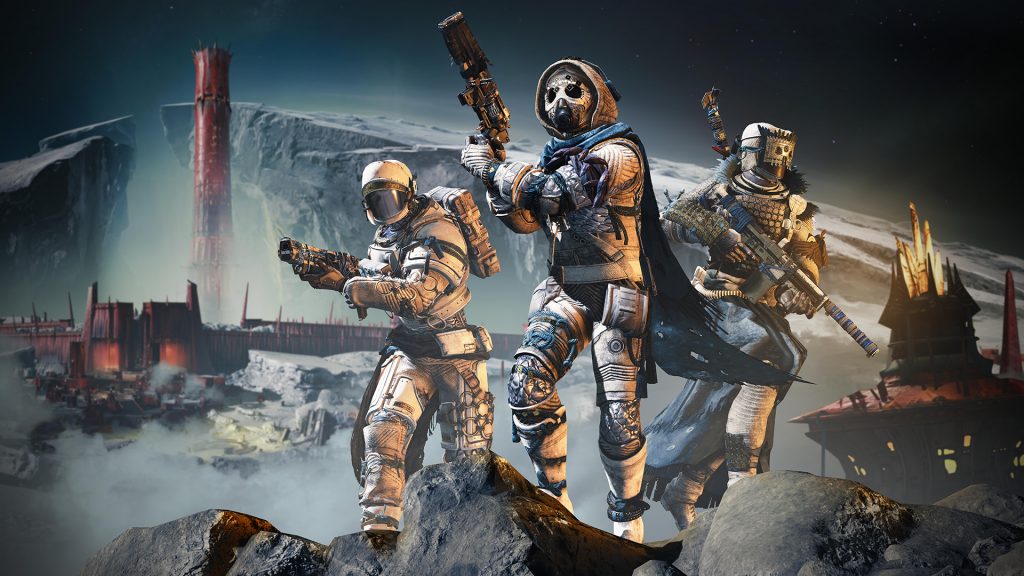
The Scarlet Keep Campaign: The most fun of all, and also the most sudden end
Shadowkeep assigns Guardians the task of forming the Moon. The keeps of the Moon have always been an unsettling guess for the Destiny community and have made conquering the Moon a bit nostalgic. The overview of Scarlet Keep, a massive Hive castle that has risen from beneath a shrine, drove the campaign with its sudden bloom and obsidian cluster. The keep and the cursed haze of the battle zone are the first missions that have strong fundamentals of the campaign. Every mission has a purpose. The dark, lighting domes of the Missed Eris lie all around.
The campaign fails in the broader elements of pacing. Every mission has its moments of core and scale, atmosphere, while the rest of the main story, most of the time, feels like a single line from the lore. The Pyramid ship beneath the surface feels like it tells a big part of the story. The moment of potential promise only feels like a sandbox; the end drags on painfully, full of longing. The closure most people tend to look for instead feels like a double-faced dome. The clash with the Darkness starts the plot for the next saga, while the under points keep its story feeling incomplete.
The campaign gets one thing right – it sets the tonal shifts for Destiny. The Moon isn't simply the surface for contentious military engagements. It's a realm of the psychological – a domain riddled with Nightmares, both real and otherwise. Much of the emotional weight comes from the split between the eerie and the firm, reflected in Eris’s exchanges. For those who buy cheap PS4 games, even if the ending feels unfinished, it marks a shift that moves Destiny beyond pure action and violence toward something more thoughtful and mysterious on a cosmic scale.

The Garden of Salvation, on the other hand, is the most creative and most streamlined.
The absence of a raid in any Destiny expansion is simply unthinkable. The raid's climax, Shadowkeep's Garden of Salvation, is everything a person wants it to be. Set in the Black Garden, it is one of the most mythical and defining pieces of architecture from the end of the first Destiny, which helps envelop the raid in a stunningly surreal tone. The focus of the battle exemplifies teamwork in precision, tether mechanics, and hacker-core style spatial problem solving. Guardians play the augmaster and link the chains of radiant energy together to form chain streams, unlocking doors and progressing to the heart of the Garden. The entire realm is filled with enemies and mind-bending designs.
Both familiar and refreshing, the raid fulfills its purpose wonderfully. Bungie’s trademark balance of organized chaos is maintained, but the format is streamlined to four essential encounters. Each of these encounters is substantial, yet none of them ever feels as though they’re overstaying their welcome. The Gambit-like boss fight near the end of the game is where players collect motes while fighting off swarms of Vex. It adds to the variety of the game and increases momentum while never disrupting the pacing.
Bungie has never created a harder raid, but the Garden of Salvation might just be its most elegant. It’s visually stunning with its endless digital vines and fractal skies, making every moment screenshot-worthy. It is a seamless blend of attention and freedom in Bungie’s encounter design. It's a testament to the fact that they can deliver complexity in a streamlined way.

Vex Offensive: Rewarding, Repetitive, and Accessible
On the more casual end of Shadowkeep’s offerings lies the Vex Offensive, a six-player activity released with the first season of the Shadowkeep expansion. It’s the more casual aspect of Shadowkeep. It bridges the gap between the raid and the strike playlist. Players enter the Black Garden where they are tasked with repelling waves of Vex, capturing points, and defeating bosses. It’s simple, chaotic fun with a series of escalating phases.
The charm of the Vex Offensive as a feature activity of Shadowkeep does not come from its reward structure or difficulty. Rather, its charm comes from the ease of access. Vex Offensive is like a mini-raid, accessible to most players. The communication is helpful, but not compulsory. Pacing is comfortable, making it relaxing rather than tedious. Given the time constraints most players have, it is surprising how often a sense of achievement is delivered, especially for a game like Destiny.
At the same time, the easy nature of the activity reduces the longevity. Once the seasonal rewards are earned, the activity quickly becomes tedious. Still, as a proof of concept for Destiny’s evolving model, it shows the narrative success of a “raid-lite” event. Bungie’s goal was to make high-engagement activities approachably easy, so the Vex Offensive does just that.
The value of Shadowkeep does not come from its quantity of content, but rather from the framework it sets for Destiny’s structure. Destiny's The Post-Activision era began here, with a focus on sustainability, accessibility, and systemic depth. Each of these concepts was divergent from the gameplay volume that was the genre’s norm. The expansion's campaign is likely to feel initial value, and the seasonal content simply fades with time, but the structure does endure.
The Nightfall system’s evolution, paired with modular endgame activities, and the shift towards consistent updates have all added to the groundwork for Destiny’s long-term stability. Bungie exchanged showings for modularity, and regardless of the differing opinions on the change, the resilience that the foundation has shown is unquestionable. To simplify matters, Shadowkeep was more concerned with future possibilities than it was with instant ease.
It’s a smaller step than Forsaken, but a smarter one- a recalibration that allowed Destiny 2 to thrive independent of a major publisher’s machinery. Bungie learned to maintain its own world, week by week, season by season, expansion by expansion. With Shadowkeep, that world began to have a semblance of self-sufficiency.