A Reunion That Finally Feels Right
I still dread the sound the PSP made when you coaxed its UMD disc into motion—tiny mechanical growl, slow spin that felt more sepulchral than comforting. Zach Fair whispered to me through that noise, and the words tasted bittersweet, the wide-eyed joy soon to curdle into dread. We cheered the story, hated the seams that yanked at the motion: directional pad that tore away left and down like a spoiled thread, awkward, choppy cinematic bars, one insipid analogue stick that demanded rhythmic violence. Promise lived behind every hop and spin, every fevered Limit Break blocked by the clunk of a vintage engine desperately courting spark. I still felt the weight when I returned the burnt-disc prototype to my pocket—was love returned by the same hands that issued the box into the ether, that condemned it to scuffed chassis and dead pixels? For those who buy cheap PS4 games, it’s a chance to experience that same spark without paying full price.
Now, a more dignified ghost arrives. Crisis Core – Final Fantasy VII Reunion neither hands us the bow, nor apologizes for the wiring,centertakes the circuit and simply blinks living neon through it. The same bittersweet journal you dog-eared as a kid is not corroded, just resurfaced with wet ink. Cloth of control is smoother, light of cutscenes rich enough to have sat through paint, camera reassuring rather than snapping its leash whenever the environment taunted. Minuscule HDR notes of broth and burnt skies embered behind memory become directional, become wind. Remixed chorals chirp anthems you swore you buried, faster, stronger, purer, salt replacing the earlier bittersweet. I slip the new disc in, and the new disc exudes warmth, not mechanical whisper. Ta back into orbit, into an odyssey illuminated anew—upgrades undemanding, tenderness the only password.
Even if you never touched the original, it’s crucial to understand how much the PSP’s quirks tethered Crisis Core’s ambitions. With a lone analog nub, you hovered over the “move” or “camera” choice, never able to blend both naturally. Add in a hodgepodge of button assignments for spells and abilities, and the interface, while boldly inventive, frequently dropped the ball in the heat of play. Reunion wipes that slate clean. The right-stick camera inverts the workflow: dodges and spells now coexist instead of fighting for survival. Suddenly, the once-awkward, graceful stampede of bosses is a slick heartbeat, a microsecond response to thumb flicks. In tandem with a layout cribbed from Final Fantasy VII Remake and Kingdom Hearts, the translation goes from “close enough” to “wow—he moves like the marketing cartoons.” Even dodging a parked Buster Sword feels heroic. The fallout echoes beyond control: where the PSP version was an unfinished sketch, Reunion is a finished oil painting with extra layers. Encounters that once dragged like gated cutscenes now cascade like unlockable trailers, all fluid nudges and decisive camera sweeps, as if the action is finally authorized to keep pace with the cinematic ambitions. Zack earns the parade rhythm he has always owned in cutscenes, with zero excuses and every ounce of dignity.

The Evolution of the DMW System
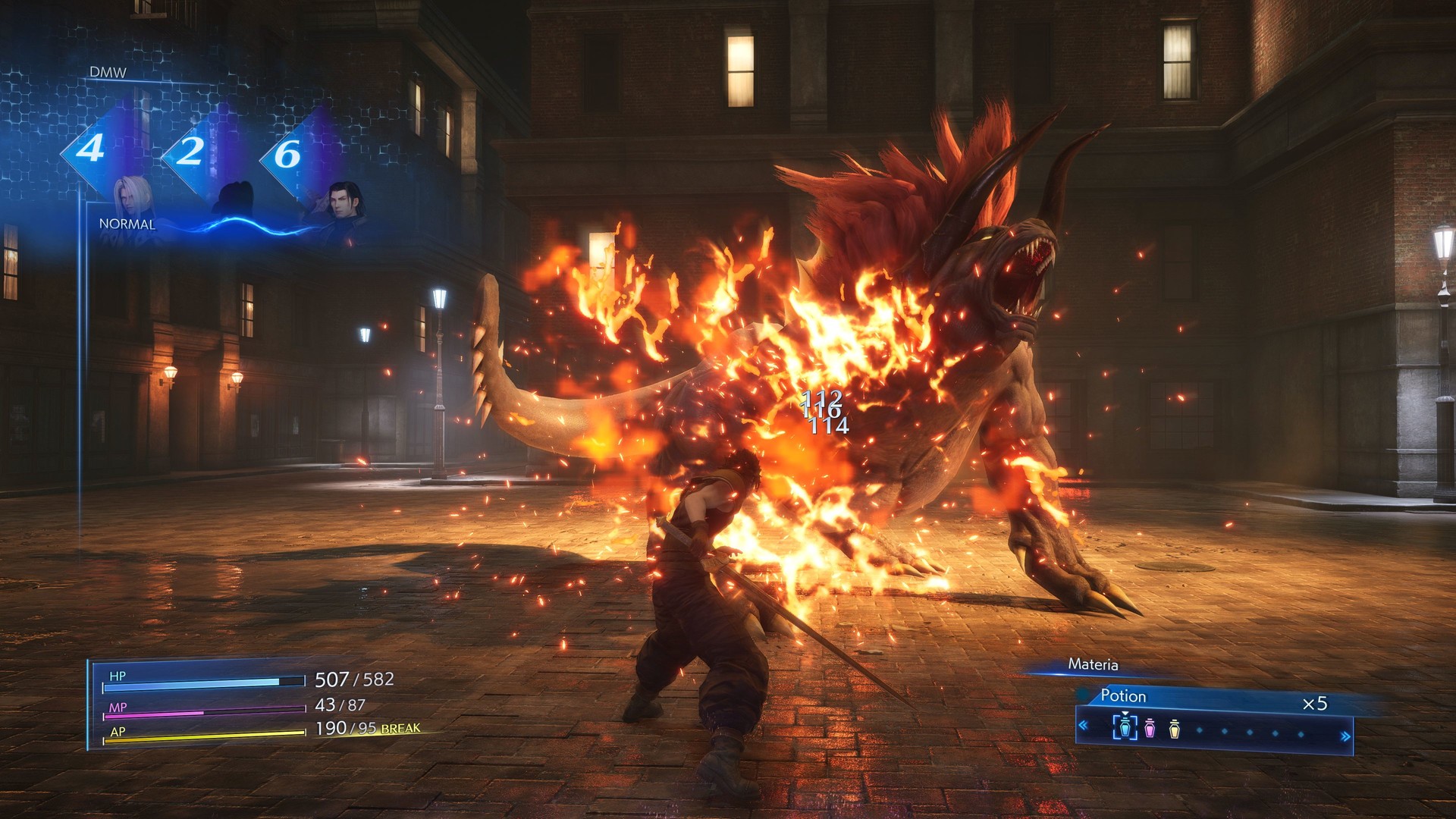
The Digital Mind Wave—a flashy slot machine rattling in the corner of every fight—still stands as one of the oddest gadgets in Final Fantasy history. Back in 2007, its arrival was divided; some hailed it as inspiration, others dismissed it as fate thumbing its nose at tactics. Memories of the past, illusions of friends, all stitched together and blasted in a spin of luck. For anyone who buy cheap games, it’s a chance to revisit this quirky mechanic without paying full price.
Reunion dips the same card, adds a clever tweak. Holding a Limit Break as a fill-in slot, ready to drop at the conceivably perfect moment, swaps wild luck for calculated flair. It nudges the whole tempo of the exchange; the DMW goes from a brief gamble to deliberate invocation. Any summoned titan can zip by the scene and vanish; stubborn players who preferred six-second fireworks can silence every repeat, letting it all roll forward.
That grace is deliberate, a reserved elegance. The machine’s warped charm—flashing images of character cameos and half-formed dreams—still breathes. Only instead of roaring, “Worship the dice,” it now leans in, “Use me, I’m on your side.”
A Thematic Analysis of the DMW: More Than a Slot Machine
What first appears as a flashy mini-game reveals itself as a moving kind of narrative sculptor. The DMW is a kinetic portrait gallery: every spinning face is a living echo of Zack’s history. Angeal’s knowing smile, Cloud’s quiet determination, Aerith’s shimmering hope—these go beyond cosmetic fan service, turning into veins of power that Zack can tap the moment three of them align. He does not mechanically grind for bigger numbers; the numbers themselves, the present, the past, and the present flash into synch. In that quiet second as the reels lock into place, the game freezes time, collapsing memory and act into one bright instant of affirmation.
This frame of memory is thematically perfect. Zack’s growing strength never stems from hacks. He does not achieve feat after feat in perfect isolation, clutching only his own will. Instead, his sword is tangled in the spider threads of loyalty and love. Friends, teachers, fears, and quiet moments of warmth become energy, become power, become consequence. Random isn’t truly random; it’s a shimmering script we prune of coherence only in the dull from dawn to dusk. The DMW reads like a would-be ornamental screenplay suddenly forced to step into the present, pasting scenes of devotion and trust into the middle of a battle line.
Still, the lush set piece never becomes a distraction. Instead, it weaves itself into the main seam of Crisis Core’s dress: a tale of memory, ambition, and the quiet way we change and are changed by the bonds we undervalue.
Audio and Music: Remixed and Elevated
Reunion leans harder on the senses than its predecessor, and the aural overhaul is the centerpiece. After the original soundtrack by Takeharu Ishimoto—enhanced by passing melodies from Nobuo Uematsu—had its moment, the updated arrangements tease forth a deeper emotional undercurrent. “The Price of Freedom,” “Under the Apple Tree,” and other key motifs pulse, swell, and recede under expanded orchestration, managing to drape you in the same emotional rhythm yet again just when you thought it had settled. The score no longer accompanies the story; it reverberates through your ribs. The voice work, likewise, has been methodically refined. The entire script is now fully voiced with the same team from Final Fantasy VII Remake, providing continuity that the original PSP release lacked. For veteran fans, the shift from the older English dub may feel immense—the previous performance was operatic by nature. The renewal, however, dispenses with excess and anchors the scene with an eye toward cinematic restraint, granting Zack more breathing space in the quiet dialogues that line the path toward tragedy. The subtleties the new cast threads through underplayed lines do more than sing; they hum, they shudder, they synchronize with the strings.
Between the sights and the re-energized sounds, Reunion is not a remake that merely upgrades; it deepens, layering the sensory milieu in such a way that the player’s attention is drawn in every frame, every frame, every note.
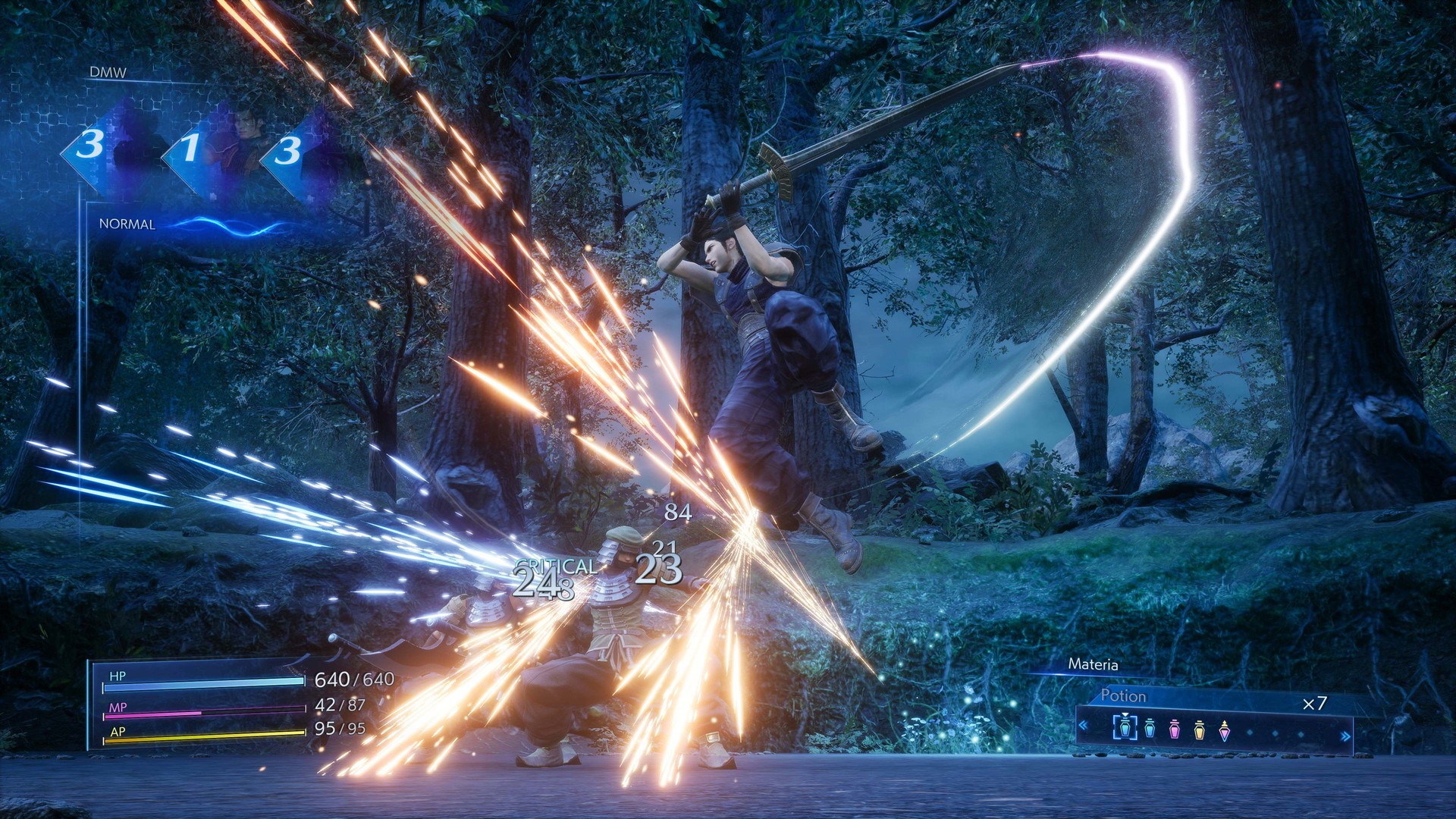
The first thing Reunion announces is its new appearance, and the difference is monumental. Back on the PSP, Crisis Core was held to miniature corridors, stitched-together tiles, and clockwork-stiff models. It had personality, yet the actual world felt like a suggestion rather than a reality. Reunion isn’t a simple buff; it’s a rebirth. Every character is remade down to the last finger, animations spill with small gestures, and lighting gives mood to material—steel glints sharply inside Shinra, dust meanders softly through Aerith’s church, and petals are not flat skins but miniature paper lanterns glowing at a distance. Each Summon—from the flames of Ifrit to Bahamut’s operatic wings—now roars in a full Koch, stopping the screen the way you imagine the theatre would. The performance rises to meet the polish. Frames flow at tier-one speed, keeping the knife-slice of combat as concise and grand as any action epic. A title once celebrated for its portability is now an unmistakable console invite entirely at home on living room shelves.
Reunion holds to its name, so each member is carefully purposeful. Levels are reshaped to match a freely floating camera; edges are elongated, door angles tucked, small barrels shifted so the wider eye sees the wider truth without ever turning a scene into a spectacle. It’s not a riot of neon graphical alerts; it’s a patient whisper, an invitation to rediscover street corners you once memorized.

Conclusion
Final Fantasy VII is stepping back under a bright spotlight. With the ongoing Remake project and the retro-tinged revival of the Compilation titles, the universe is once again the talk of the industry. Crisis Core Reunion settles in that montage like the last shard of glass that pulls the whole thing into clarity.
This isn’t a revisionist chronicle for Zack—it’s a gift that the narrative always deserved. Responsive controls now guide the story like the action RPG it yearned to be three hardware generations ago. The newly minted DMW spins into something that combines clever defense with poetic commentary on fate and memory. Newly minted tracks alongside re-recorded dialogue add dimensionality to every cut, animatic, and jump-scare. Lastly, visuals painstakingly rebuilt for current machinery elevate the game from portable memory test to formidable ally of Final Fantasy VII Remake.
Reunion endures because it does not ask players to forget. It polishes the edges not to veneer them, but to present a bronze statue that was once rusted, preserving every indentation that tells a story. It’s loud and bright, sleekly choreographed, and wounds reopen for the gentlest of resurrections. Even a materia-loaded grin, if Zack could see it, would give a stale memory an enthused thump on the back.