Lords of the Fallen Review: The Dark Souls 4 We Never Got
A Good Title
First and foremost, Lords of the Fallen (2023) is not a sequel or a remake. It has no ties to the lackluster 2014 Lords of the Fallen game. That game is the Black Sheep of the Soulslike family reunion: dull, lifeless, and doomed to stagnate while Dark Souls II steals the show. Lords of the Fallen, developed by Hexworks, is a much-needed upgrade to the name, making it a compelling choice for players who want to buy cheap PS4 games without settling for mediocrity.
In truth, Hexworks’ iteration is much better than the previous game in every regard. It’s like purchasing an antique home with horrendous plumbing, tearing it down, and constructing a stylish Gothic cathedral in its place. These two games have nothing in common with each other except the title. It is even an added bonus that most people’s memories of the first game are blurry, making this reboot feel like a new game instead of a lazy remake.

A Clone of Dark Souls 4
Now, let’s address the elephant in the room, or better yet, the cathedral’s bonfire. Lords of the Fallen looks and feels like Dark Souls 4. From combat systems, mechanics, and level designs to the sophisticated “rest at a checkpoint and respawn enemies” feature, Hexworks seems to have picked everything from FromSoftware. And, you know what, it’s not necessarily a negative.
Many Soulslike games attempt to rework the formula and fail due to their scope. Mortal Shell was stylish but far too bare bones (pun intended). The Surge was atmospheric, but the exosuits lacked finesse. Lords of the Fallen stays near the primary fundamental source, but that’s the point. It’s a tribute to the trilogy, with intricate maps, hidden puzzles that feel like personal victories, and enemy designs that step from “cool knight” to “nightmarish, walking rib cage.”
Sure, the world may lack originality. But in the end, it’s the execution that counts. Hexworks has delivered a much-awaited Soulslike that meets the real needs of the players: tense exploration, impactful combat, and a world full of mystery and decay. Derivative, if you like. But to me, it’s satisfying, and it’s a great pick for those who want to buy cheap games without sacrificing quality.

The Background That Envelopes the Game in Emotion
Lords certainly has its own unique feeling when it comes to the music. The game's music is composed by the industry’s best, and it is brilliant. The boss fights echo with roars from giant choirs, string instruments skip lightly in ghostly tunnels, and every ambush is laced with combat and artistry. It is astonishing how the music sets the mood for the game. It carries the very essence of the game.
The voice-overs are equally impressive. NPCs in Soulslikes often come off as bizarre, and their vague lines are routinely spoken in monotone voice. This game is different, though. It is refreshing to know that the cast is full of actors who give the game life. It creates an immersive feeling when the actors are able to capture how exhausted a knight pleading to you is, or how a priest describing a cursed priest doused in fire is able to capture such an intense emotion. The lore of the game is very immersive, and the voice-overs are able to capture the essence of the game perfectly.
Having such immersive voice-overs in a game where most of the gameplay is dedicated to exploring a dark, chilling world makes the game that much better. The feeling you get from the voice-overs, combined with the gameplay, is that of being thrust into a living and dying world as you explore every inch of it.

Combat: Tread Familiar Yet Rewarding
Anyone who has played Dark Souls will find the combat instantly recognizable. Stamina bars, dodge rolls, parries, heavy and light attacks–everything is in place. Combat is still responsive and well-designed, and Hexworks has not strayed too far from the Dark Souls framework. The greatswords have a distinct weight and deliberate heft. Daggers elicit faster and riskier strikes. Ranged combat is still the main event with the magic schools–Radiant, Rhogar, and Umbral. Boss fights require a great deal of concentration and observation, which is rewarded with patience in return. It has also been said that much of this world has gone without combat like this for too long, and for that reason, it's enough to keep the tension alive. It also doesn't need to be like Sekiro's combat, which takes razor-sharp precision. Instead, it is more akin to other Souls games, and there is much to be said for that.
When loading the game on the PS5 from the main menu, the game promises a 60 FPS Performance mode. Serious combat engagements steadily struggle to meet that goal, often dipping below the allocated 60 frames. Micro-stuttering is most pronounced during crowded, resource-intensive interactions and is triggered by the game attempting to process these 'super' dense areas. Quality mode turns on the broken frames option of Mournstead and makes everything look beautiful, but the frame drops are so extreme that it makes the game unplayable in a precision, structured role-playing game. Quality mode also turns on the 'add some bugs', which are mostly intact — some loot, also known as the glorious treasures, turns invisible, and surprisingly so does the enemy. Robo-legs also indicate there is a bug, and it is the frameless pants of the enemy, stuck in a wooden wall. Bafflingly or shockingly, it isn’t as bad as it seems to be. Nothing game-breaking or ruinous. More like a mild pebble stubbing a toe. If you consider them the growing stages of a Soulslike, you will be fine.
When you consider the almost non-existent expectations the game had, it is very clear that it managed to pull off the most difficult task of all by following the trend of the fallen lords. In the end, the still unsaved game in the overflowing genre has alienated itself by not having the competently needed aspects. The detailed worlds, along with the ample difficult foes, in addition to satisfying combat, pull you in and keep you fighting, even after defeat. Sure, many elements of Dark Souls are present here, some argue, even too much, to the point of cosplay. But it still carves out an identity of its own via its dual worlds, aesthetics, and sinuous sound design. More than anything, it encourages you to push further, to fail and try again, to feel the rush of uncovering a new shortcut, to recite new lines of eerie monologue. That’s the trace of a Soulslike that’s done exceptionally well.
Verdict: Light the Lamp, Praise the Shadows
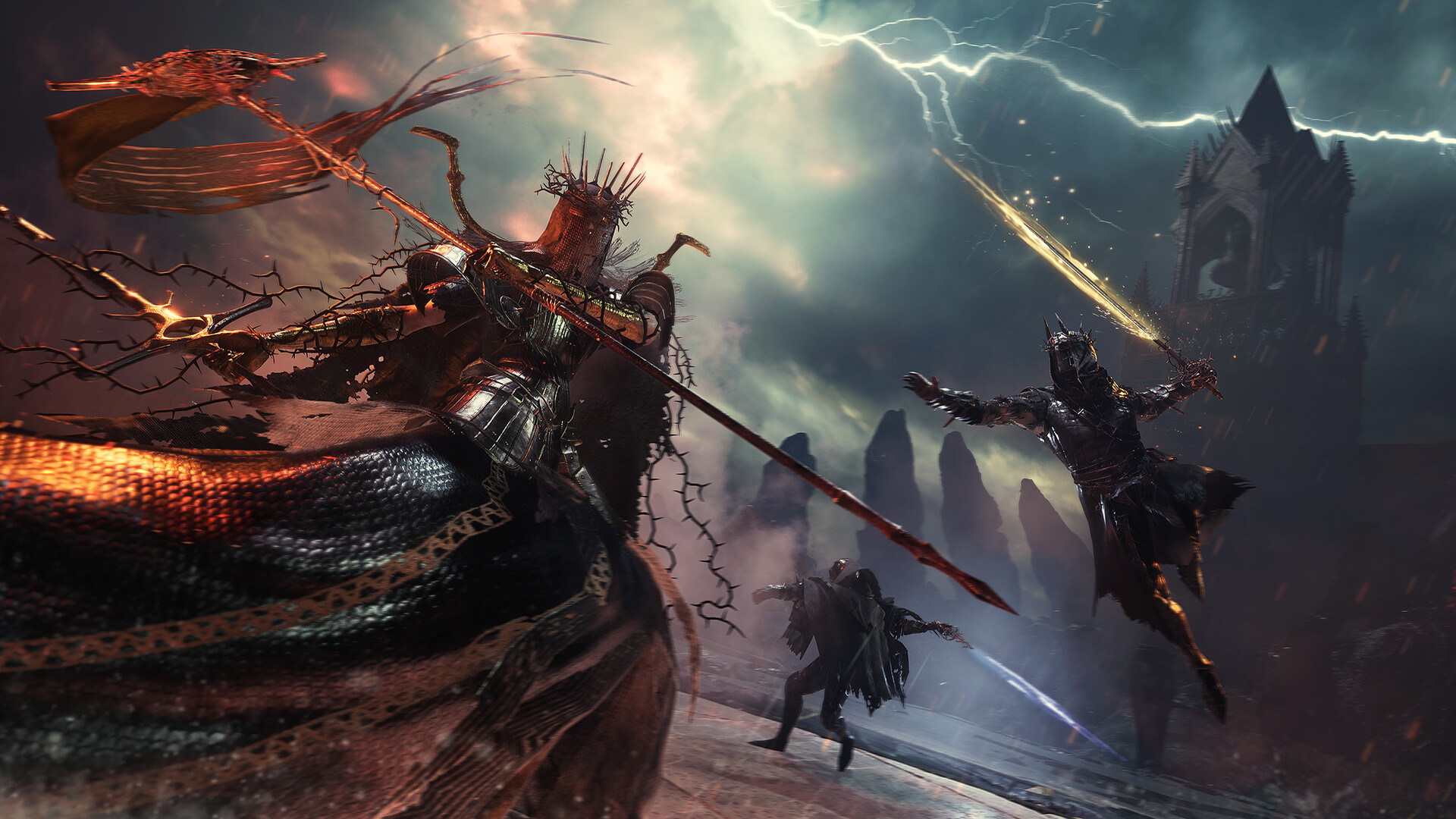
Lords of the Fallen isn’t aiming for perfection, and it doesn’t have to. It’s not attempting to change the entire genre. It’s attempting to provide yet another viciously rewarding trek through a cursed land, and that’s exactly what it does. This isn’t just a redemption tale for the franchise name; it’s arguably one of the finest Soulslike experiences you can find today.
This is the closest to a Dark Souls 4 that FromSoftware never created, if that’s what you’ve been yearning for. Just be on the lookout for the standard early patch bugs, the occasional stutter, and the eerie sense of déjà vu. Because you’ve been here before, but the return still feels damn good.