Visions for a New Web
( Web De-enshittification, Ethical AI, Worker-owned Co-Ops & Wealth Redistribution )
Introduction
Identities — the Public, the Private, and the Anonymous.
AlohaCoin — the cryptocurrency for Wealth Redistribution.
maLcoLM — the Ethical AI.
cool:// — the Web de-enshittified.
SpamFree — the end of SPAM.
Worker-owned Co-operatives — the shape of work in the 21st century.


When Sir Tim Berners Lee invented the World Wide Web in 1989, it was meant to facilitate the exchange of scientific data between researchers around the world. Over the years, it has mutated into a digital landfill with a cloud of data smog hovering above it, filled with commercial advertisments, dancing baloney, clickbait, fake news, AI posing as humans, solicitors, snooping agents, identity thieves, phishers, scammers, spammers, and crackers. As a result, trust in basic institutions like the government and the press has eroded, and we are left confused, with few things to believe in.
High priests and gatekeepers ruled through sheer obscurantism and gaslighting the masses into thinking that they are less than capable of running their own lives. Talking heads and panels of experts browbeat us into choking down our voices, and engage with their endless dissections of issues of no actual relevance, while ignoring what is meaningful to us.
In this article, I offer a few ideas to shape how we use the Internet in this century. The aim is democratization, and giving a voice to everyone, including marginalized people who were kept by a gauntlet from voting in a so-called democracy.
Most of the world's information systems were rube goldberg contraptions, in the absence of an identity management system.
Web identities can be simplified to exactly 3 types:
1. Public Identity
A public identity is certified by a distributed, decentralized, democratic certifying authority and always ends with a globally unique id in brackets. Maximum of one public identity per living person.
Examples:
Samuel Clemens [808] and Ashwin Dixit [420] refer to these people by their legal names.
2. Private Identities
A person can have any number of private identities, which are pseudonyms and always begin with an * and end with a globally unique id in brackets.
Examples:
* _ashitaka_88 [862] and * Mononoke [862] are the same user.
* James Bond [45565] and * James Bond [937841] are different users.
3. Anonymous Identity
The universally Anonymous identity requires no permission and no key. Bots can use this identity ( as can 👽, etc. 😁 ).
It is always shown as: [Anonymous]
Quite frankly, conventional AI is daylight robbery and creative people are understandably enraged about it. The main problems with conventional AI are:
No Consent: grabs people's content without asking.
No Credit: gives the creators no credit.
No Compensation: does not pay the creators.
Trivialization: dehumanizes the craft people worked hard to learn.
Displacement: throws creative people out of work using their own creations, which it stole, against them — like a thief breaking into your house, stealing your gun, robbing you at gunpoint with the same gun, then getting away with evicting you from your home, since they now have your gun, money, and all your stuff to boot.
Environmental Impact: inefficiently uses Earth's resources for purposes that are often neither quite utilitarian, nor properly aesthetic.
Solution: maLcoLM — the Ethical AI
maLcoLM is a completely Free and Open Source LLM, named as a tribute to Malcolm X.
maLcoLM uses all available public domain data for training.
Also, maLcoLM addresses the pain points of conventional AI:
Consent: Creators voluntarily send ( not submit ) content to maLcoLM, for use as training data.
Credit: maLcoLM credits each creator every time a derived work draws upon their creations, if they choose to be publicly credited.
Compensation: maLcoLM pays each creator instantly in AlohaCoin, using smart contracts, every time a derivative work of theirs is monetized.
Celebration: maLcoLM celebrates the hard work creators put into learning their craft, by pooling it with the work of other creators, and turning it into a supercharged tool to let us take creativity to the next level. For example — if you spent decades learning a drawing technique, now you can slack a little, and apply that skill ready-made to your next creative project. Create a maLcoLM account, and send one creation ( code, image, audio, video, etc. ) as training data, and maLcoLM is yours to use free for life.
Empowerment: See Worker-owned Co-Operatives
Environmental Impact: See AlohaCoin
Free and Open Source programmers use maLcoLM to generate code, and optionally help train it by using the IDE plugin or sending code repos.
As with contributing to any Free Software project like GNU/Emacs or GNU/Linux, contributions to maLcoLM will help the world at large.
maLcoLM assigns a unique creator_id to each creator, and a creation_id to each creation they send. For every derived work generated, maLcoLM produces a credits hash table.
key: creator_id
value: % of the generated work that this creator's creations were used as input data for.
For example:
| creator_id | credit % |
| 1234 | 43.47 |
| 9268 | 23.17 |
| 5230 | 21.45 |
| 3456 | 11.91 |
| 100 % | |
This is somewhat like tracking tomato plants grown by various growers around the world, processed through a complex and dynamic supply chain, from harvesting tomatoes, processing them into ketchup, to bottling ketchup and shipping it to stores. Then, picking up a random bottle of tomato ketchup off a shelf, and asking to identify each individual tomato plant that contributed to that specific bottle.
This granular level of tracking is already possible. Piggybacking a creator_id metadata field alongwith each input item, and preserving it throughout the generation process is relatively easy and gives us digital provenance. Thanks to Jaron Lanier, and his article “There is No A. I.” for the inspiration behind this idea.
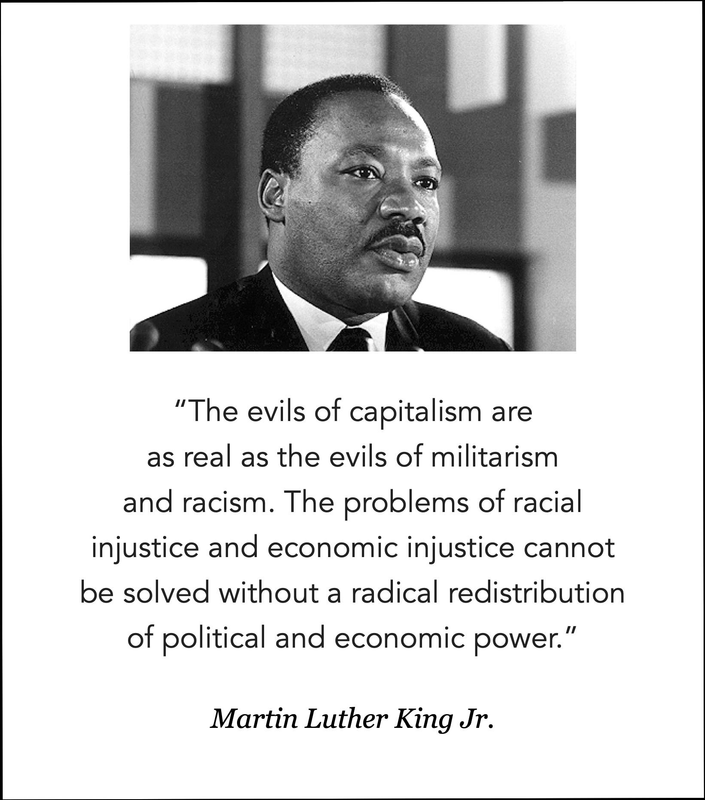
AlohaCoin is a green-energy-based cryptocurrency aimed at Wealth Redistribution.
10% of each AlohaCoin transaction is automatically disbursed equally to every existing wallet. No exceptions. No ifs ands or buts. No politicians, experts, or talking heads to distract the people and siphon public funds.
AlohaCoin wallets have a finite size, like cash wallets, and unlike the greed of the billionaires. If there are
Wwallets, andNAlohacoins in existence, then each wallet's balance is capped atN / W. If the globe's wealth were a pie, everybody gets an equal slice of that pie. Any amount sent to a wallet, in excess of the wallet's maximum size, is automatically disbursed to all wallets.If some boats in a marina rise with the rising tide while others are stuck in the mud, the marina is rigged, and should be demolished and replaced. While many disadvantaged groups, such as descendants of enslaved peoples, rightly feel that they should be made whole, perhaps the idea of reparations is too complex to be practicable. Distributing reparations requires tracking genetics and records of human slavery, which raises difficult questions:
- Do African-American immigrants, who are not descended from enslaved people, get reparations? Does Elon Musk get reparations?
- What if the genealogy is mixed, fuzzy, and/or complicated? Who should get paid how much in reparations, according to what rules or formulae?
AlohaCoin aims to spread wealth so abundantly, that we skirt these thorny issues related to exactly how to implement Social Justice using reparations as a means. If all boats rise with the rising tide, and no boats are stuck, do we care much about the past state of affairs?
Over time, as wealth is distributed more evenly, the incentives for crime, violence, and war drop. The world becomes a kinder, gentler place. Eventually, money itself becomes moot. If everyone on the planet were a millionaire, and there were no hyperinflation, who would care about the petty amounts involved in daily life?
If you are wondering — “Do people get paid 10% of every AlohaCoin transaction, even if they don't work?”, the answer is, Yes! AlohaCoin aims for everyone to have enough, so you can scale down your work hours, which will scale down production of goods, extraction of resources, mass over-consumption, and the pollution problems it brings. If newly rich Asians started consuming like their Western counterparts, the Earth would be reduced to a landfill, before climate change problems can even affect us seriously. Stopping this unsustainable growth in garbage is crucial to fixing global warming.
If your sense of justice is galled by the idea of people getting paid to do nothing, consider this:
{ *********************************************************** }
Each living person can have upto 1 AlohaCoin wallet. Bots can have none.
Like Ethereum, AlohaCoin has a Distributed Virtual Machine ( DVM ) on which one may purchase compute resources. The AlohaCoin DVM also runs computations to verify AlohaCoin transactions by accepting payloads from any user who purchases AlohaCoin compute resources, processing them, and returning the output to that user, thus becoming a candidate for the AlohaCoin block resolution reward.
Birth/Death certificates are issued by a crowdsourced, decentralized and democratic entity, which also creates/deletes AlohaCoin wallets.
To verify transactions, AlohaCoin miners provide proof-of-useful-work, offering compute resources by serving as nodes in the AlohaCoin Distributed VM.
AlohaCoin miners use green energy from offshore arrays of floating spherical pods which harvest solar & ocean energy.
- each pod runs:
- Linux Container
- AlohaCoin miner
- each pod runs:
Why cool://?
When I started as a Webmaster ( that's what they called “the web guy”, because the Web field was not very diverse, or specialized ) in 1994, Web Development was very simple. There was no client-side scripting. Then Web Development turned into a labyrinthine nightmare. A Full-stack Web Developer had to know HTML, CSS, JS, a server-side language, a templating language, DDL, and SQL, at the bare minimum. That's 7 different computer languages each with very different purpose and arcane syntax.
cool:// takes the Web back to its roots, trims out the junk, distills it to essentials, consolidates the most commonly recurring patterns, and makes Web Development simple and fun again, even in the age of AI and vibecoding.
cool:// is the eye in the needle through which everything passes and which filters out the shit to create a new, de-enshittified web.
How cool:// benefits Users:
- No cookies.
- No ads, which means a faster user experience.
- The great joy of not being sold anything.
- No distractions. No nonsense. Just content. A focused and leisurely experience.
- No trackers following you around the web.
- No popups and disclaimers at every site you visit.
- Very few forms to fill, as logins are as seamless as possible. ( See Identities )
- Improved privacy and security.
How cool:// benefits Developers:
cool://aims to replace JS, an ugly language that has gone on too long.cool://radically simplifies Web Development by using Python for both — client-side and server-side code.Content: Instead of HTML,
cool://uses a simple Markdown-ish language based on Syntext. A very minimal subset of HTML tags is allowed to be mixed in with Markdown. Some custom tags are added to this minimal set, and will be proposed before the W3c, as additions to the HTML standard.Logic:
cool://uses Brython instead of JS for client-side scripting. The server-side language could be Python, Ruby, Perl, Raku, or anything else you like.Presentation:
cool://uses a minimal variant of CSS, radically simplified for developer friendliness.
How cool:// benefits Enterprises:
It is easier to hire
cool://Developers, as the required skill set is much smaller.Faster development time.
cool:// Implementation Notes:
Browser Plugin intercepts and handles calls to the
cool://scheme.Encrypted handshake with web servers that support cool:// over an extra http header. Servers that suport cool:// answer back with an encrypted response. Otherwise the Plugin exits, defaulting the session back to https://.
If the server supports cool://, it specifies which Identities it accepts. The user has configured the cool:// browser plugin with their choices, and so an identity is agreed upon nearly automatically and its credentials exchanged. For example:
The server might require the
publicidentity, e.g. for public voting systems and forums. If the client agrees to share their public identity, an authorization level is agreed upon, and the session proceeds. Each page served is encrypted with a key containing the current UTC timestamp.The server might state that it supports the
public, andprivateidentities. Depending on the user choices configured in the Plugin, it might choose to login with aprivateidentity with the server, optionally prompting the user to select from a list of their many private identities. Or the client might choose to log in with thepublicidentity, if the user chose that default during Plugin configuration.The server might state that it allows all identities (
public,private, andanonymous) or any combination thereof. Again, which identity the client logs in with, depends on the user's existing choices which the Plugin knows about.
Cryptographically signed timestamps
cool:// key signed by an OTP that is periodically refreshed
Extend Syntext through composition to add custom tags.
A limited subset of HTML is passed through.
Initially piggyback on HTTPS.
Could front for multiple protocols including X11. An X server (MIT license) is bundled with the plugin.
Ensure maximum accessibility with 100% ANDI compatibility.
End-to-End tested with Playwright
SpamFree is an email system that adds AlohaCoin Smart Transactions to fight spam.
With each email message you send, you can optionally attach a Reading Fee in AlohaCoin, which the recipient of the email may claim instantly. This is possible using AlohaCoin Smart Transactions.
You can set a Minimum Reading Fee for your email inbox. Messages should have at least that many AlohaCoins attached, to be worth your time, otherwise they will not be shown.
You may get an advertisement from a commercial interest, and choose to read it ( or not ), and collect the attached reading fee. Remember, 10% of all AlohaCoin transactions get automatically disbursed to all existing wallets.
When you receive an email from someone you know, you may enter them into your personal Allow list, which will bypass the requirement of a reading fee for all future messages. You may also choose to not claim the reading fee attached with their initial email.
You can block email addresses by adding them to your Block list, so they will not be shown, no matter the reading fee attached.
maLcoLM changes the shape of work in a radical way. Too many people were unemployed, anxious in their long job searches, were ghosted by employers, and sat around spinning their wheels ( hopefully learning new skills to stay up to date ).
Exploitative corporations and their hierarchical mindset never suited the contemporary generations anyway. So people chose to connect with their peers, and formed egalitarian, democratic, radically transparent, employee-owned co-operatives. They pooled their time, energy, skills, money, and any other resources they could, to become owners of their own businesses, running them with pride. In all walks of business – from pizzerias, ride-sharing services, delivery services, home repair services, remote-first software companies, to pet-sitting services, people finally decided to keep their earnings rather than hand over the lion's share to some corporation. They enjoyed all the personal freedom, creative leeway, collegial work environment and informal, no-nonsense directness that came with the pride of ownership. In many cases, family units started their own co-operatives with all adult members owning equal shares. One could buy one's share out of any co-operative, including one's family's and move to another town to join/start another co-operative. Using maLcoLM, people can produce for their co-operatives at a higher scale of integration.
See also:
Thanks:
- Malcolm X
- Margaret Heffernan
- Sir Tim Berners Lee
- Jaron Lanier
- Cory Doctorow
- Neal Stephenson
All work is licensed under Attribution-ShareAlike 4.0 International

